
Strategic Framework Plan for Parks & Trails
A city scale planning framework identifying priority park and trail catalyst projects through ecological analysis, public engagement, and spatial research focused on multi-community impact.
-
The Strategic Framework Plan for Parks & Trails is a citywide research and planning initiative focused on identifying how parks, trails, and ecological infrastructure can strengthen connectivity, public health, recreation, and long term community resilience across Jackson. The framework positions public space as interconnected civic infrastructure capable of shaping mobility, economic development, environmental performance, and everyday quality of life at the city scale.
TREE led the research, spatial analysis, mapping, and public engagement process behind the framework, culminating in the 2024 Jackson Design Forum where the research was publicly presented alongside conversations with government leaders, nonprofit organizations, community advocates, and business stakeholders. The plan identifies 20 catalyst park and trail opportunities with the potential to generate high impact across multiple neighborhoods and districts throughout Jackson.
The framework was developed through a layered spatial analysis process informed by landscape architecture methodologies rooted in ecological planning. TREE analyzed a series of city scale mapping systems to better understand how public infrastructure, environmental conditions, and social patterns overlap across Jackson. These studies evaluated relationships between walkability, transportation systems, population density, employment centers, food access, educational institutions, neighborhood structure, public land ownership, vacancy patterns, environmental risk, public safety, and existing community assets.
The research focused on how they intersect spatially to reveal areas where strategic investment in parks, trails, and public space could produce broader civic and environmental impact. This composite mapping process draws from the ecological planning methods established by landscape architect Ian McHarg in Design with Nature, which emphasized understanding cities and landscapes as interconnected systems rather than isolated development sites.
The resulting framework positions parks and trails as tools for stormwater management, urban cooling, public health, mobility, neighborhood connectivity, and long term environmental resilience. Through this process, TREE explored how green and blue infrastructure can help reconnect fragmented parts of the city while creating more accessible, ecological, and people-centered public environments over time.
-
2023 - Ongoing
-
City
-
Jackson, Mississippi
-
Project Partners: Great City Mississippi Foundation
Landscape Architecture and Urban Planning: Travis Crabtree PLA
Photography: Imani Khayyam
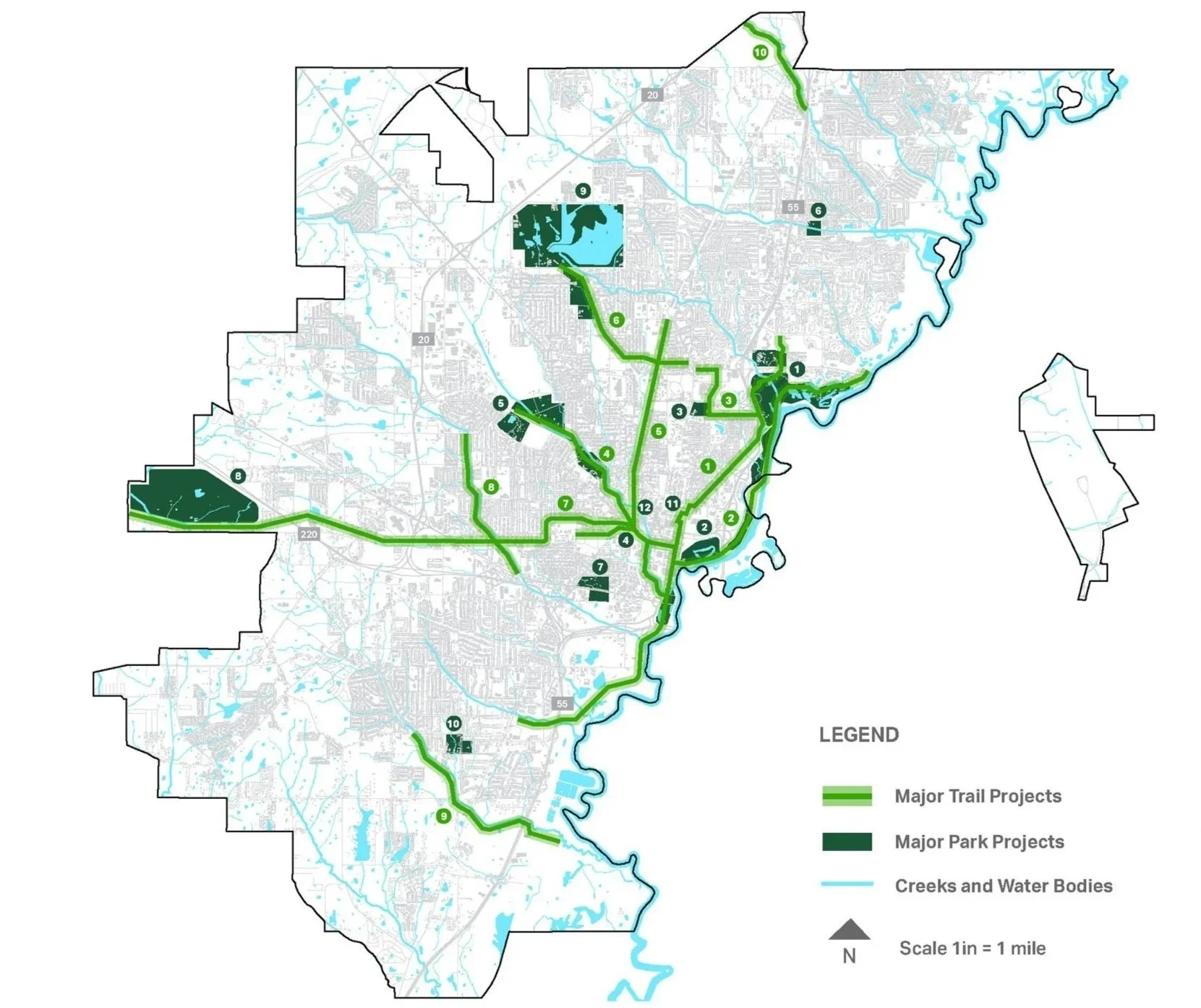
The Strategic Framework Plan identifies a connected system of catalyst park and trail projects across Jackson.
The proposed projects are positioned as interconnected civic and ecological infrastructure systems designed to strengthen access to public space, improve mobility, and reconnect fragmented parts of the city. Each catalyst project was selected based on its ability to leverage existing environmental systems, serve surrounding neighborhoods, and contribute to broader citywide connectivity when implemented as part of a coordinated network.
The framework prioritizes projects that align with creeks, waterways, underutilized corridors, and existing public assets, using green and blue infrastructure to support stormwater management, urban cooling, pedestrian mobility, recreation, and long term environmental resilience. Major park investments and trail systems were evaluated for their ability to strengthen public health, neighborhood connectivity, ecological performance, and access to community resources.
Projects highlighted within the framework include major public space initiatives such as Parham Bridges Park, LeFleur’s Bluff, Livingston Park, Battlefield Park, and Sykes Park, alongside citywide trail systems including the Museum Trail and its associated connectors. Together, these projects establish the foundation for a phased and interconnected public infrastructure network capable of expanding access to parks and trails while supporting long term neighborhood revitalization and equitable investment across Jackson.

Jackson Greenspace Network
The plan identifies how parks, trails, public land, environmental systems, mobility infrastructure, and neighborhood conditions overlap across Jackson to identify where strategic investment could generate the greatest long term impact. Rather than analyzing these systems independently, the framework explored how social, ecological, and infrastructural conditions intersect spatially across the city.
The research incorporated factors including walkability, urbanization patterns, food access, population density, employment centers, public land ownership, vacancy, environmental risk, and existing community assets. These layers were combined into a composite mapping framework used to identify catalyst park and trail opportunities capable of strengthening connectivity, ecological performance, public health, and access to public space across multiple neighborhoods.
Shared Vision for Public Spaces
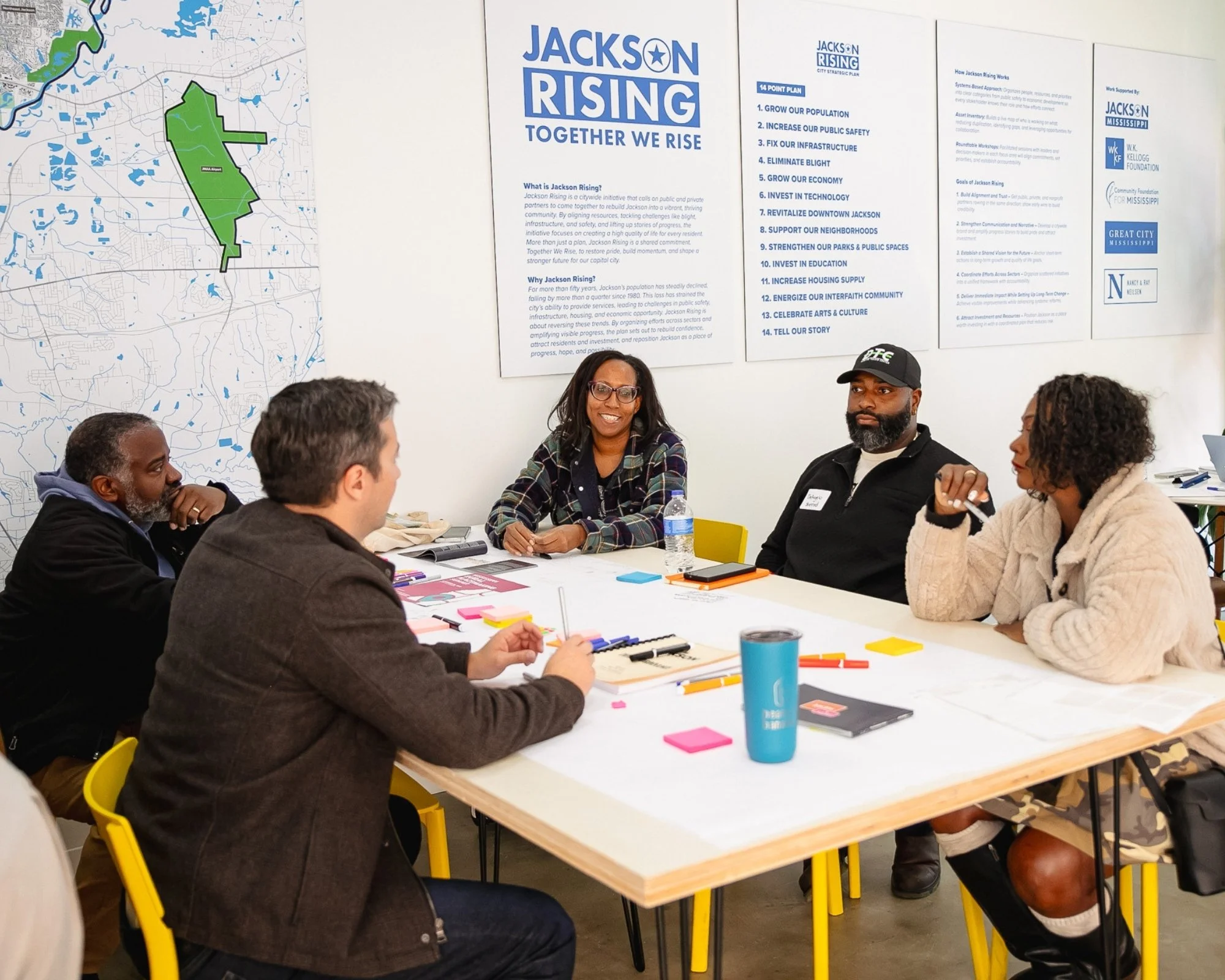
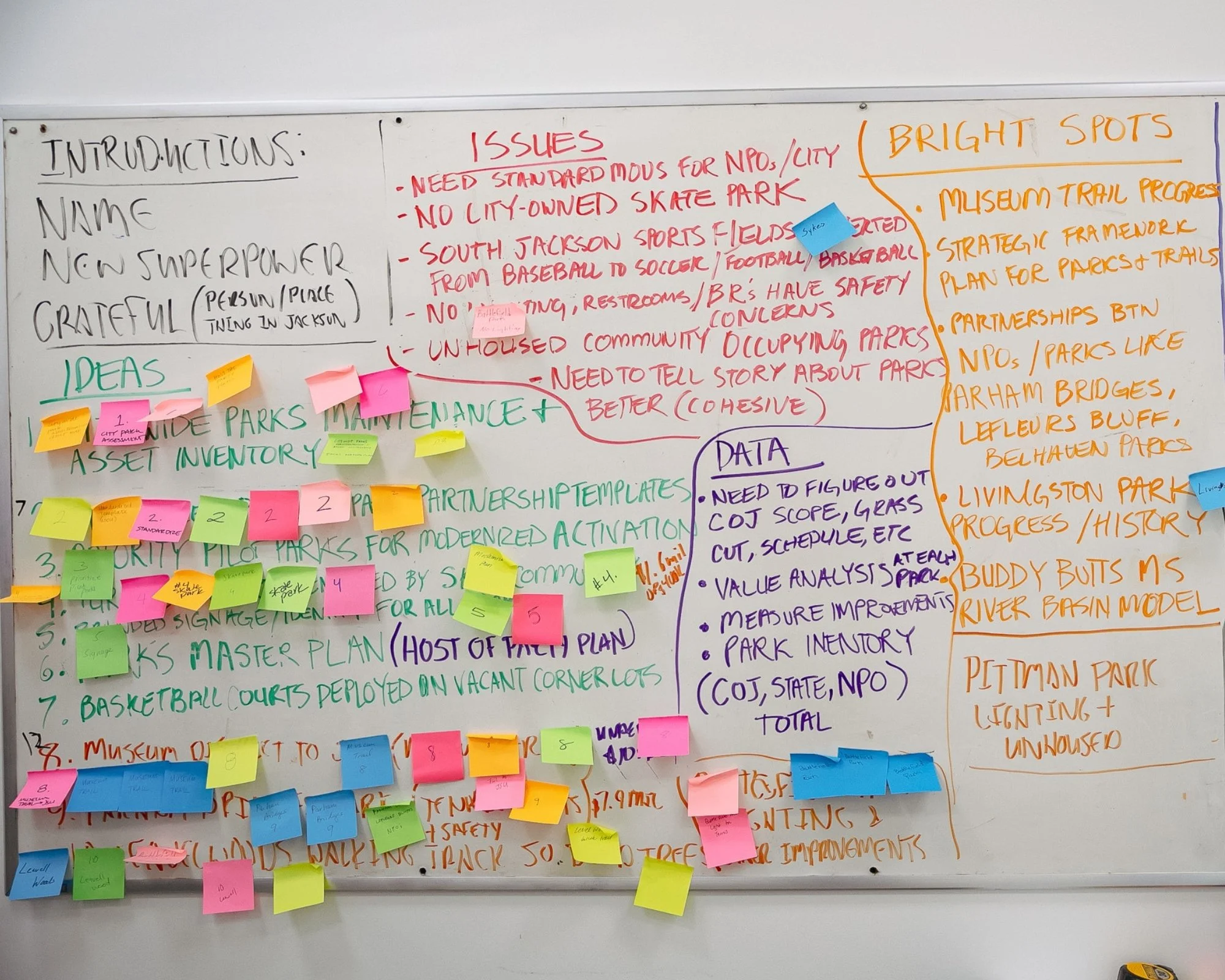
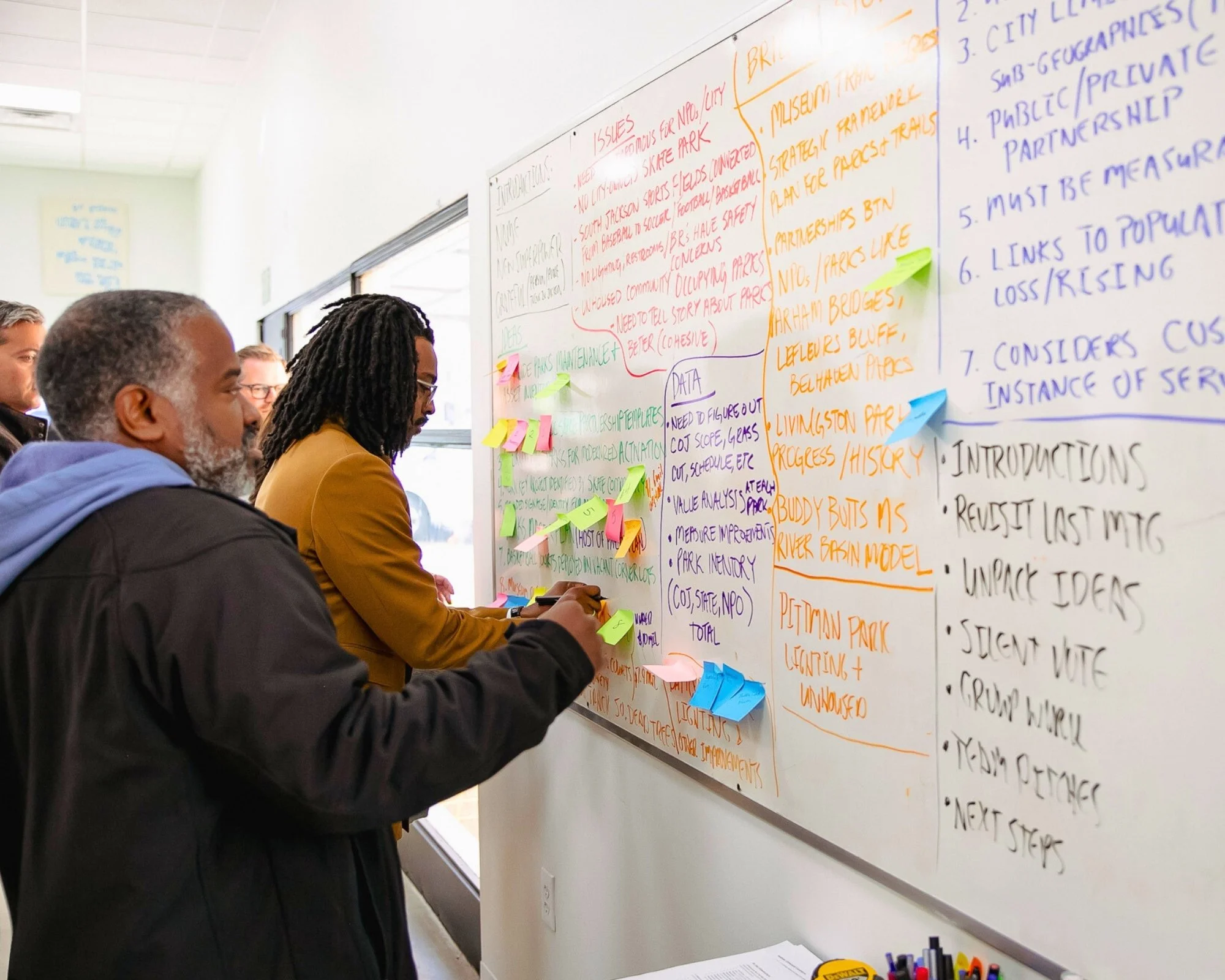
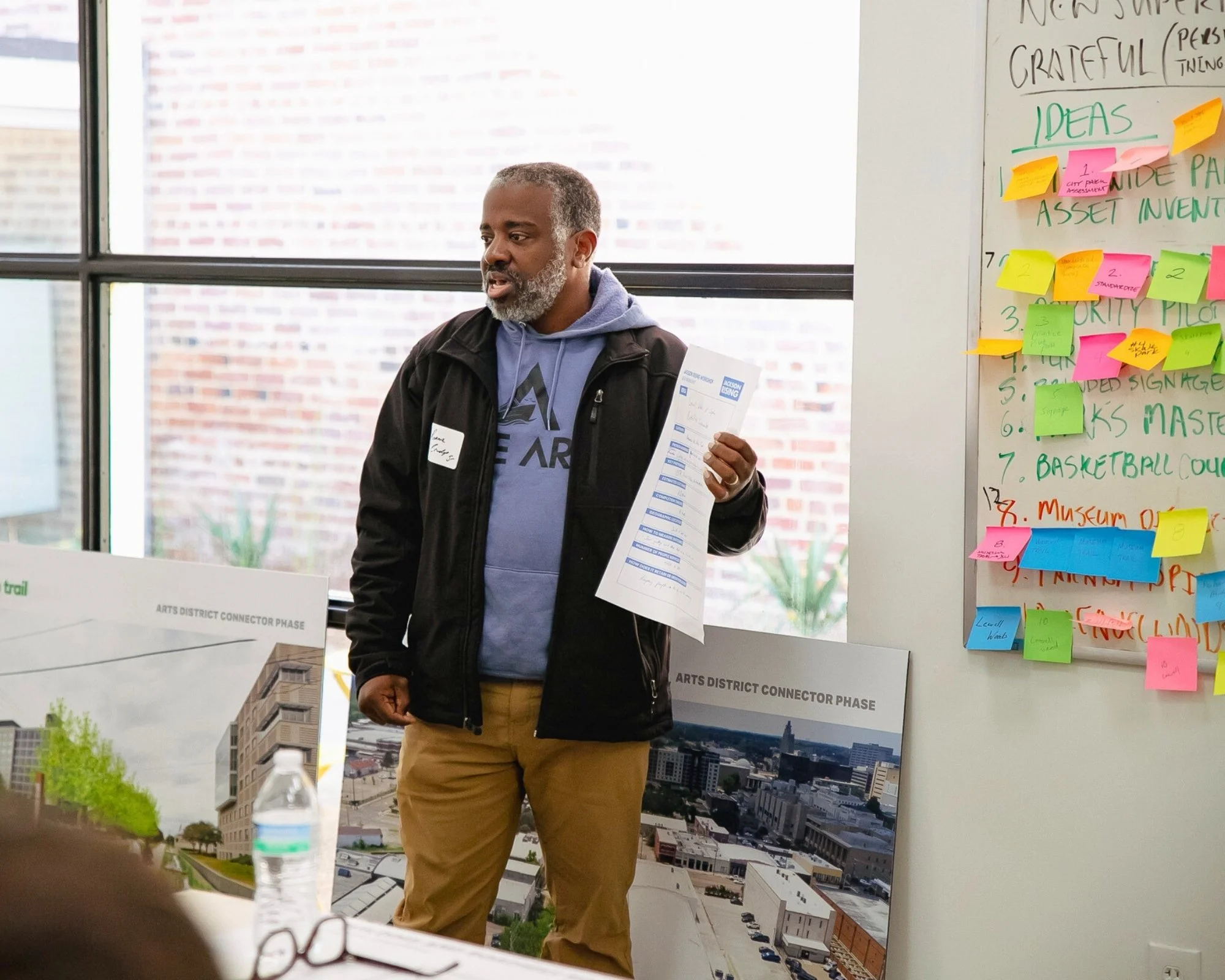
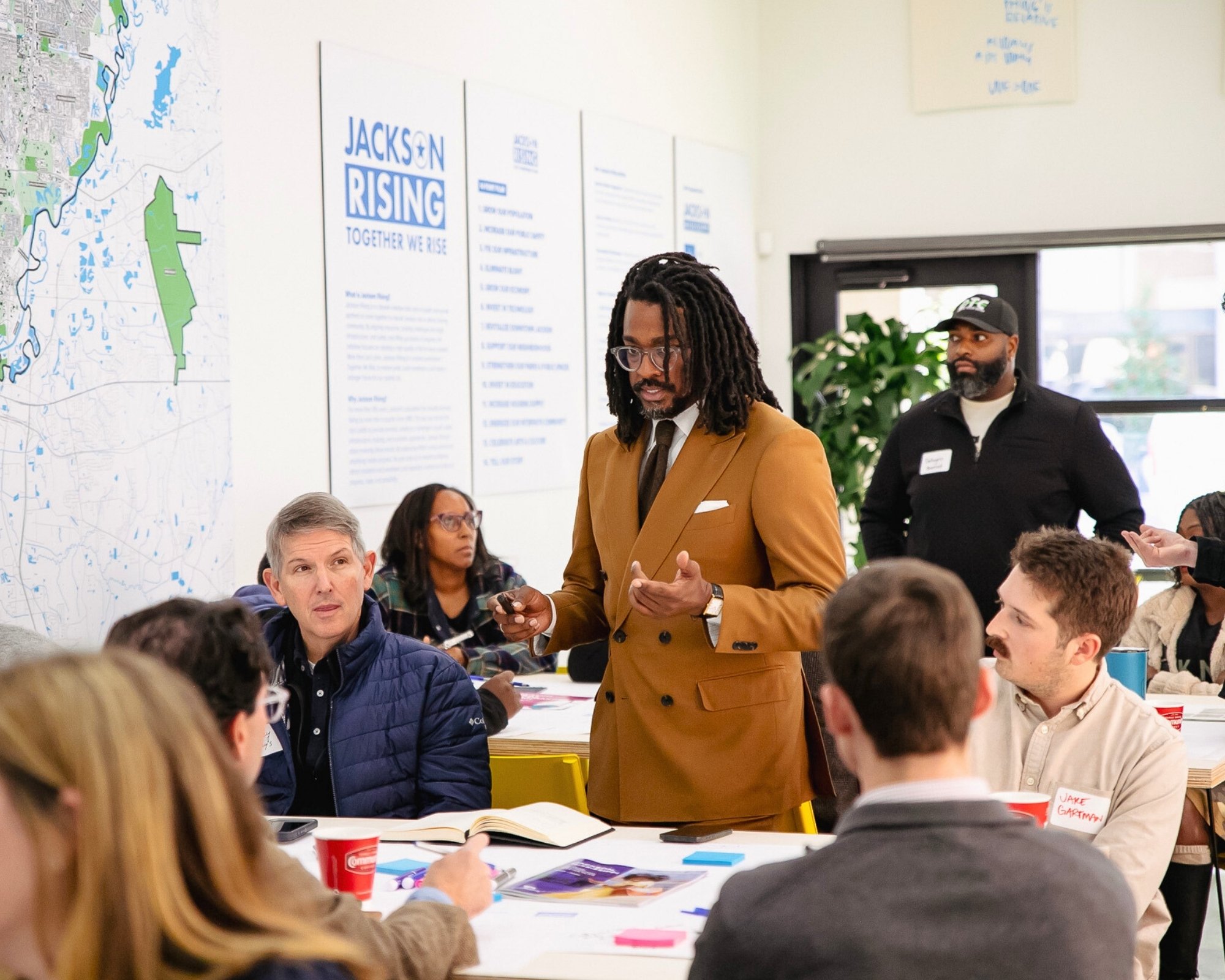
Through the Jackson Rising public engagement process, community members participated in facilitated discussions focused on parks and trails projects across the city, with the Strategic Framework Plan available as a resource. Feedback from these sessions demonstrated strong support for many of the catalyst projects identified in the study.


Jackson Design Forum for Parks & Trails
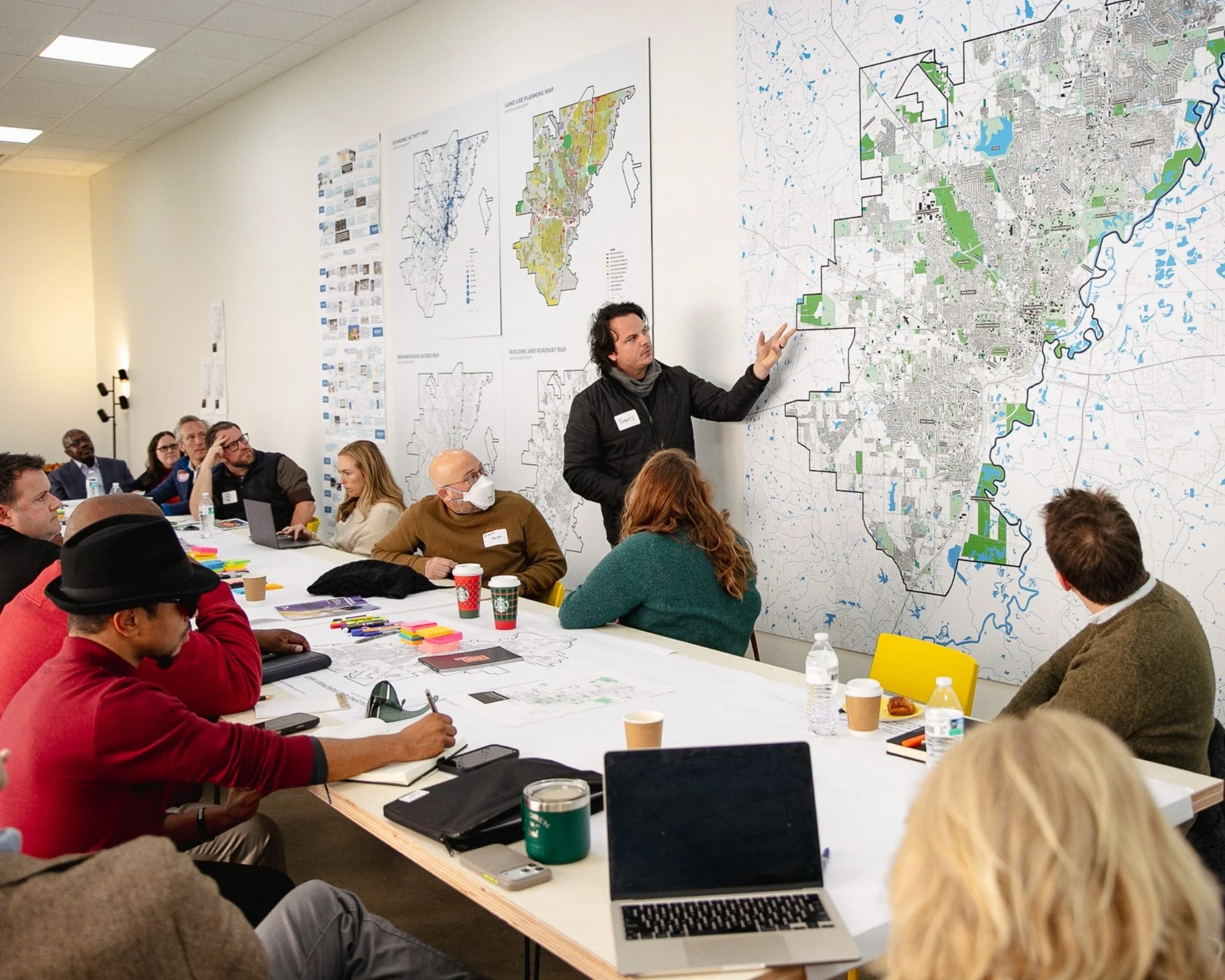
The Jackson Design Forum for Parks & Trails brought together local leaders, designers, nonprofits, government agencies, and community stakeholders to explore how parks, trails, and ecological infrastructure can shape Jackson’s long term future. Organized as part of the Jackson Design Forum, the event created a collaborative space for presentations, mapping exercises, workshops, and public discussion centered around connectivity, recreation, environmental resilience, and equitable access to public space.
The forum operated as a working design and planning platform where participants evaluated catalyst projects, discussed regional priorities, and explored how public infrastructure systems could better connect neighborhoods, waterways, institutions, and community assets across the city. Conversations focused on the role of parks and trails as interconnected civic infrastructure capable of supporting mobility, public health, environmental performance, and long term neighborhood investment. Insights and feedback gathered during the forum directly informed the Strategic Framework Plan for Parks & Trails, helping shape project priorities, regional connections, and long term implementation strategies.


