Riverfront Park
Riverfront Park is a proposed 30 acre public landscape that reconnects Downtown Jackson with the Pearl River through parks, trails, ecological restoration, and public space.
-
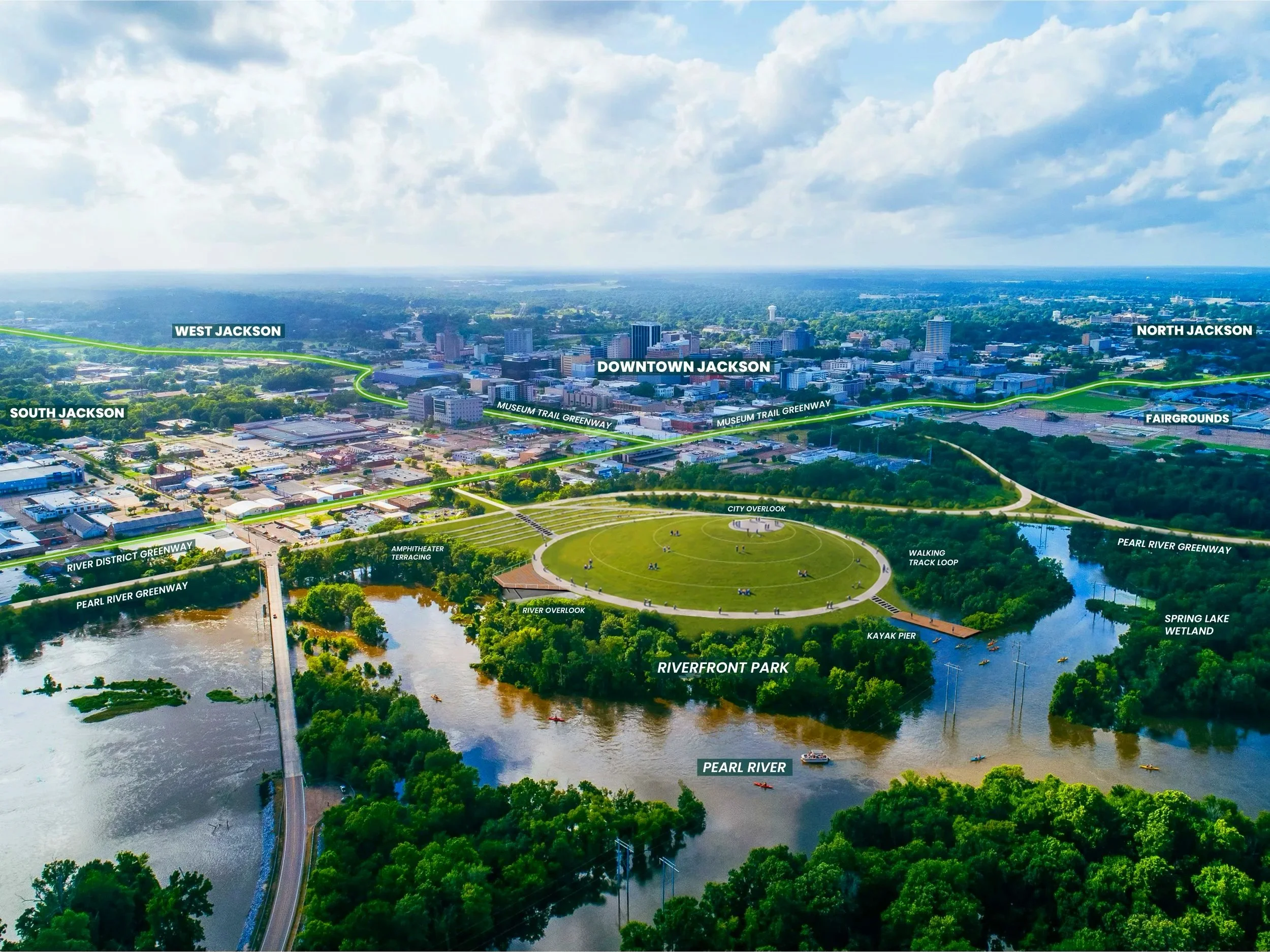
Riverfront Park is a proposed 30 acre public landscape located along the Pearl River at the western edge of Downtown Jackson. The project transforms a former landfill into a regional destination for recreation, ecological restoration, and public access while demonstrating how underutilized land can become valuable civic infrastructure.
The Pearl River has shaped Jackson's history, ecology, and economy for generations, yet much of the city's waterfront has remained physically disconnected from everyday life. Riverfront Park reestablishes that relationship by creating a continuous public landscape that reconnects Downtown with the river through parks, trails, restored natural systems, and new opportunities for community gathering.
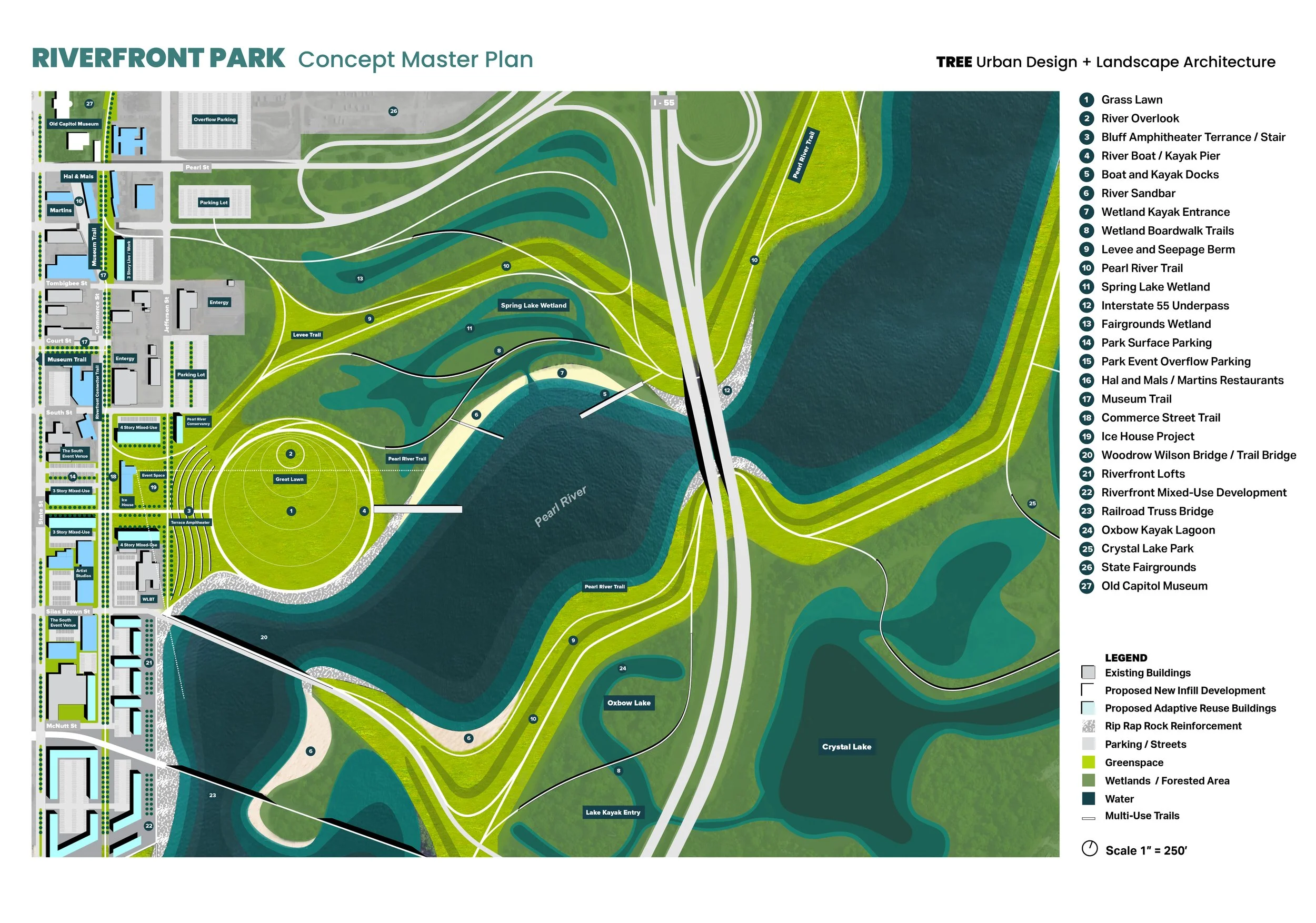
The park includes walking and cycling trails, scenic overlooks, a terraced amphitheater, elevated boardwalks through restored wetlands, expansive open lawns, public river access, and flexible spaces for recreation and events. Together, these elements create a landscape that supports environmental education, habitat restoration, outdoor recreation, and long term public investment along the waterfront.
Ecological restoration is integrated throughout the project. Native riparian plant communities, restored wetlands, floodable open space, and habitat corridors improve biodiversity, strengthen water quality, and demonstrate how green infrastructure can work with the river's natural systems rather than against them. Recreation and ecological performance are treated as complementary functions, creating a landscape that is both resilient and accessible.
Riverfront Park has been intentionally planned to move forward independently or alongside future regional flood resilience initiatives, including the U.S. Army Corps of Engineers' Alternative D1 plan. This flexibility allows the park to advance as a catalytic public investment while remaining compatible with future flood protection improvements and the long term vision of the Jackson River District.
-
2024 - Ongoing
-
Riverfront Park — 30 Acres
The River District — 150 Acres
-
Jackson, Mississippi
-
Project Advocacy & Support
Jackson River District Partnership | Commerce Street Business District | City of Jackson
Design & Engineering Partners
Rankin Hinds Pearl River Flood & Drainage Control District | Mendrop Engineering
Riverfront Park is a proposed 30 acre public landscape located along the Pearl River at the western edge of Downtown Jackson. The project transforms a former landfill into a regional destination that demonstrates how underutilized land can become an ecological and civic asset through adaptive landscape design.
Riverfront Park reestablishes the waterfront as part of Downtown Jackson's public realm. The park expands access to the Pearl River while creating opportunities for recreation, environmental education, habitat restoration, and future mixed use investment. The project has been intentionally designed to move forward independently or alongside future regional flood protection initiatives, including the U.S. Army Corps of Engineers' Alternative D1 plan. This flexibility allows Riverfront Park to advance as a public investment while remaining compatible with future flood resilience improvements throughout the Pearl River corridor.
The River District
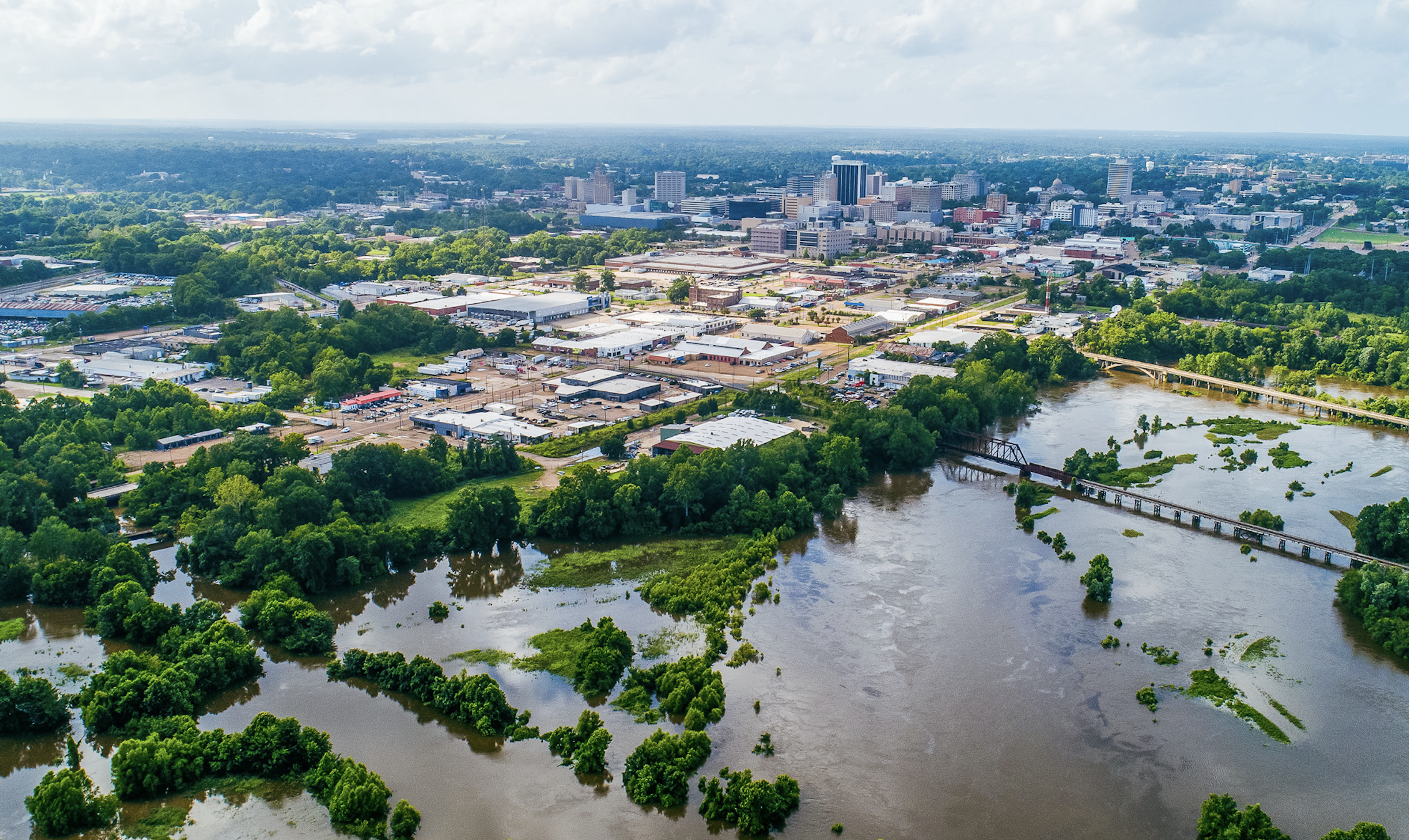
The Pearl River has shaped Jackson's history, economy, and ecology for generations, yet much of the city's waterfront has remained physically separated from everyday life. The Jackson River District represents a long term vision to reconnect Downtown Jackson with the river through parks, trails, public space, ecological restoration, and strategic reinvestment along the waterfront. Anchored by Riverfront Park, the district transforms former industrial land, underutilized properties, and fragmented open spaces into a connected public landscape that supports recreation, environmental stewardship, economic development, and public access to the Pearl River.
A Catalyst for Reinvestment
In Summer 2026, local organizations, agencies, and community partners established the Jackson River District Partnership to coordinate planning, advocacy, and implementation throughout the district. The partnership provides a collaborative framework for advancing public space improvements, ecological restoration, and investment while strengthening Jackson's relationship with its river. Riverfront Park is intended to serve as the first major public investment within the broader Jackson River District.
By reclaiming land that is unsuitable for conventional development, the project demonstrates how ecological restoration and public space can create new opportunities for long term economic growth. The district framework extends beyond a single park. As trails, streetscapes, mixed use development, and waterfront improvements continue to emerge, the River District has the potential to reconnect Downtown Jackson with the Pearl River while creating a healthier, more resilient, and more accessible public landscape for future generations.

Designing with Nature
Riverfront Park demonstrates how public space and ecological infrastructure can function together. Rather than separating recreation from environmental systems, the landscape uses restored wetlands, native riparian vegetation, floodable open space, and habitat restoration to improve ecological performance while expanding opportunities for public access and recreation.
The park includes expansive lawns, scenic overlooks, a terraced amphitheater, walking and cycling trails, elevated boardwalks, restored wetlands, habitat areas, public river access, and flexible spaces for community events. Together, these elements create a landscape that responds to the river's natural processes while supporting recreation, education, tourism, and everyday public life.