Stone County Gathering Spaces Action Plan
A countywide planning framework for strengthening parks, trails, gathering spaces, and community connections across Stone County, Missouri.
-
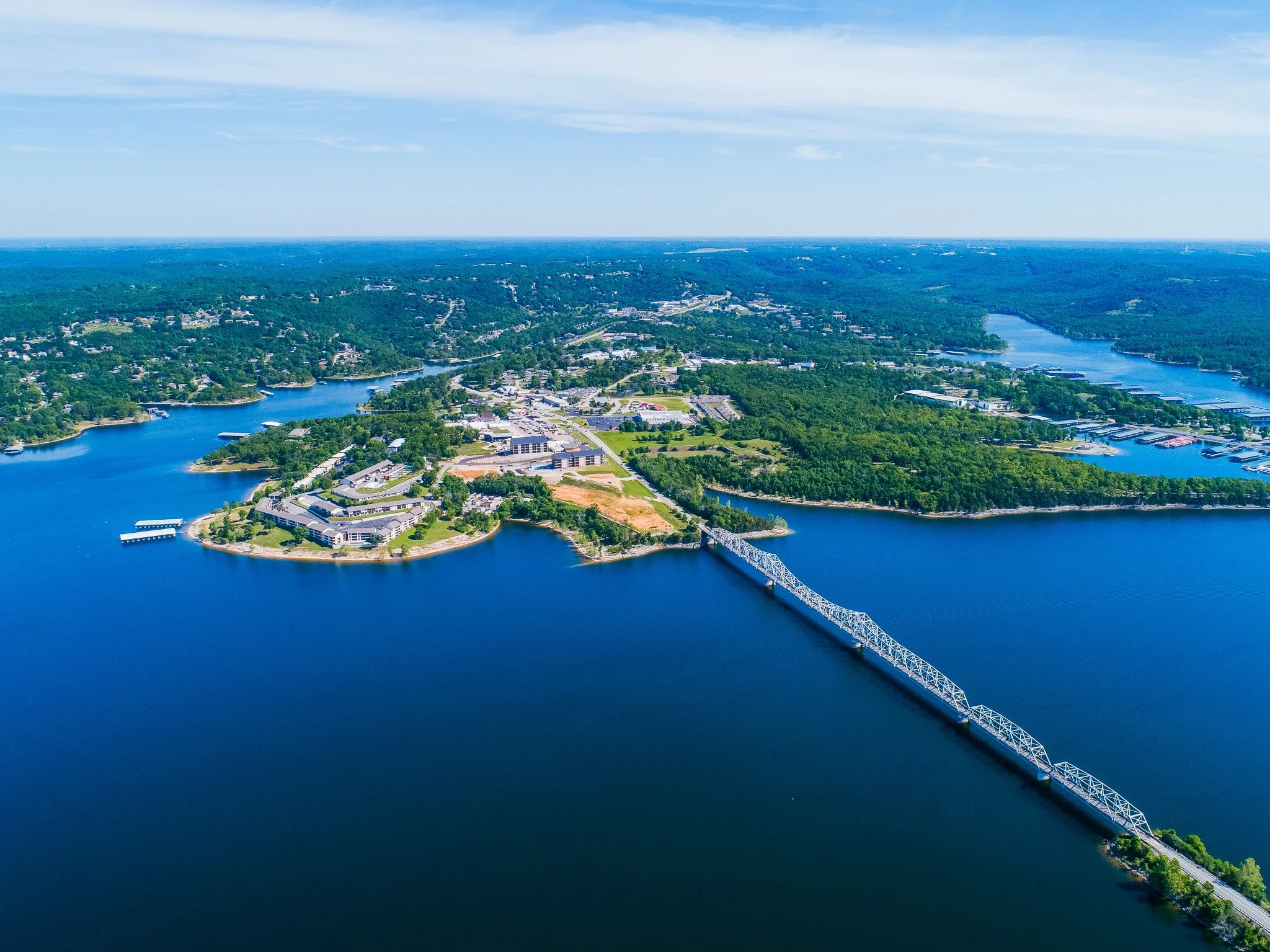
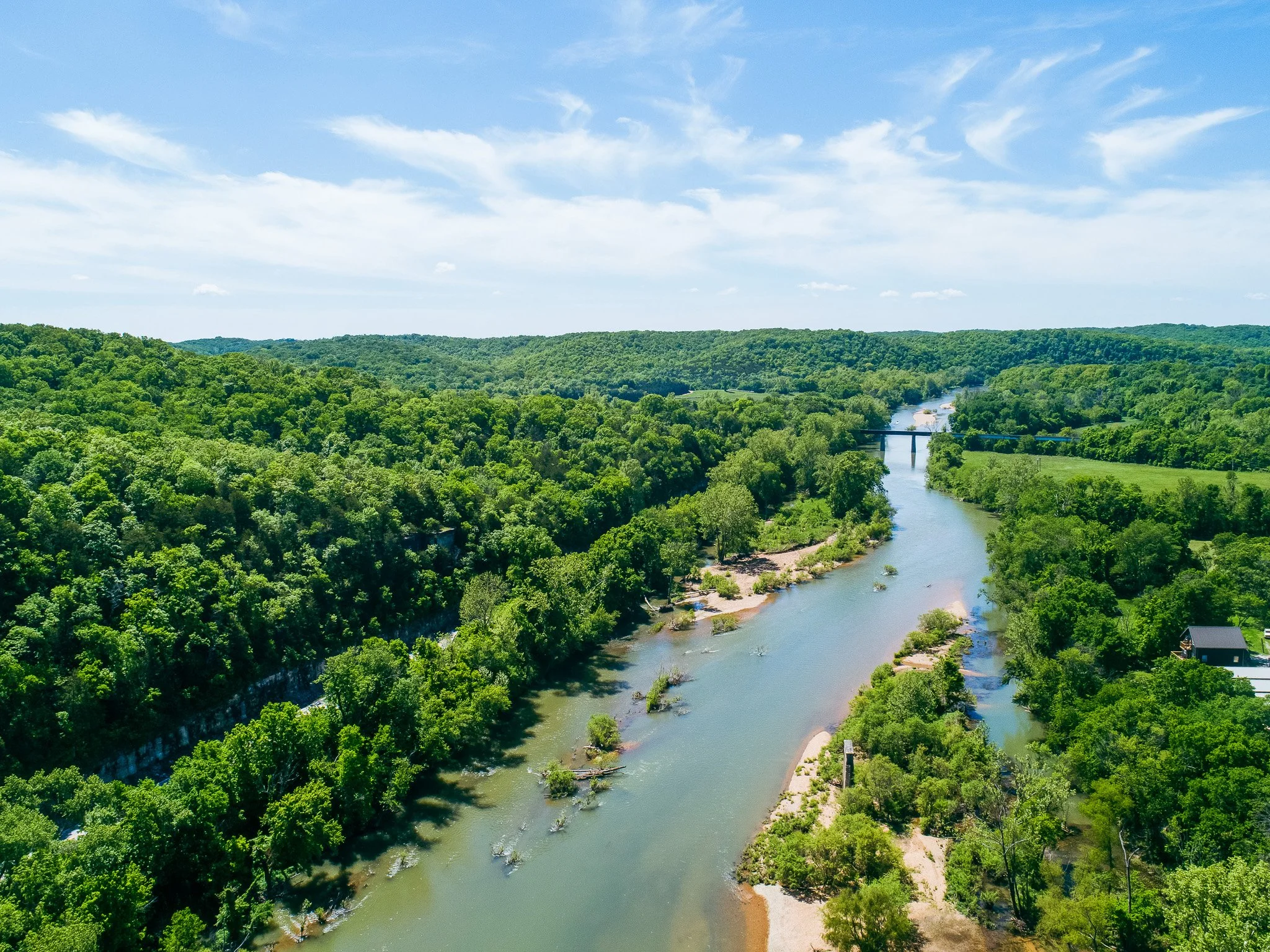
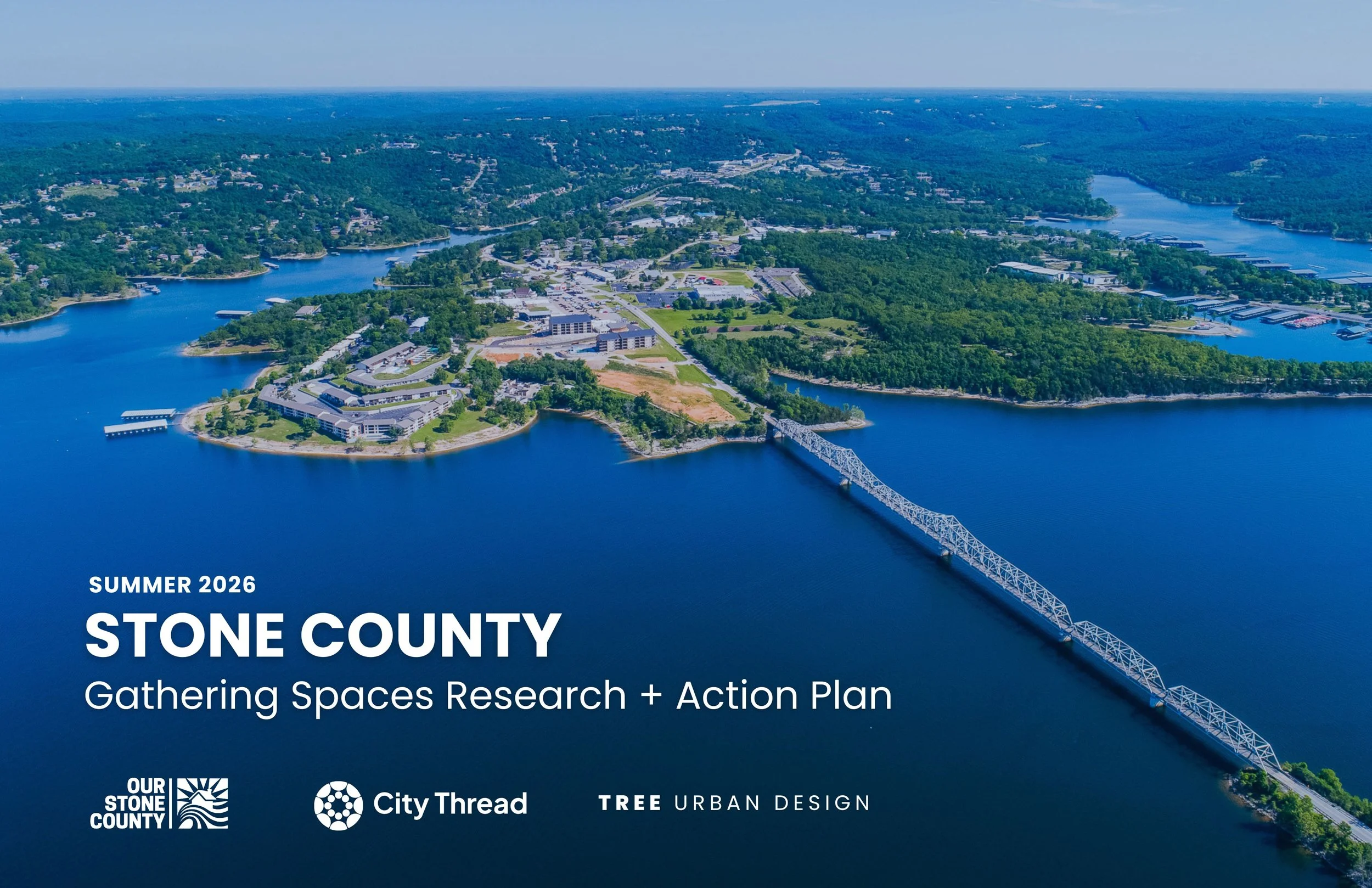
Stone County, Missouri is shaped by small towns, rural communities, Table Rock Lake, the James River, and an extensive network of natural and community assets. TREE worked with Our Stone County and City Thread to develop a countywide framework for strengthening the places where people gather, from parks, trails, and waterfronts to schools, libraries, community centers, downtowns, and other shared spaces.
The project combined spatial analysis, community research, and public engagement to understand how these resources are distributed across the county, where gaps exist, and how future investment can respond to the different needs of individual communities. The resulting recommendations establish a long term strategy for improving existing assets, expanding access to parks and recreation, strengthening connections between communities, and building the partnerships and resources needed to support implementation.
-
Year
2026
Location
Stone County, Missouri
-
Lead Partners
City Thread
Our Stone County
Research, Analysis, Action Planning
TREE Urban Design
Countywide Planning for Community Life
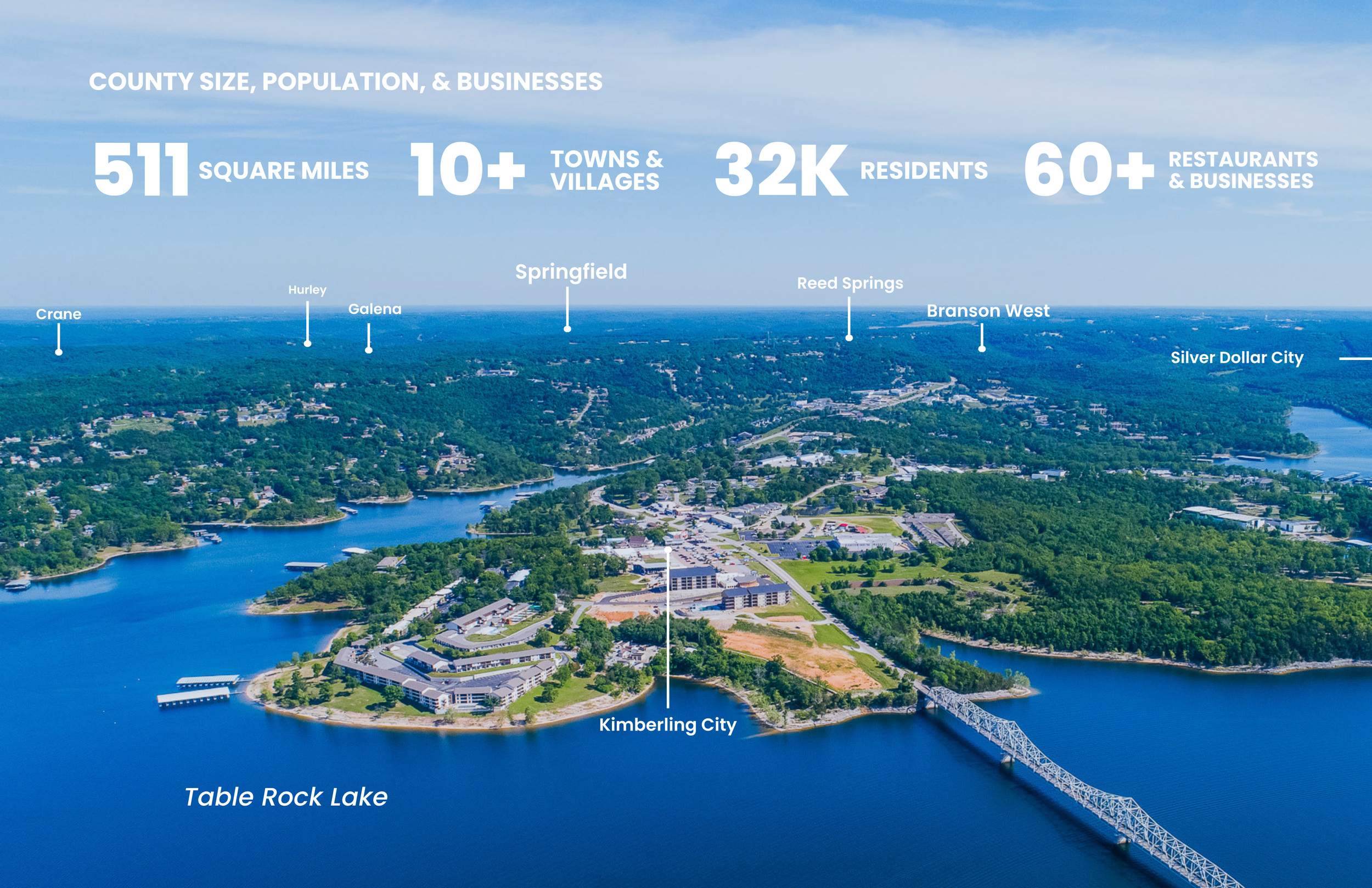
Stone County, Missouri is a growing rural county shaped by small towns, lake communities, forests, waterways, tourism, and a dispersed network of civic and recreational spaces. TREE worked with Our Stone County and City Thread to study how residents gather across the county and develop a long term framework for investing in the places that support everyday community life.
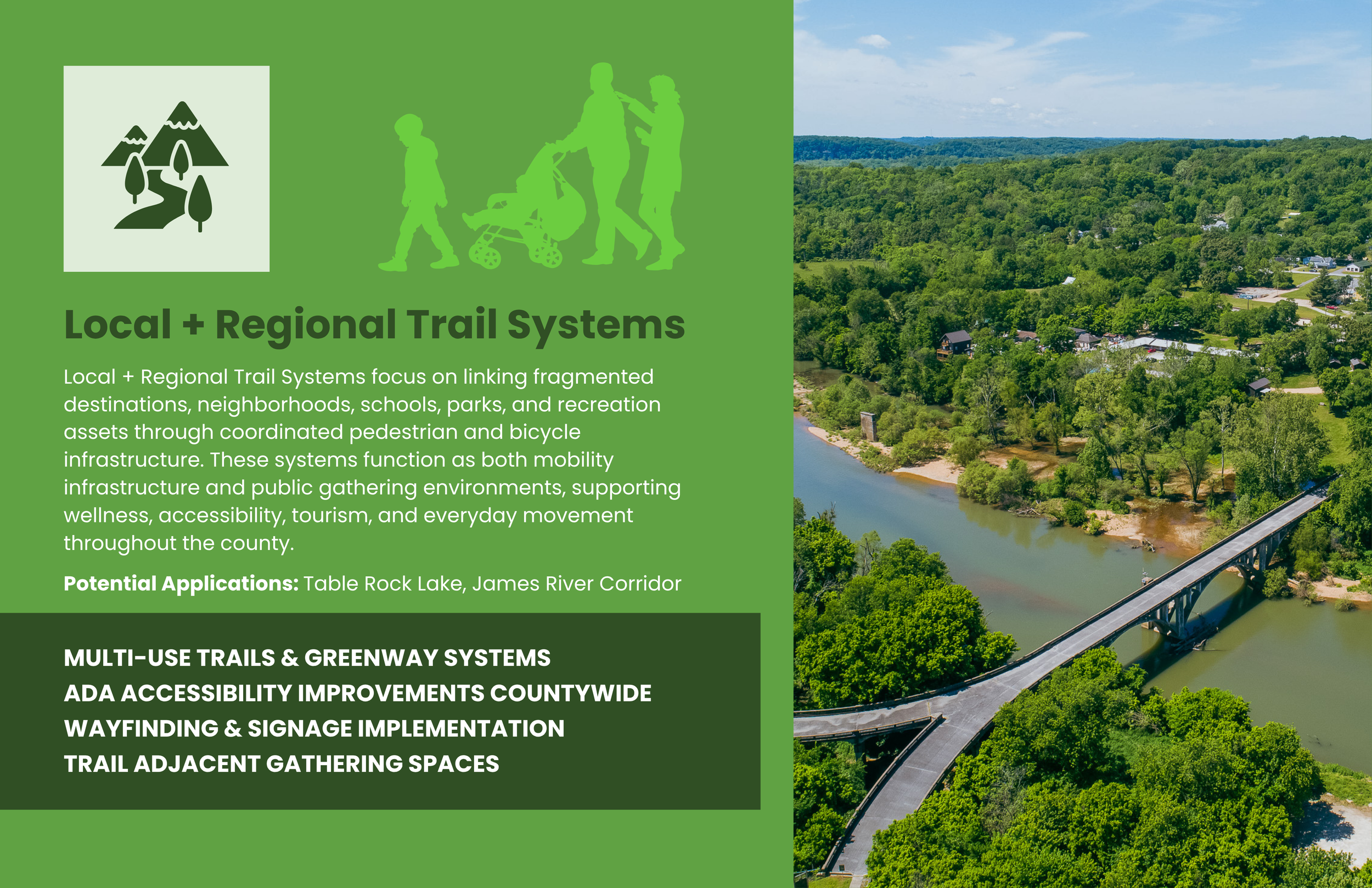
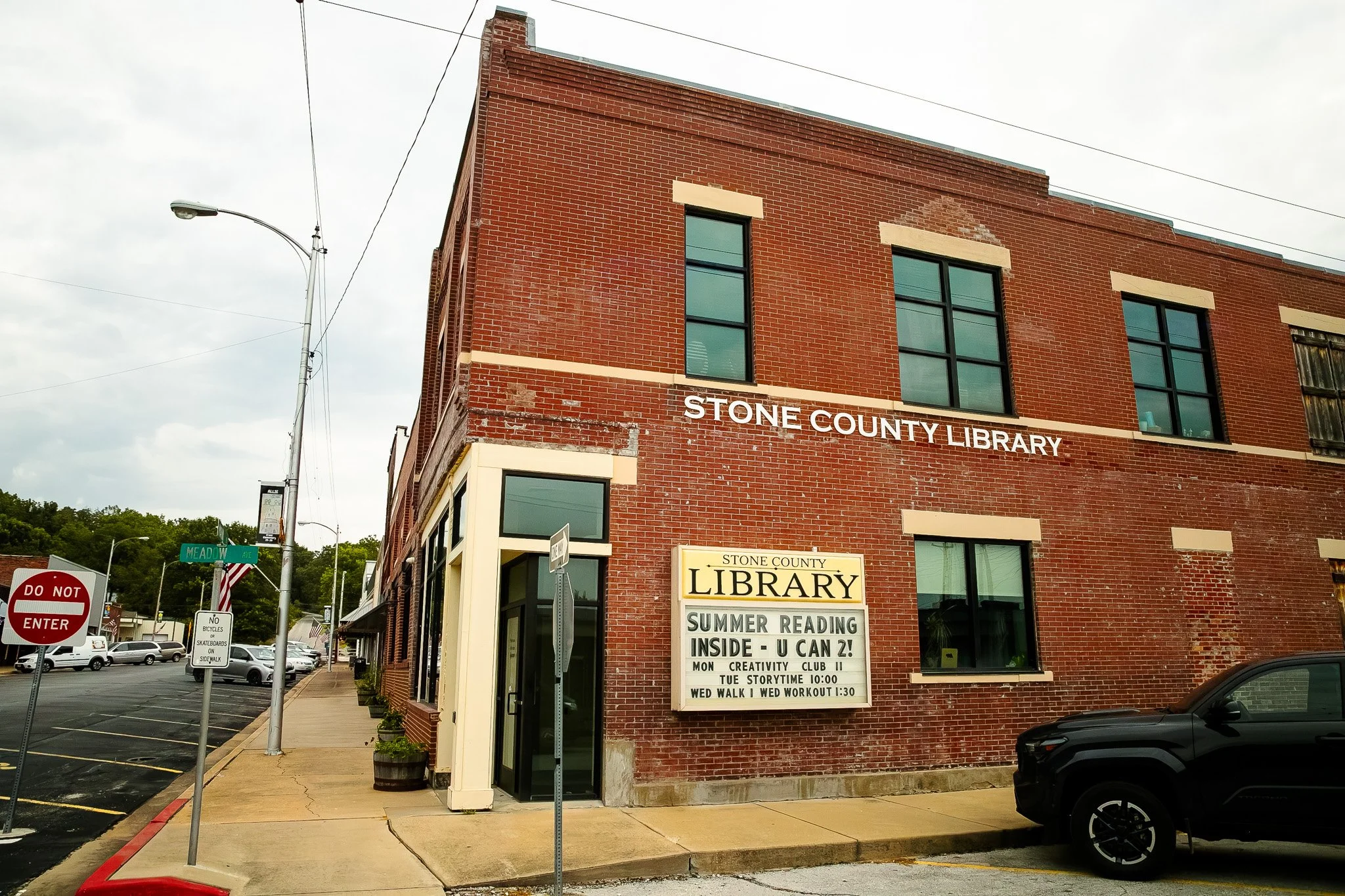
The project looked broadly at the places people already use. Parks and trails were considered alongside churches, schools, libraries, community centers, downtowns, waterfronts, restaurants, festival grounds, and informal gathering places. This approach helped reveal both the strength of Stone County’s existing social infrastructure and the geographic gaps that make access to community spaces more difficult in some parts of the county. The Action Team similarly defined gathering spaces broadly, including everything from parks and trails to churches, libraries, schools, river and lake access, markets, gardens, sidewalks, and plazas.
Research + Analysis
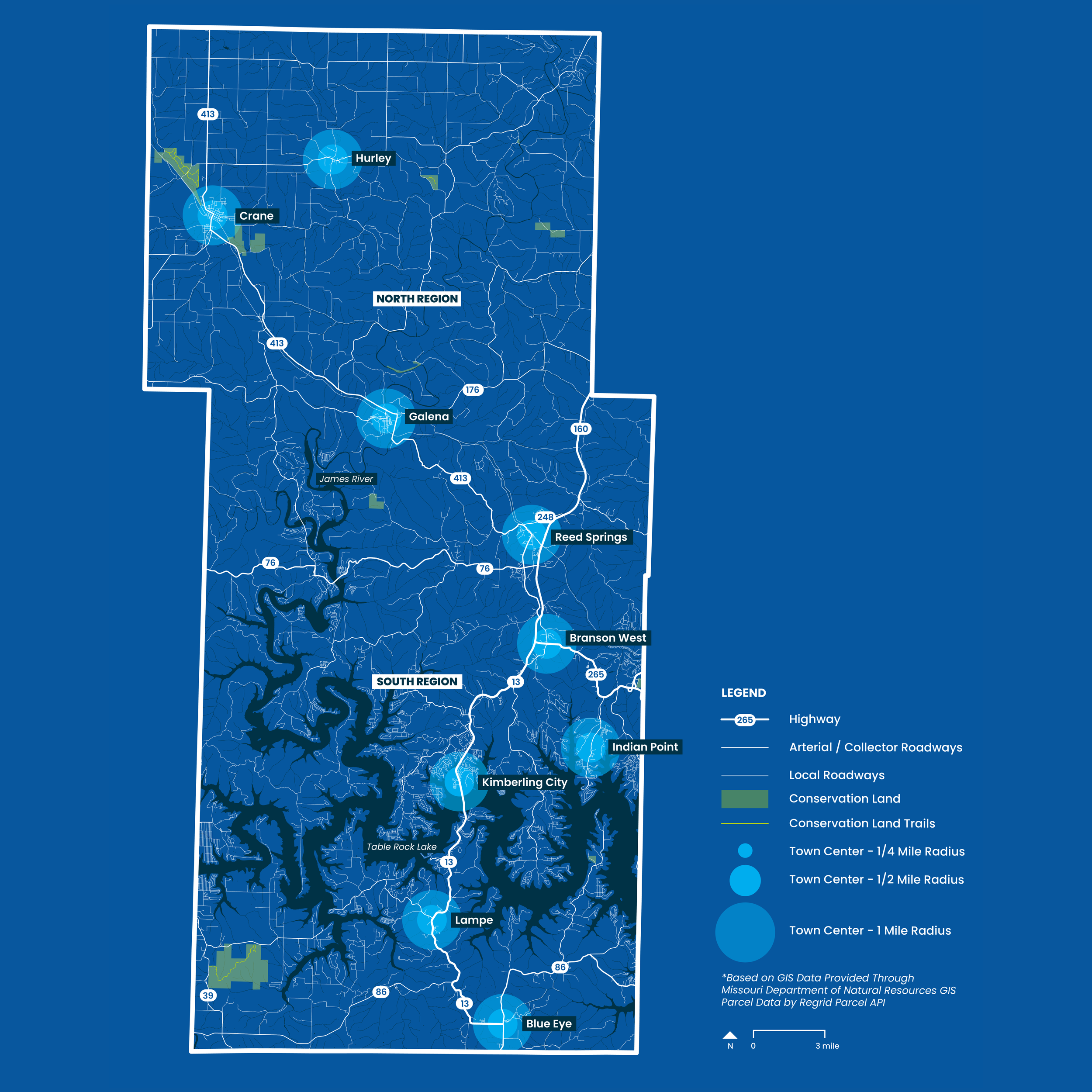
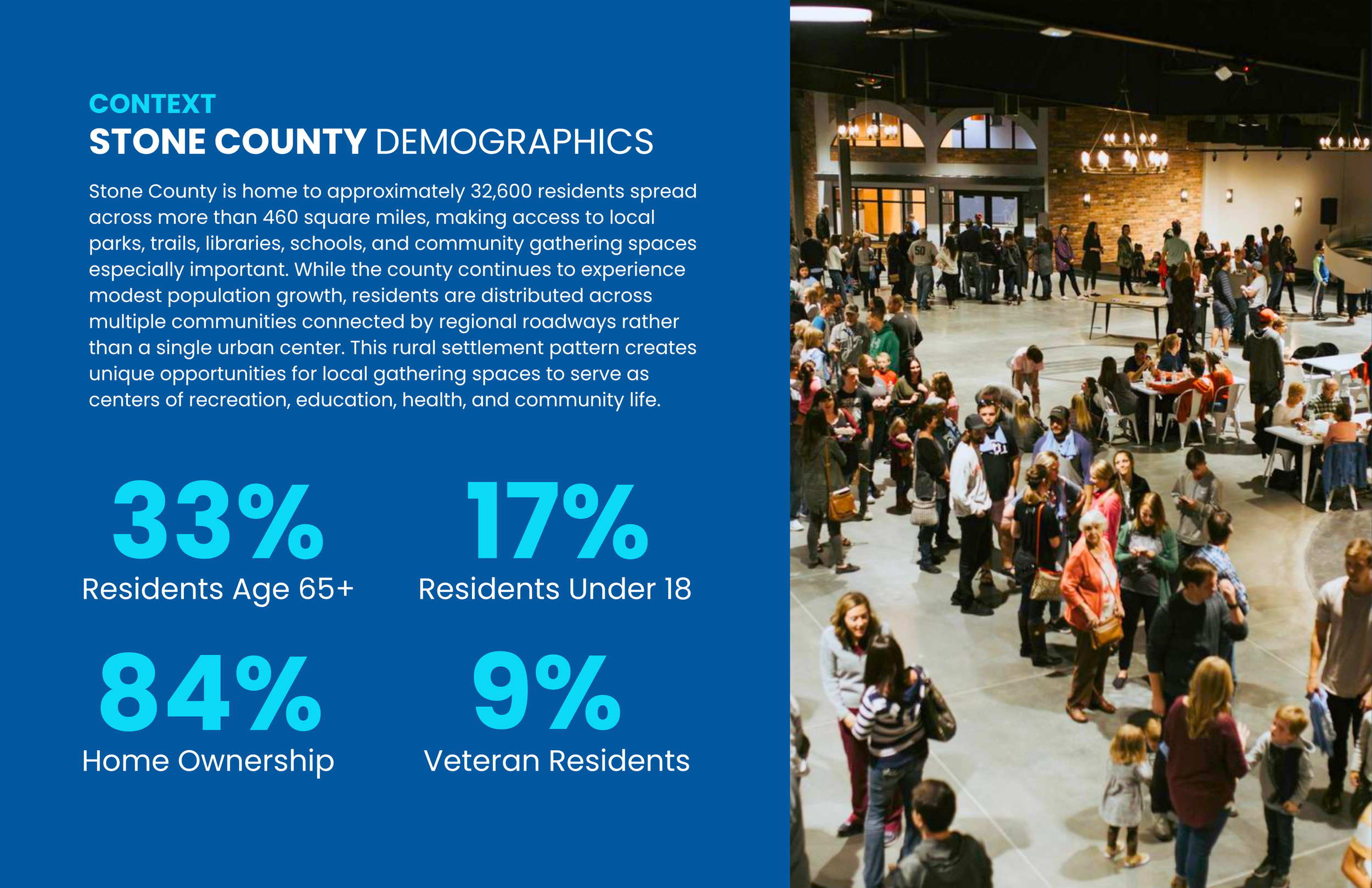
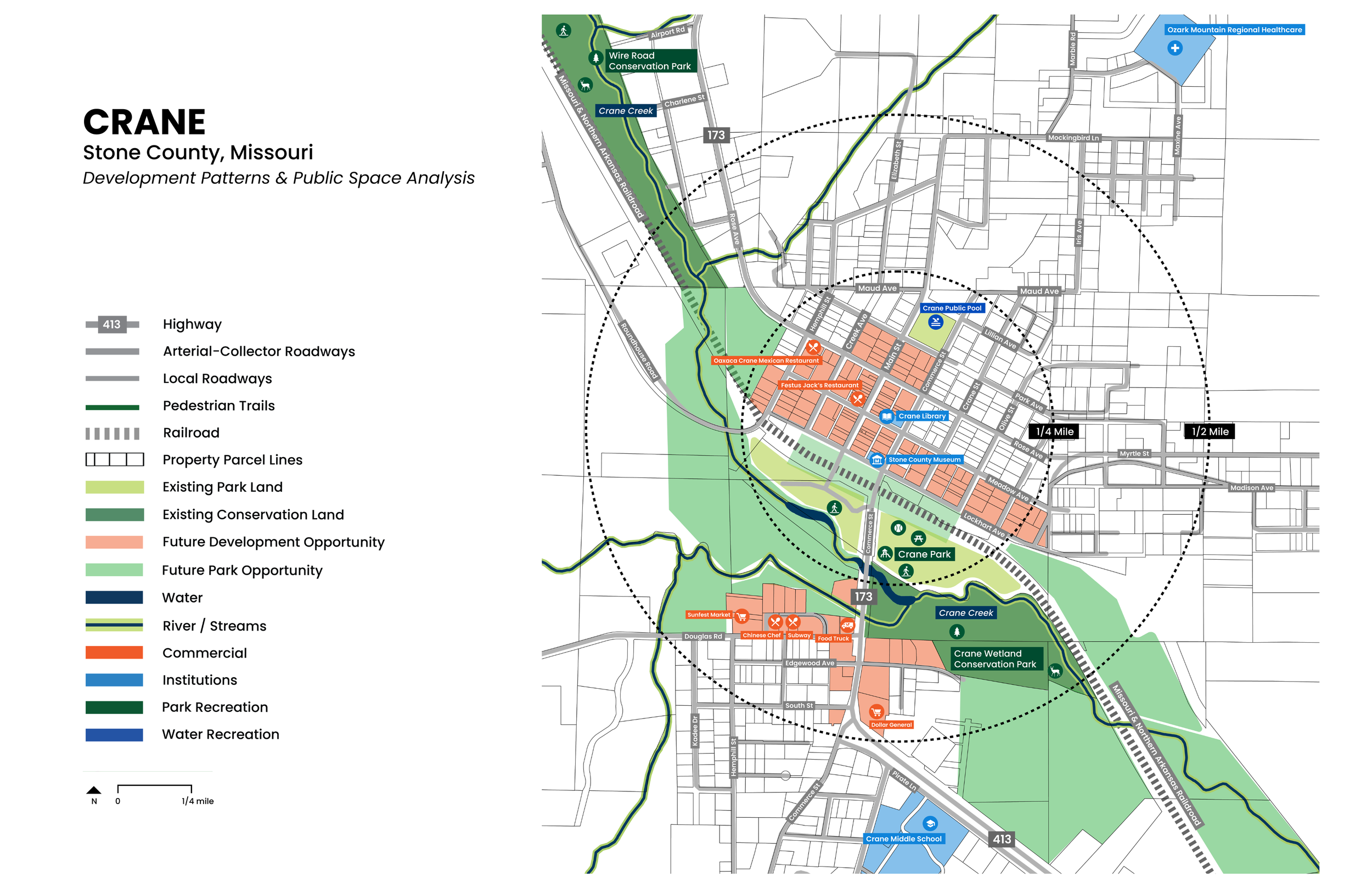
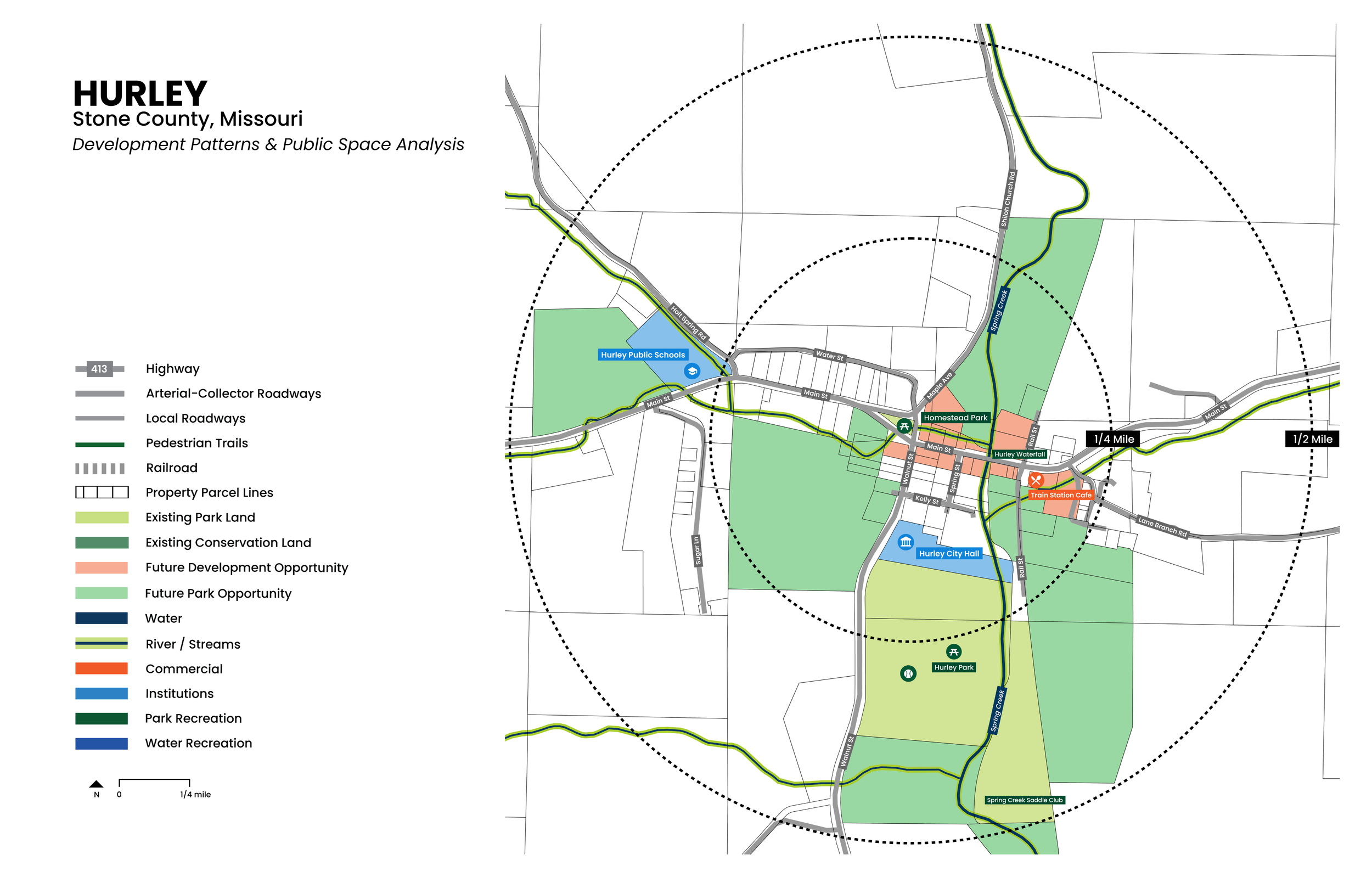
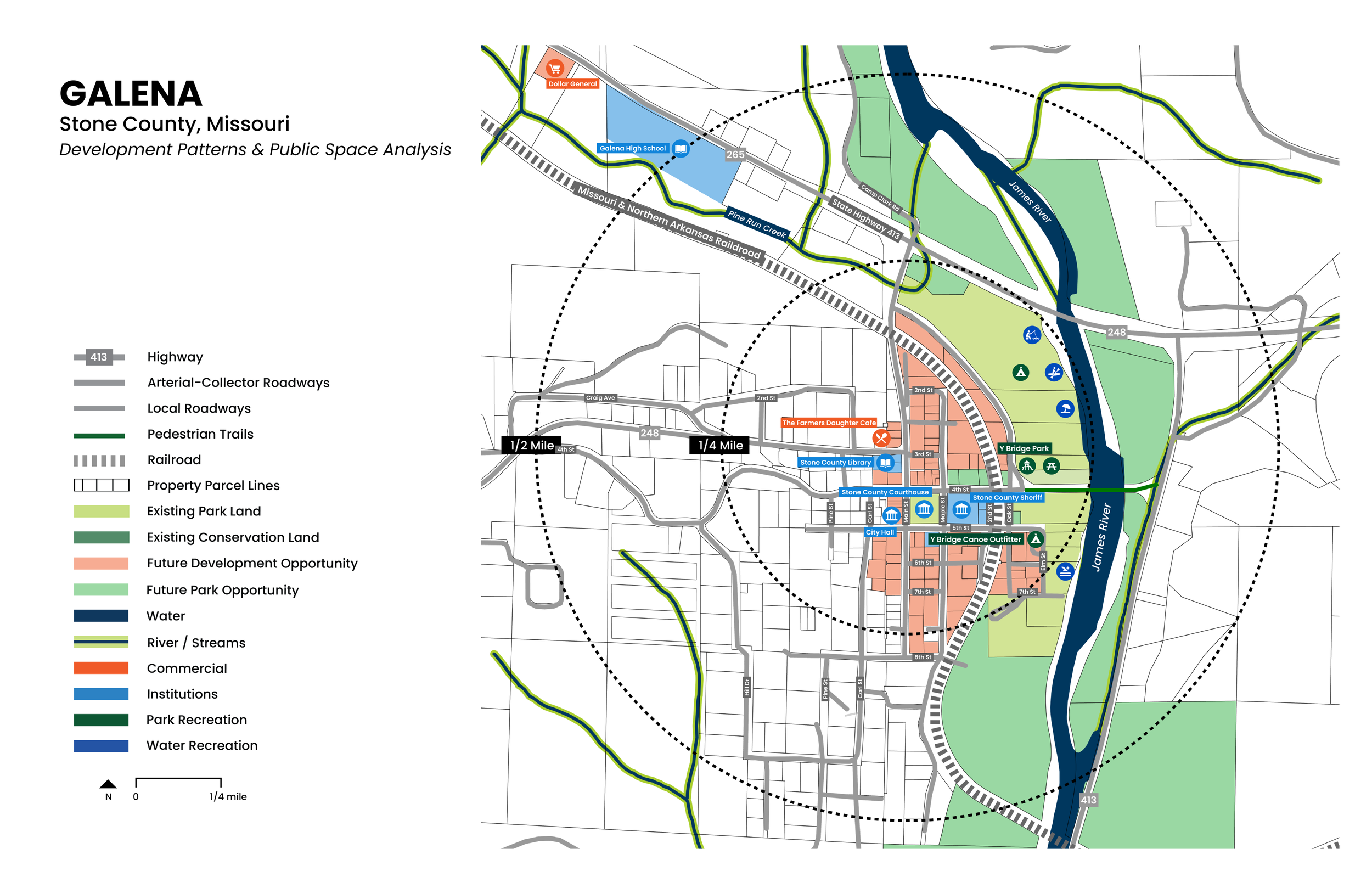
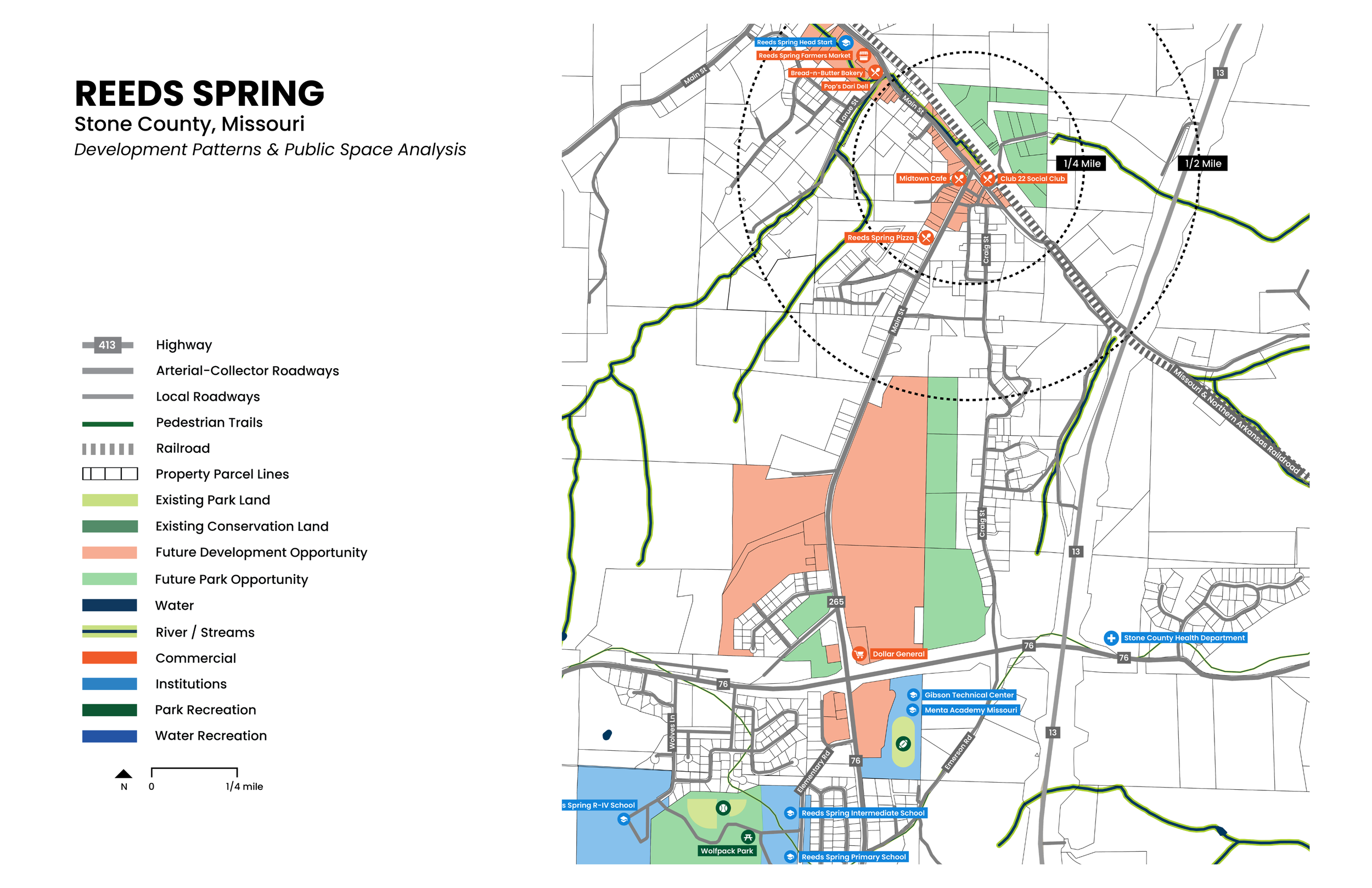
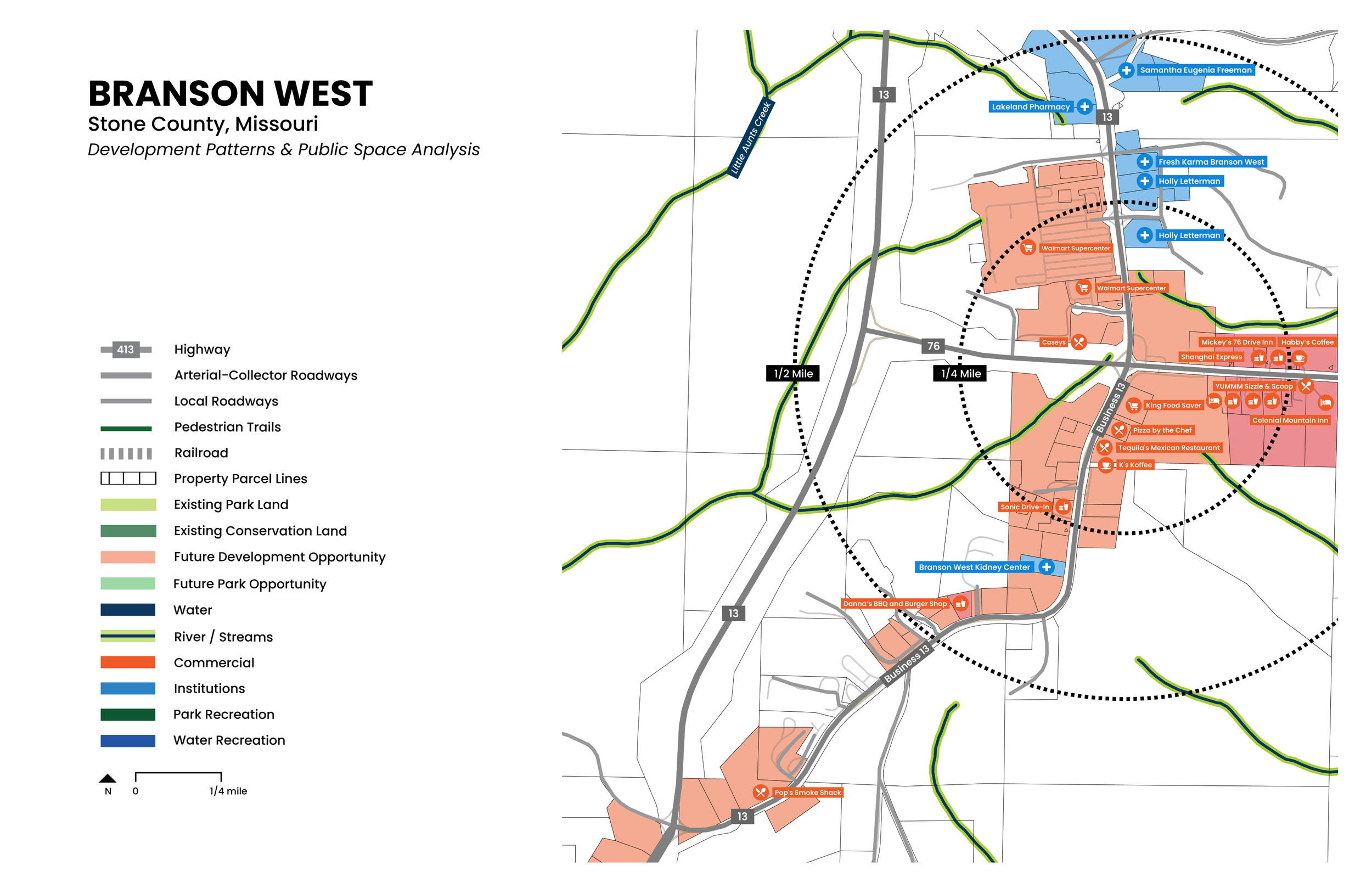
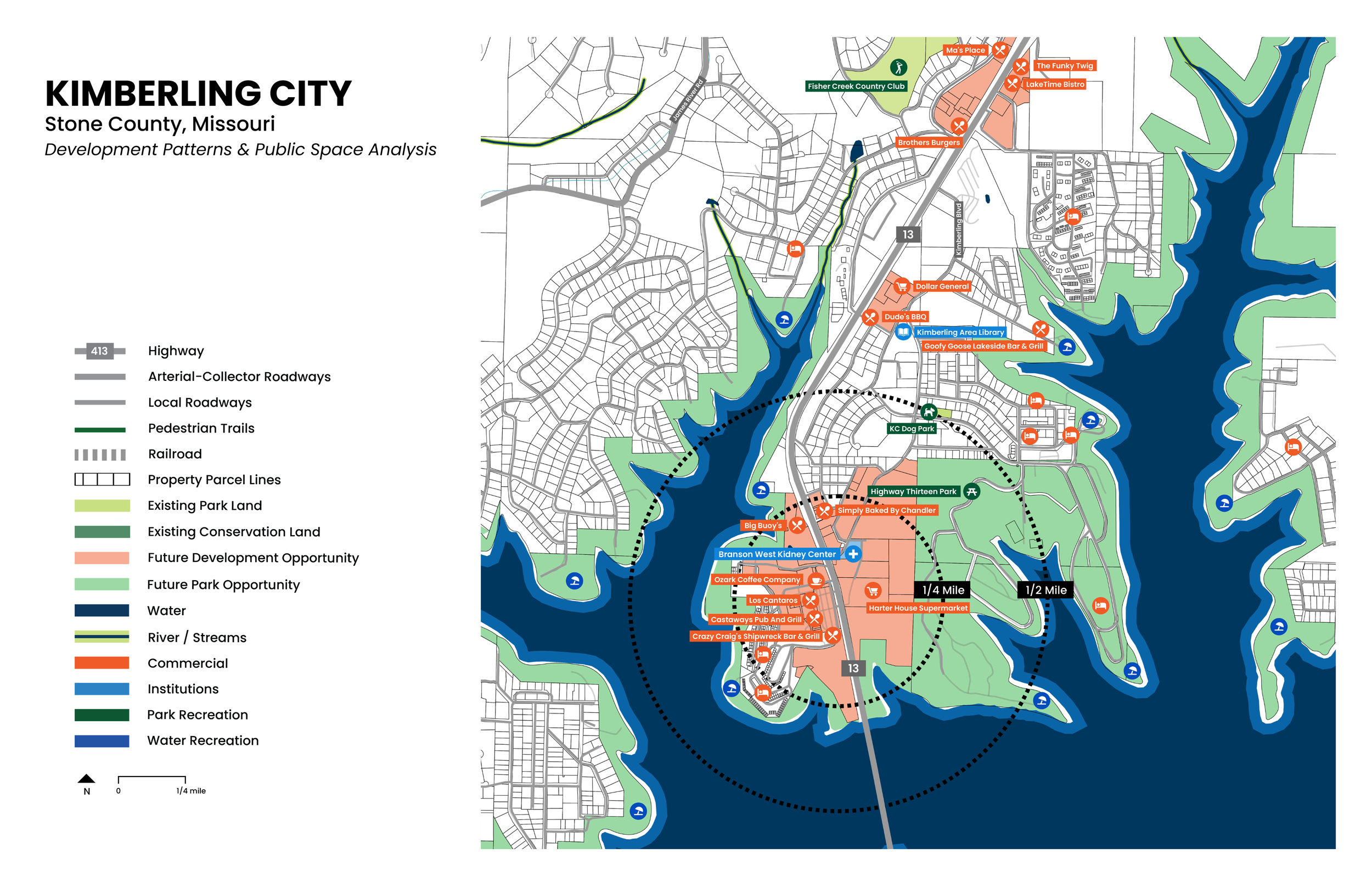
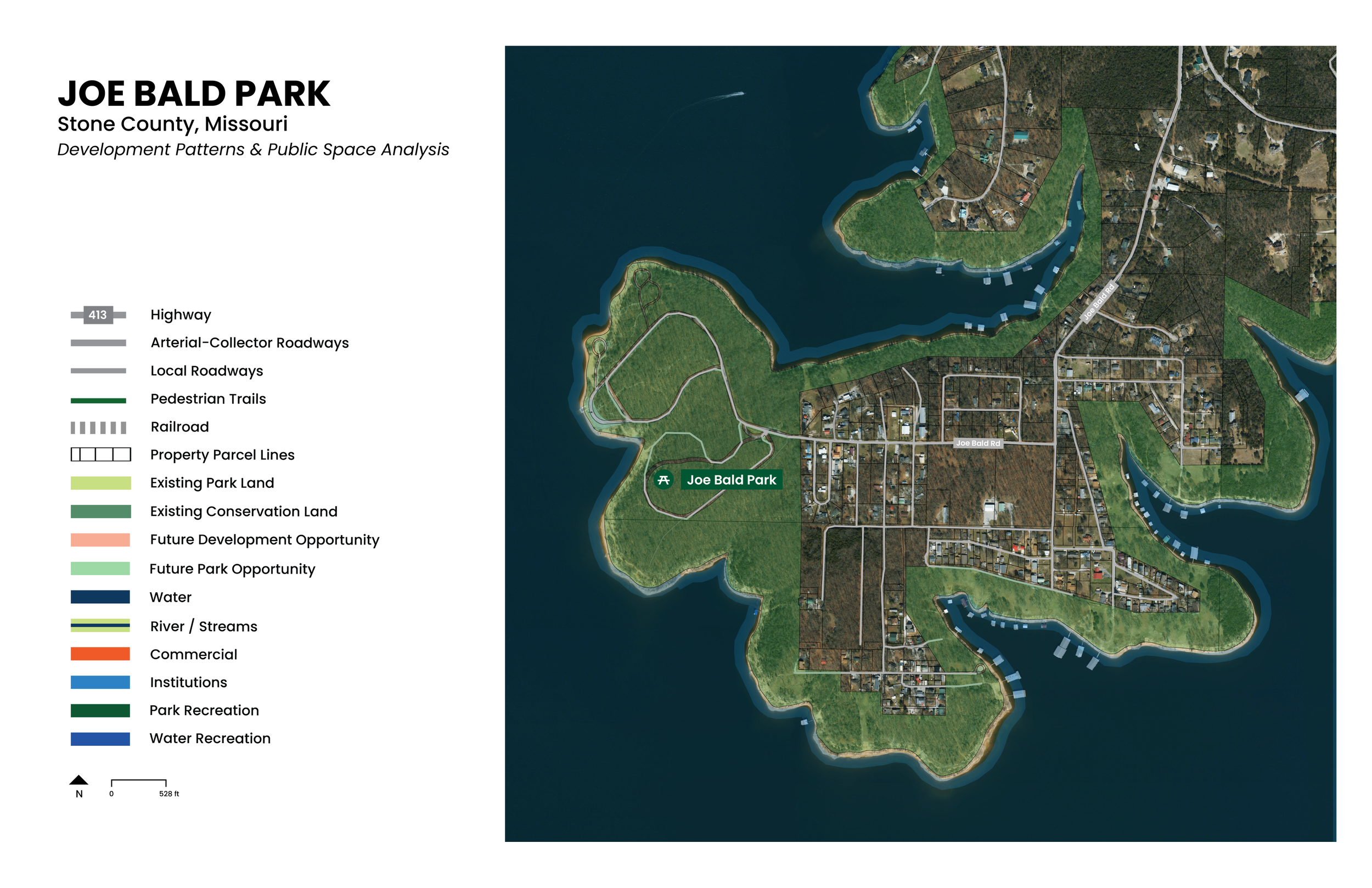
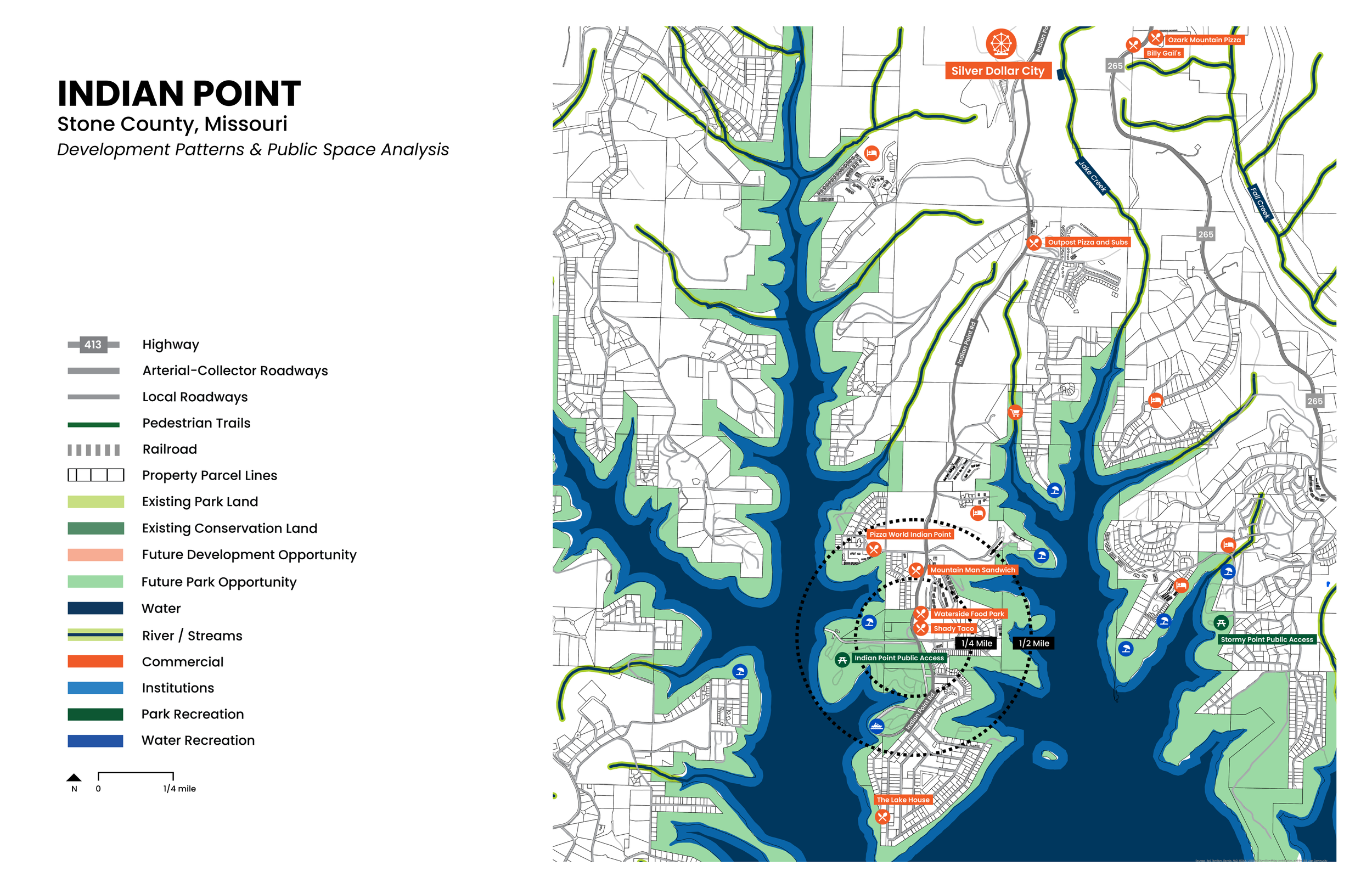
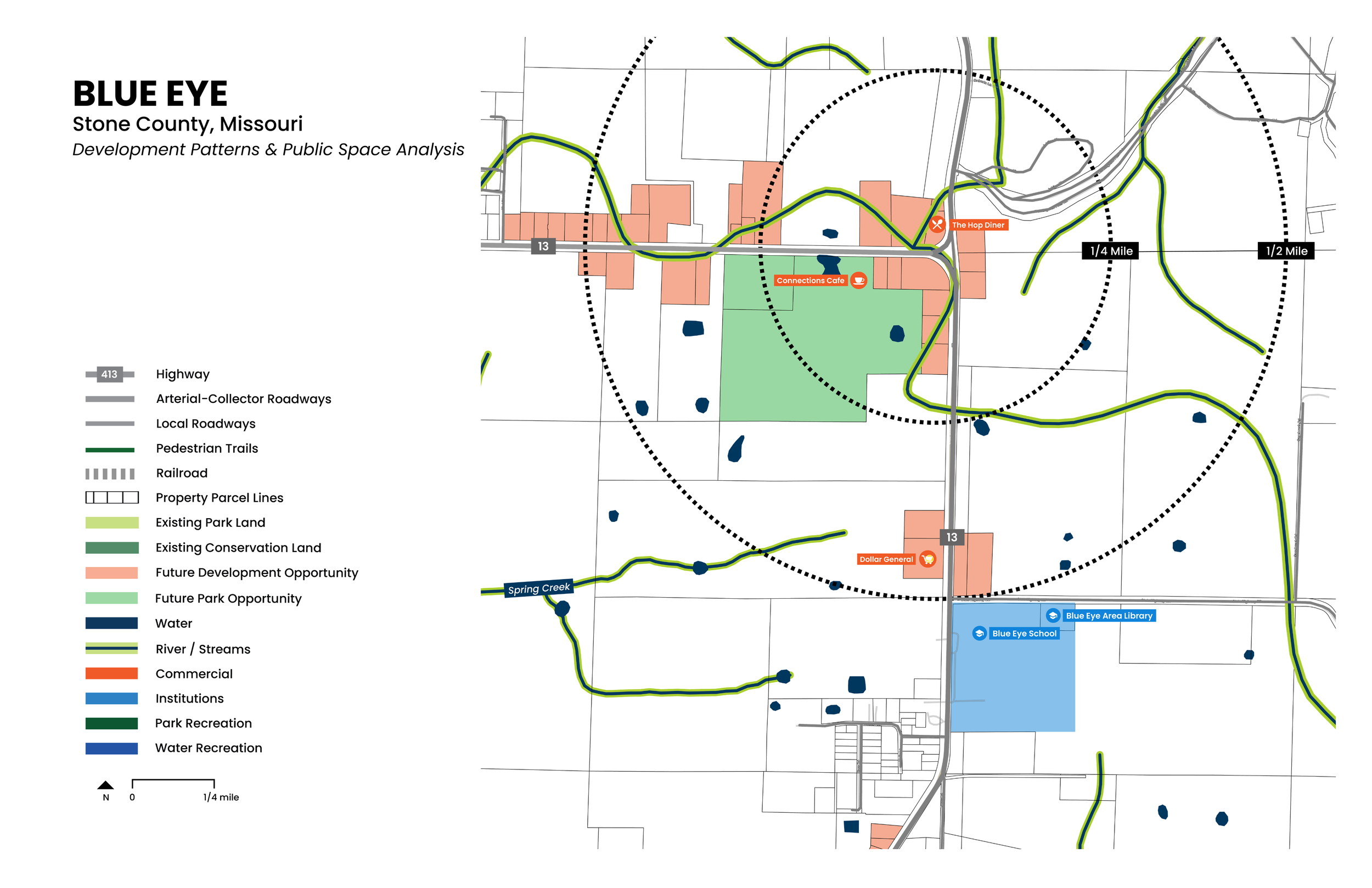
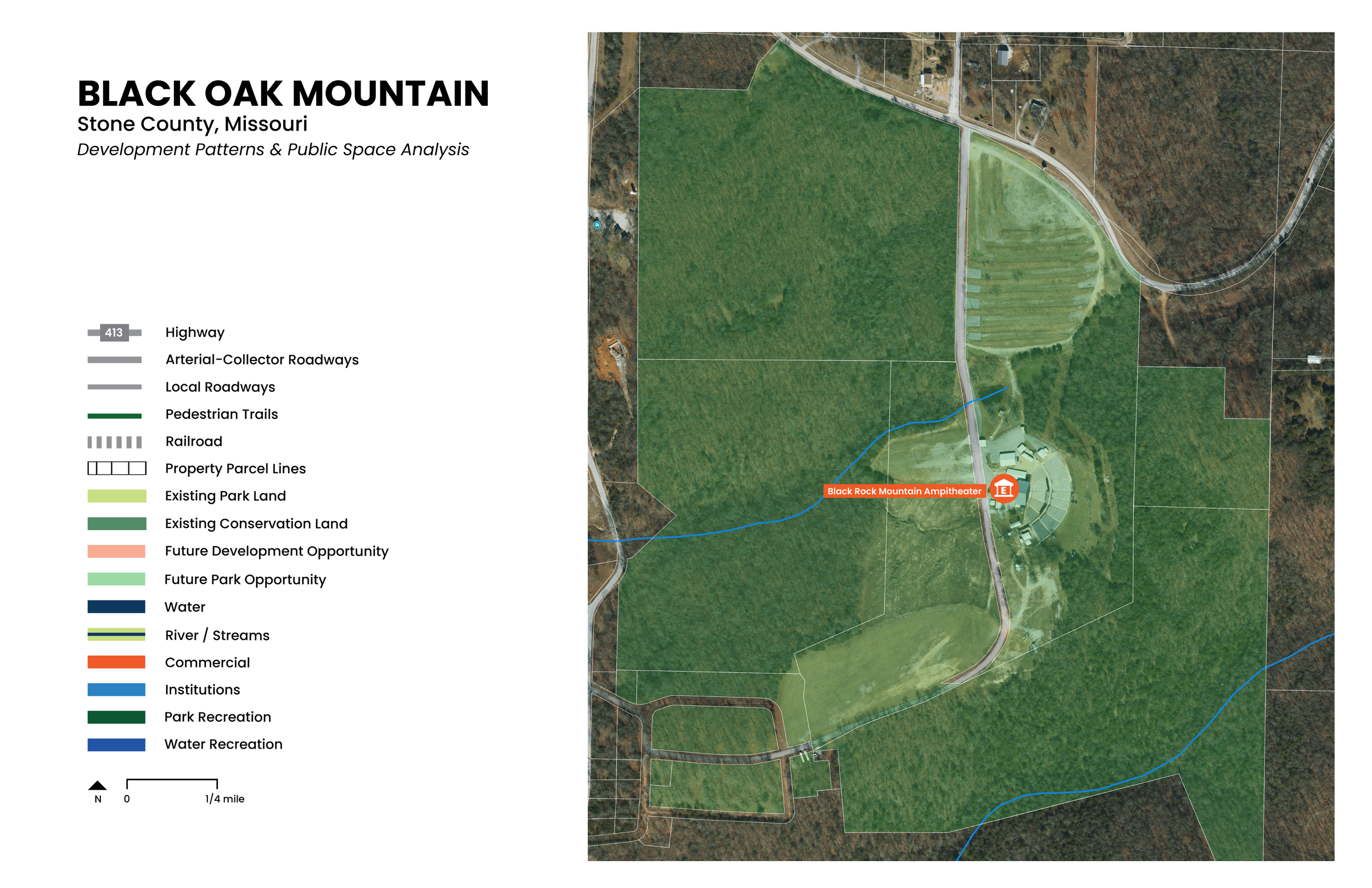
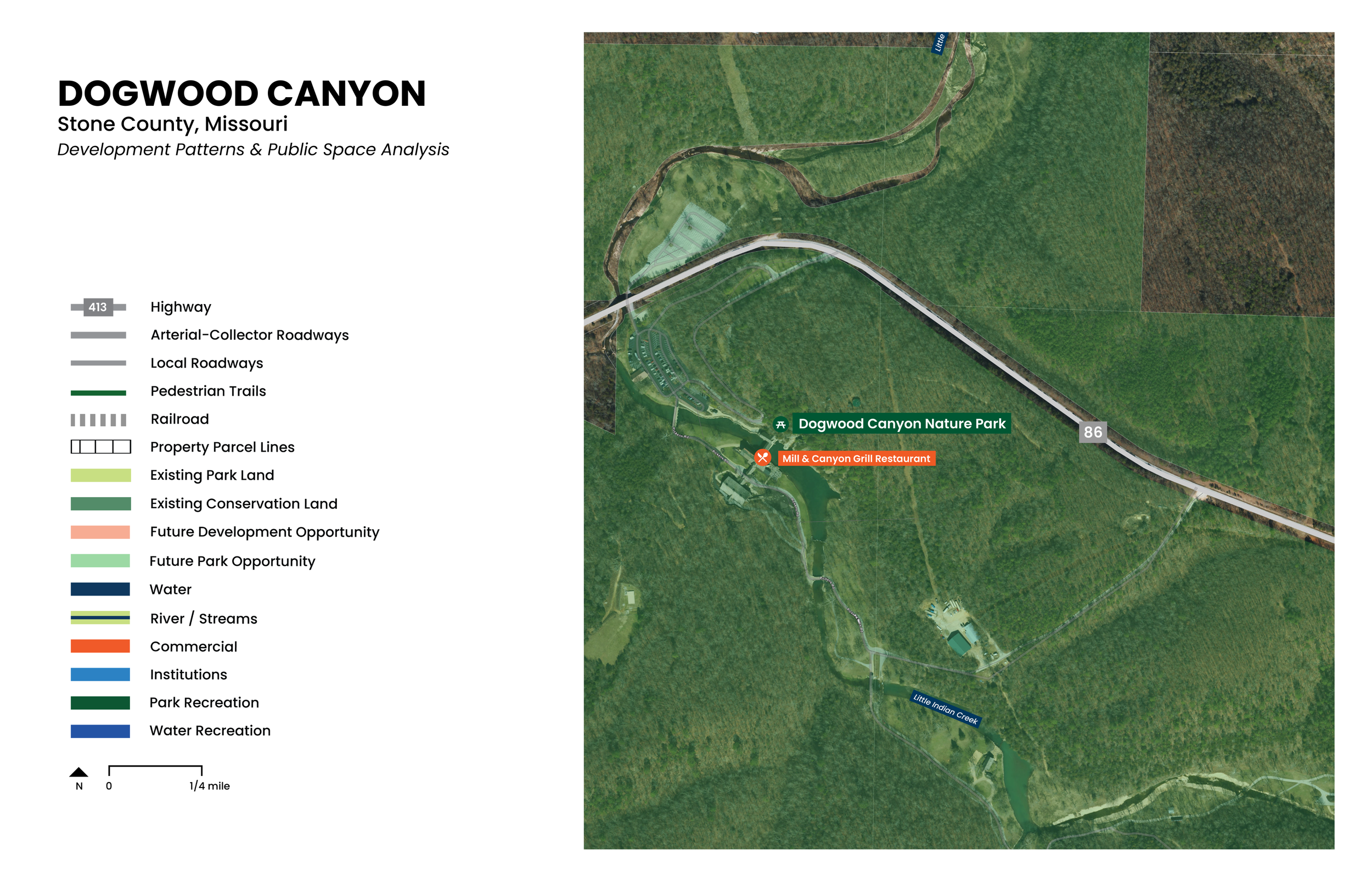
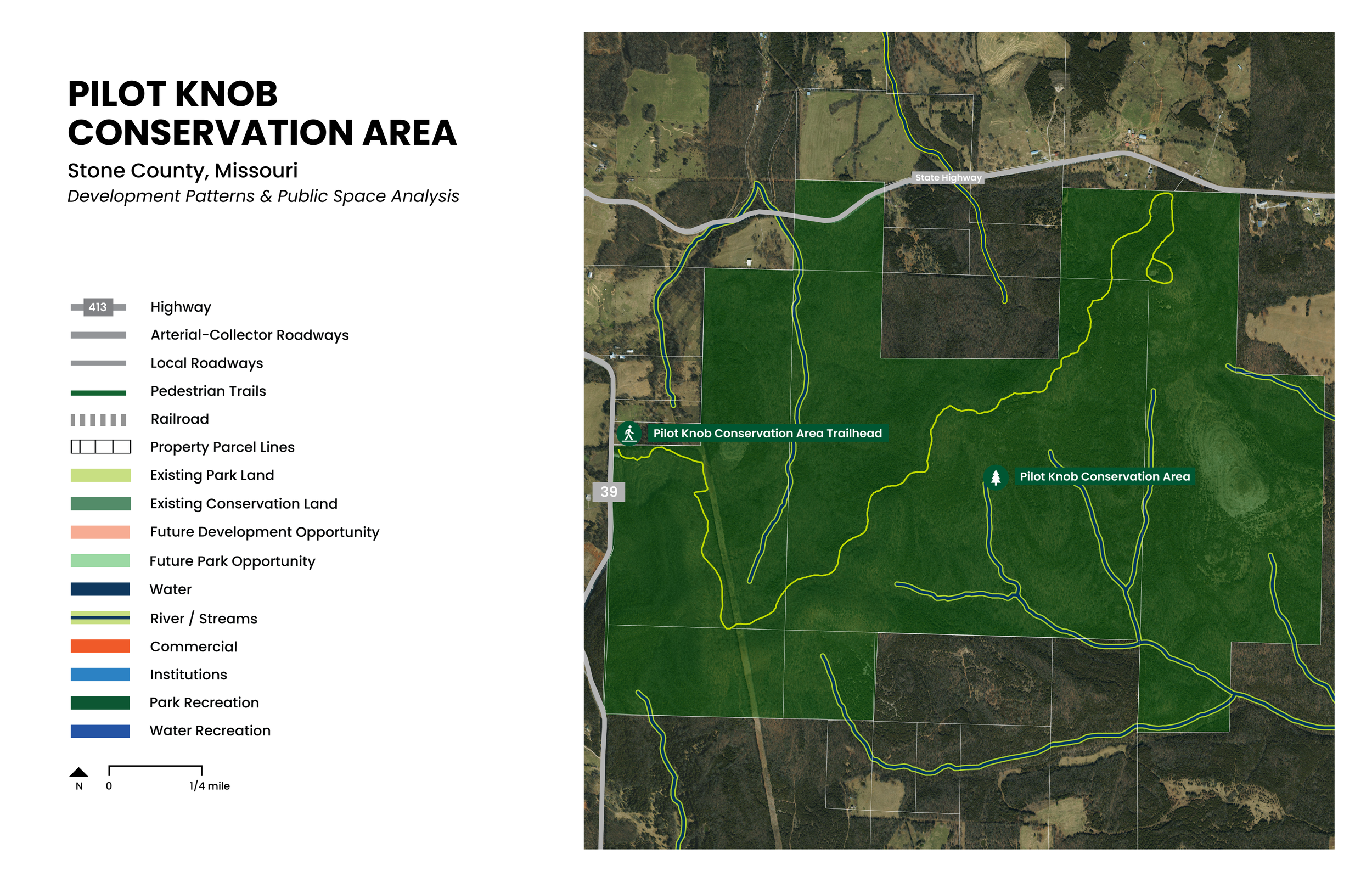
The first phase created a countywide inventory of the physical and social infrastructure supporting community life. Mapping and research examined parks and trails, churches and community centers, food access, tourism, education, healthcare, and other destinations to understand how resources are distributed across Stone County.
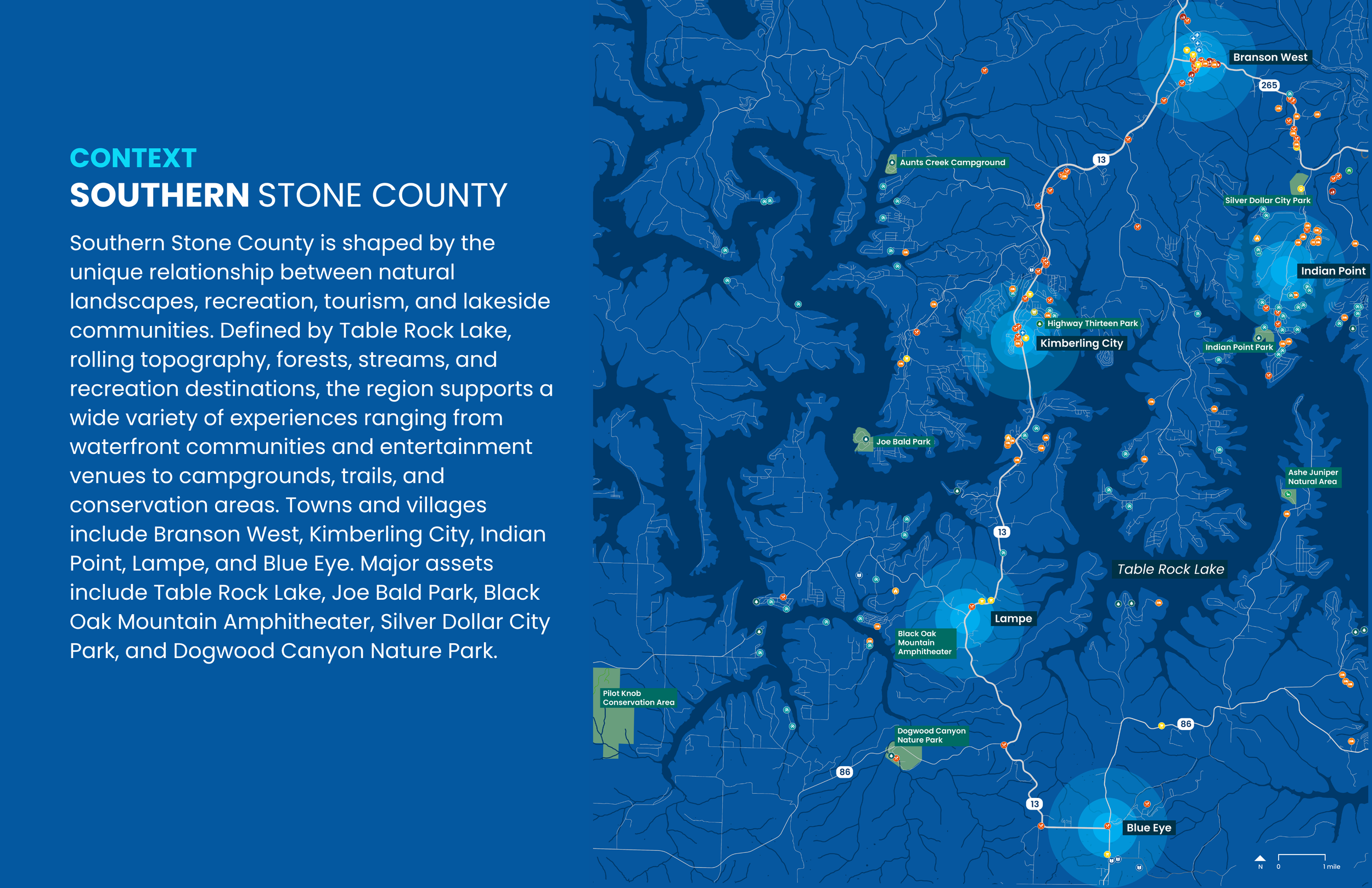
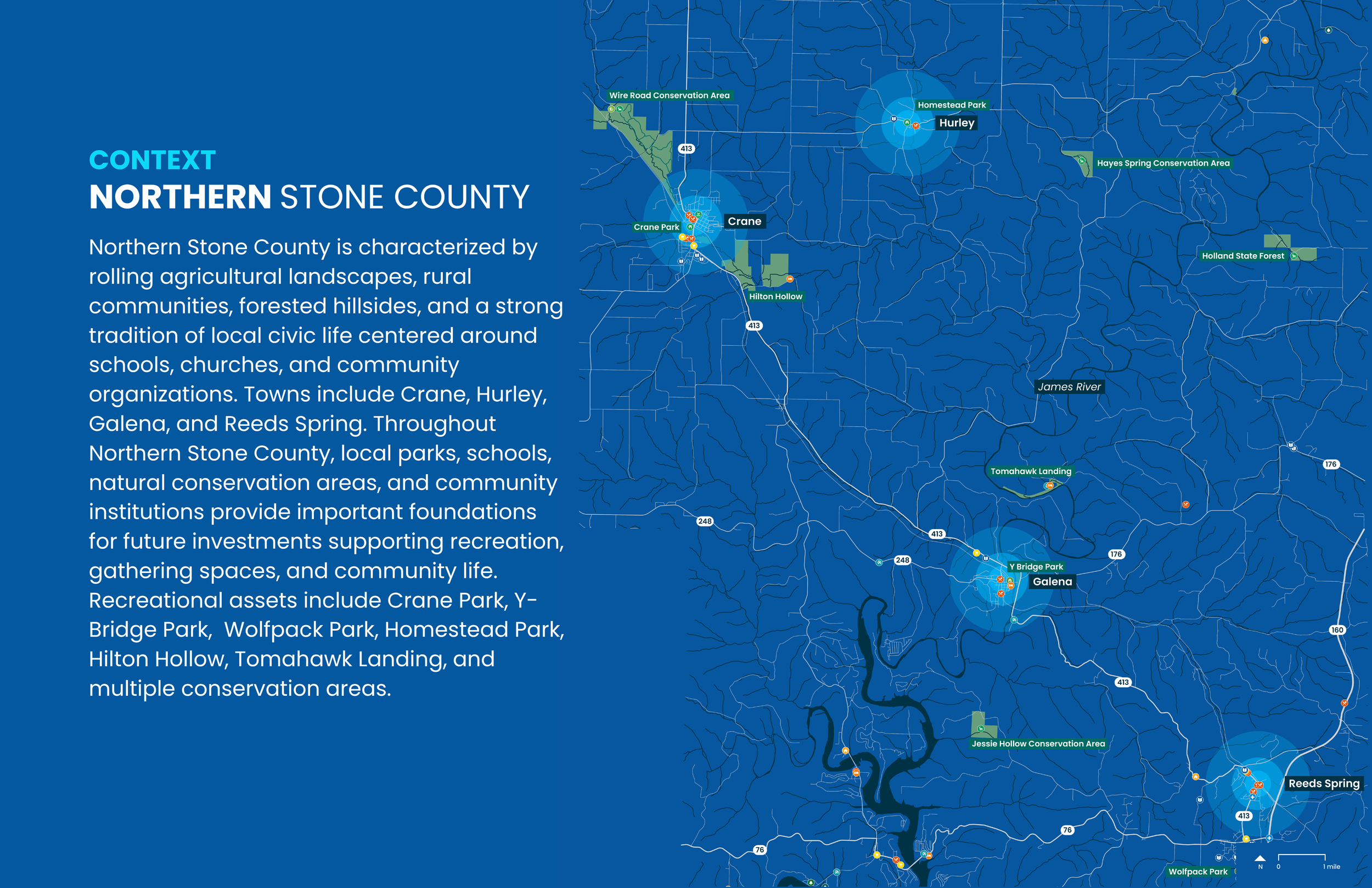
The analysis showed that access and opportunity vary considerably by geography. Some communities function as regional centers for food, healthcare, education, and everyday services, while more rural areas rely heavily on churches, schools, natural landscapes, and smaller community facilities. Table Rock Lake supports an extensive recreation and tourism economy, but those assets do not always correspond with the everyday gathering space and service needs of year round residents. The research established a framework for different types and scales of investment in different communities.
Community Engagement
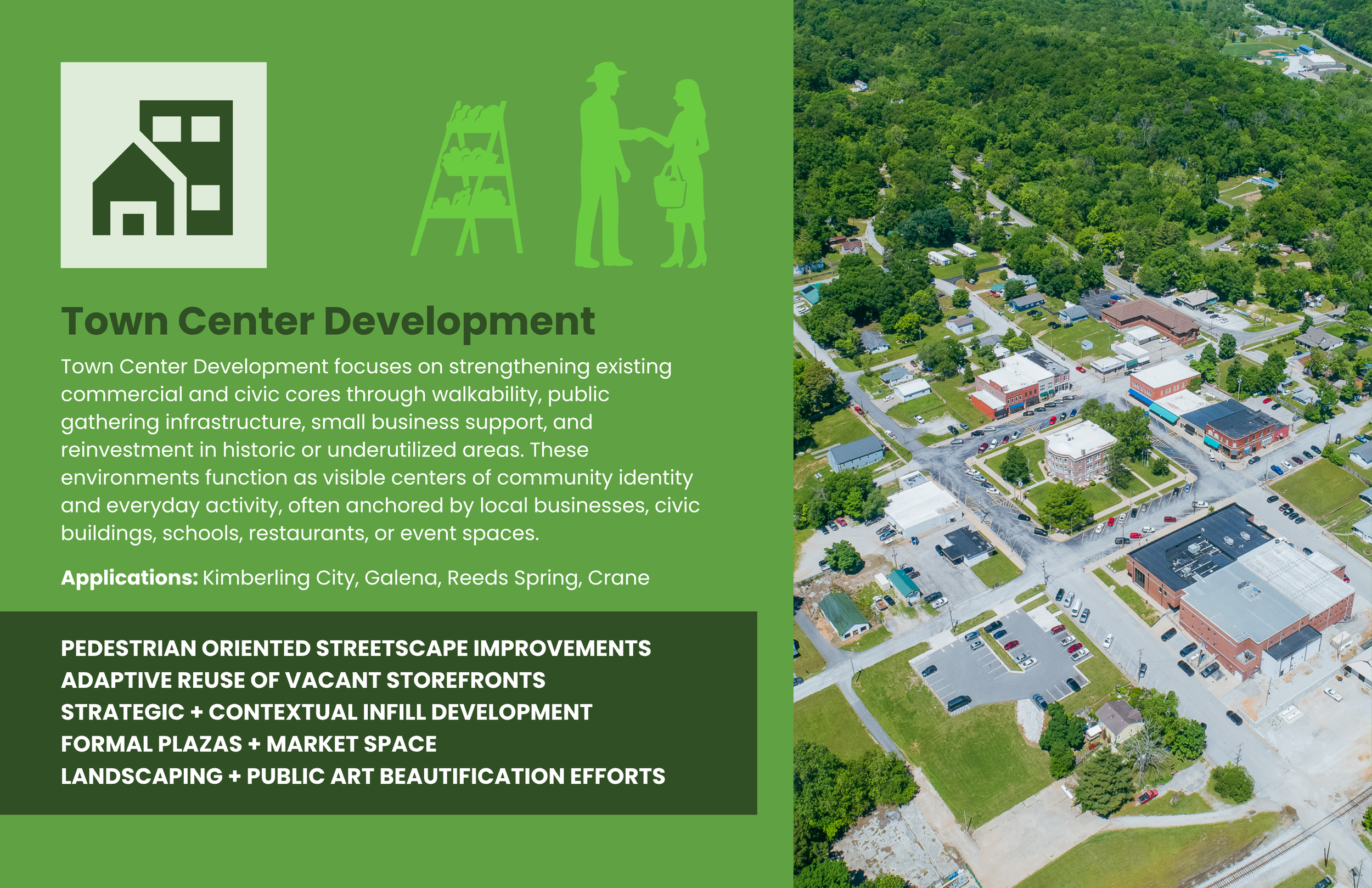
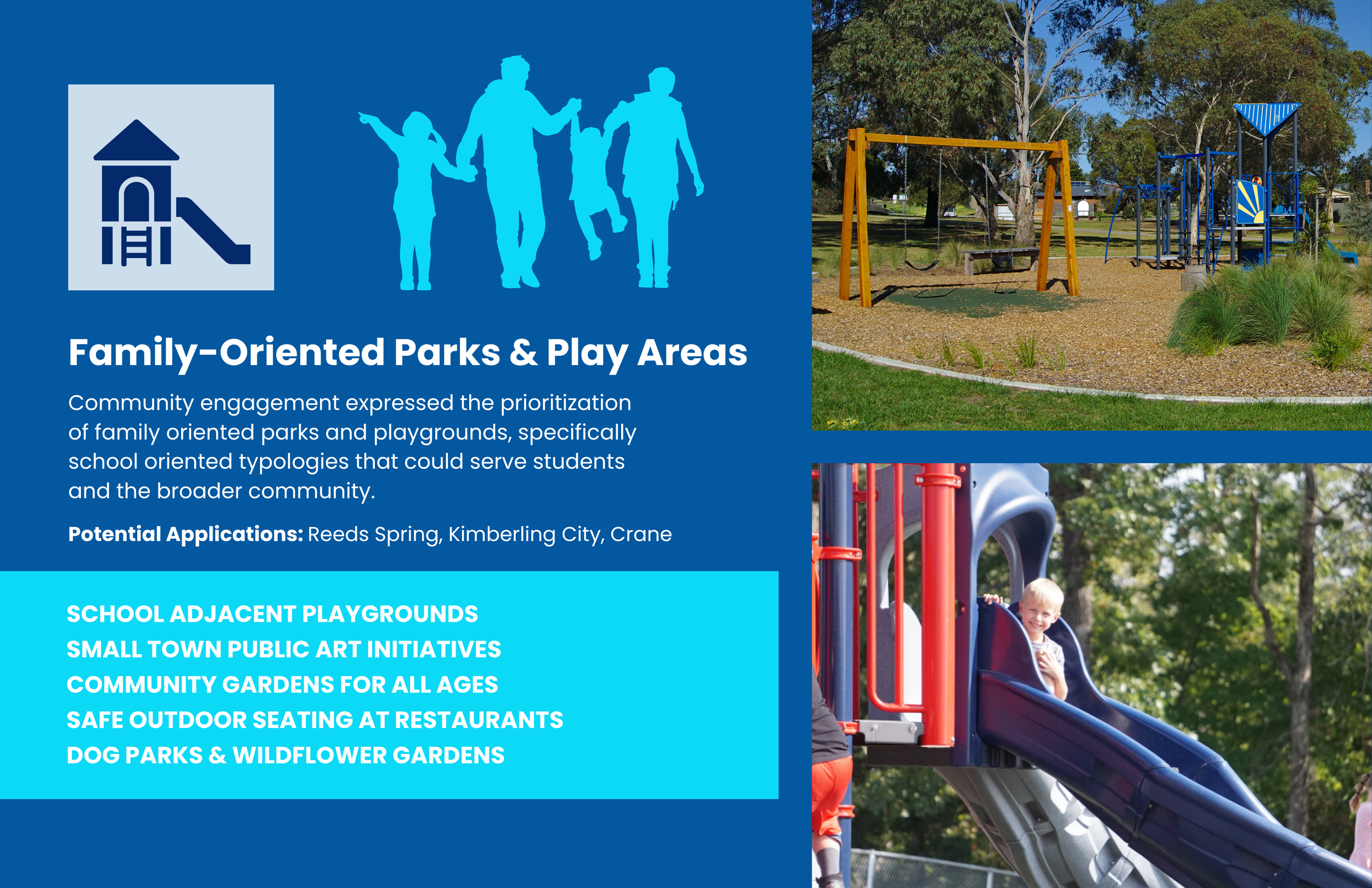
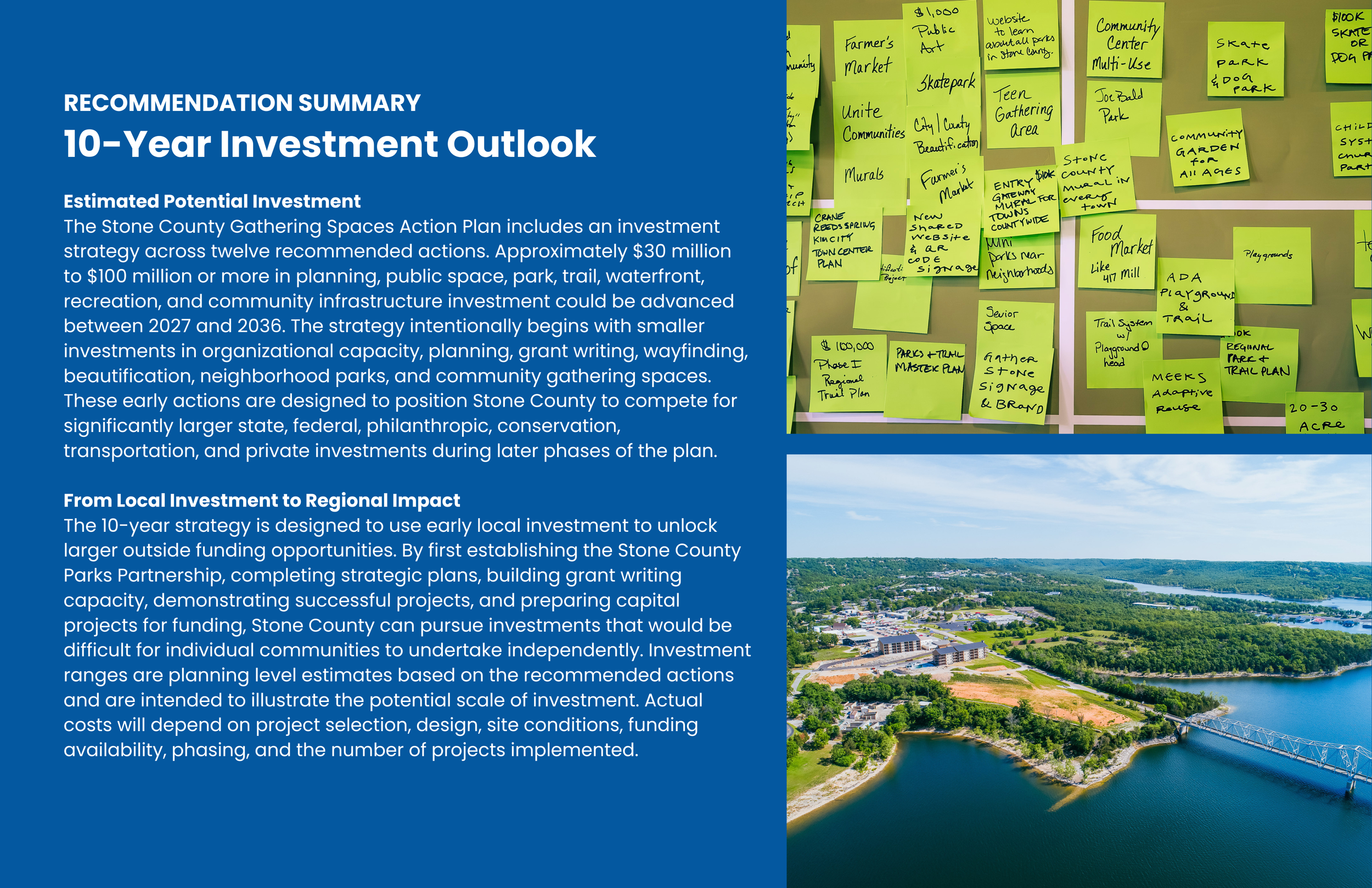
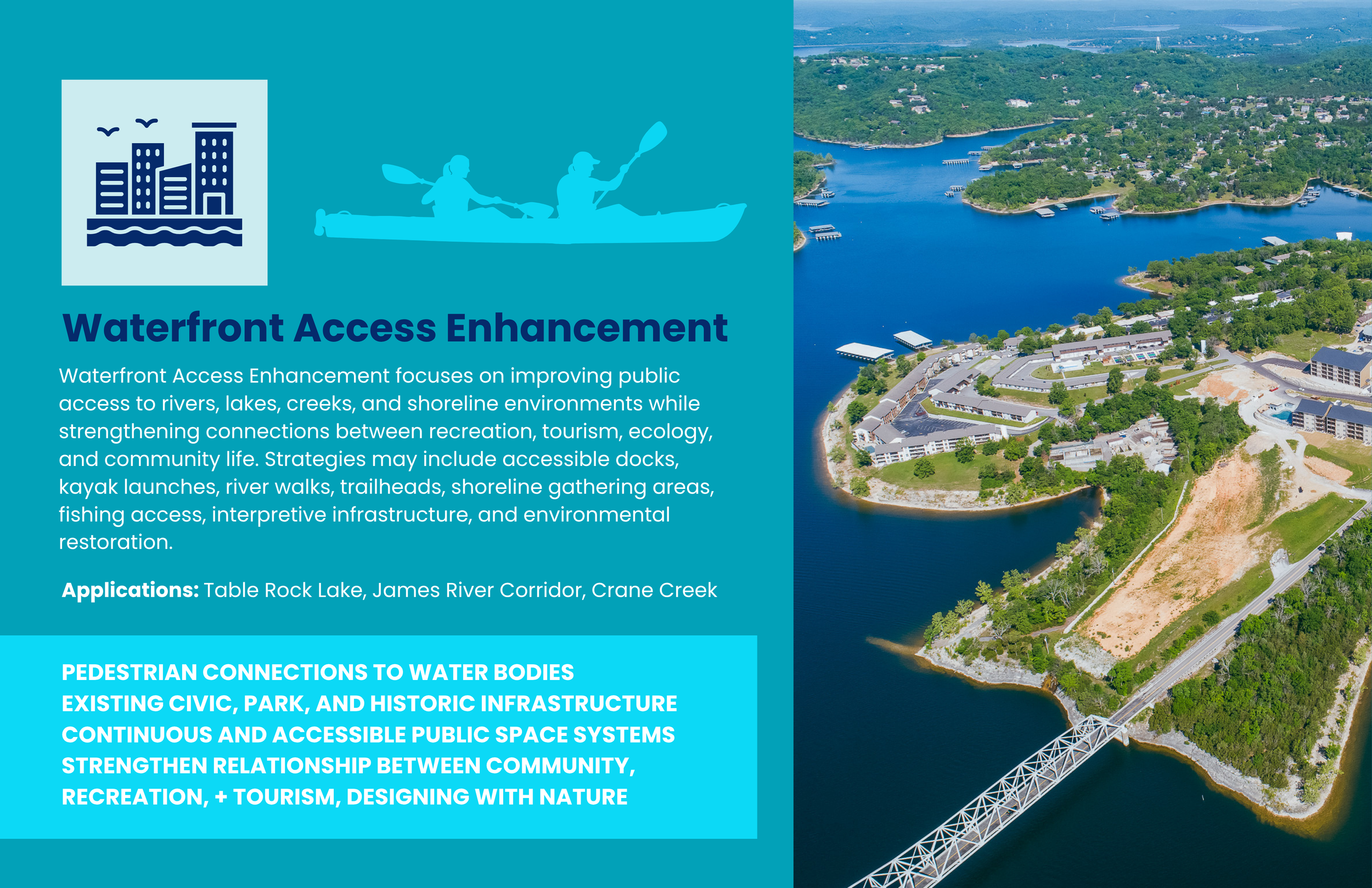
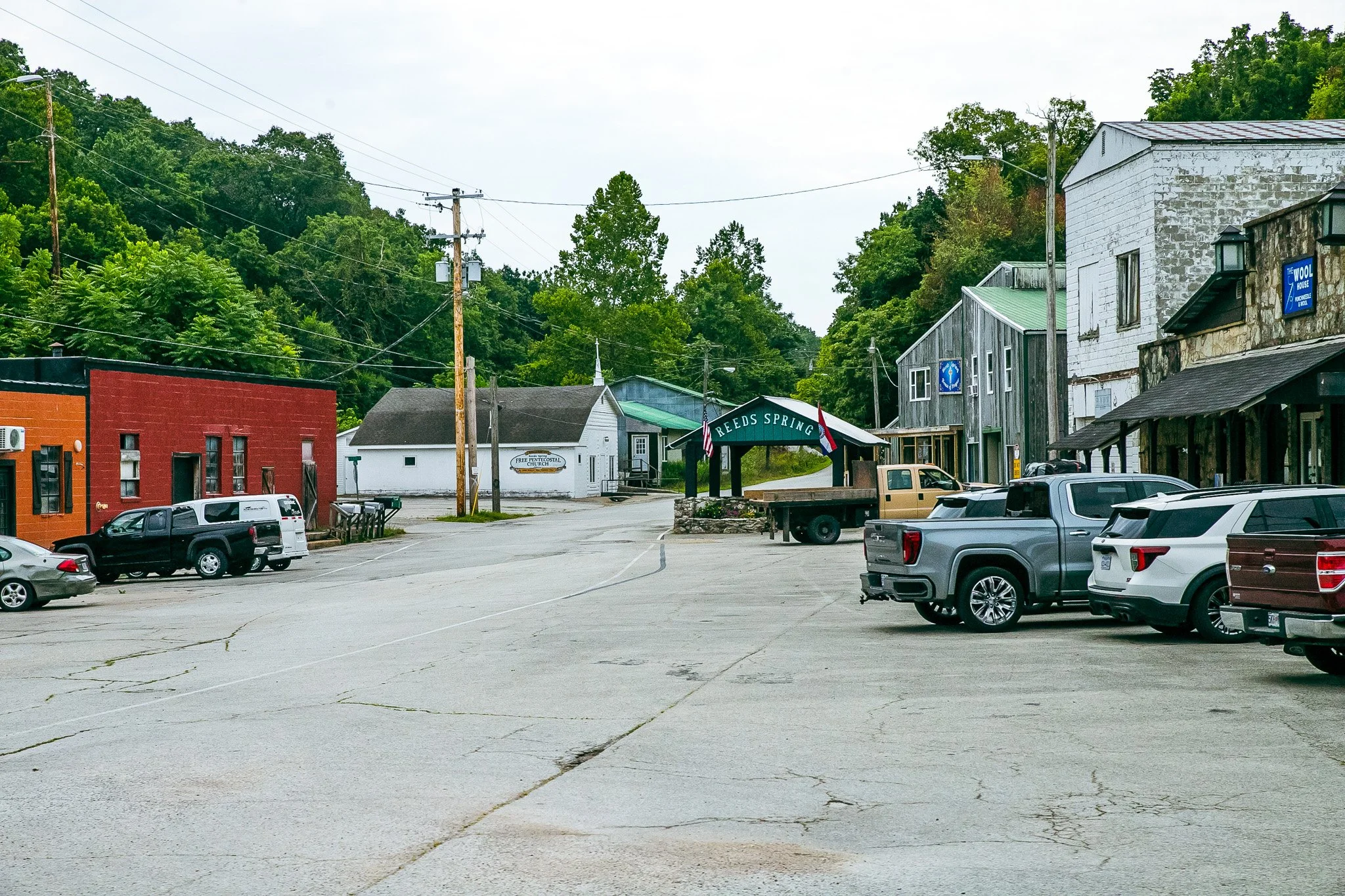
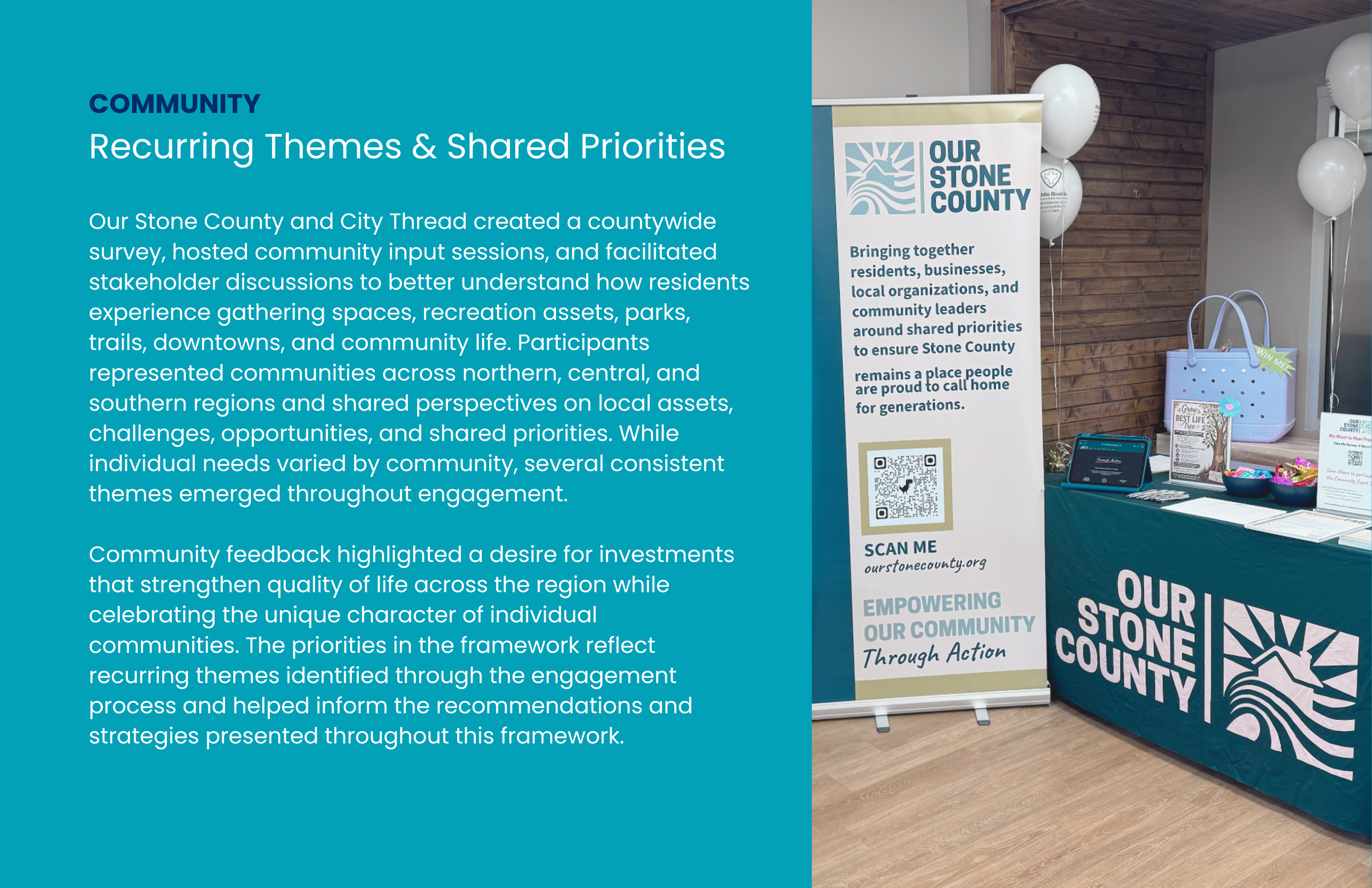
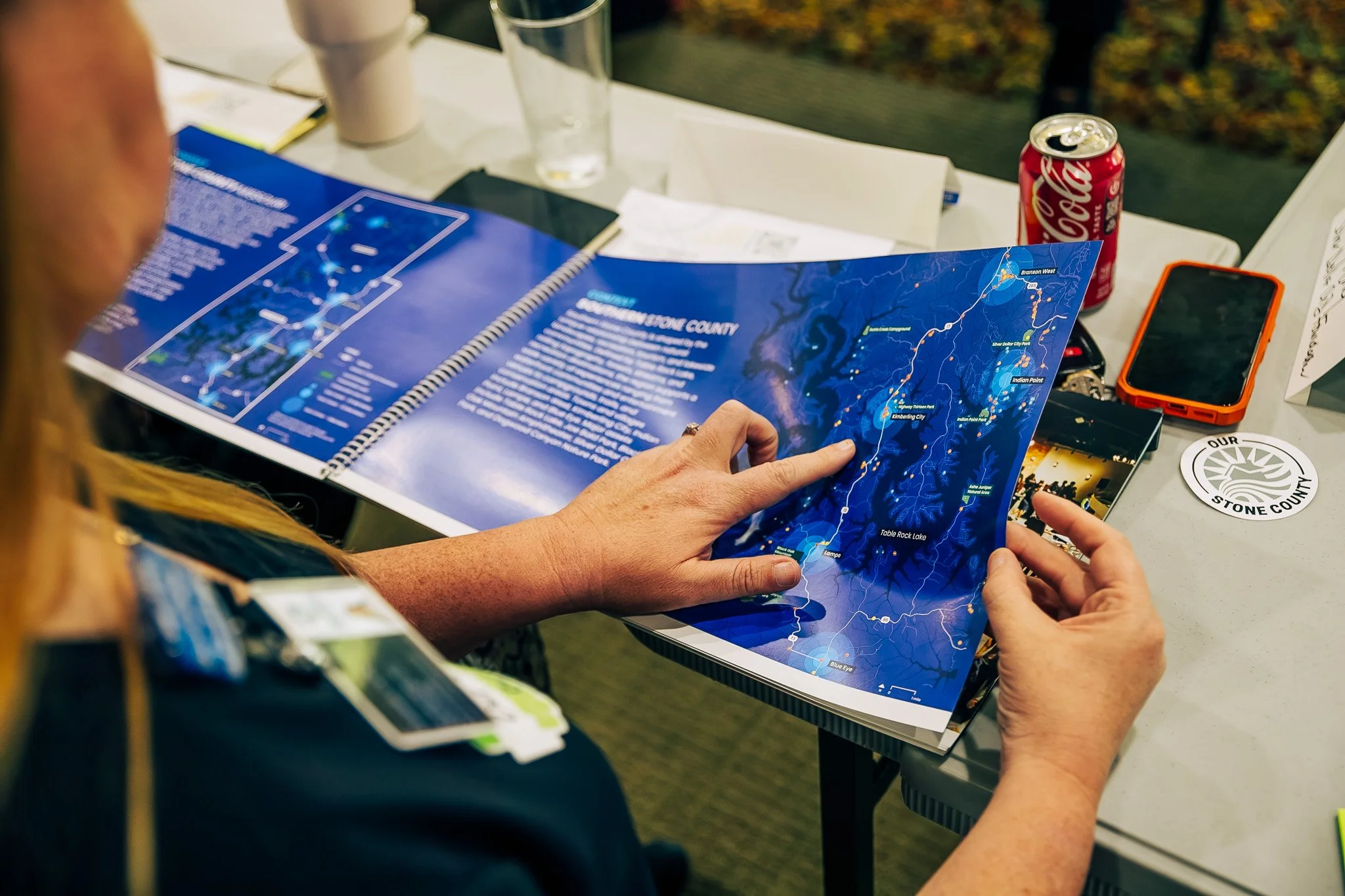
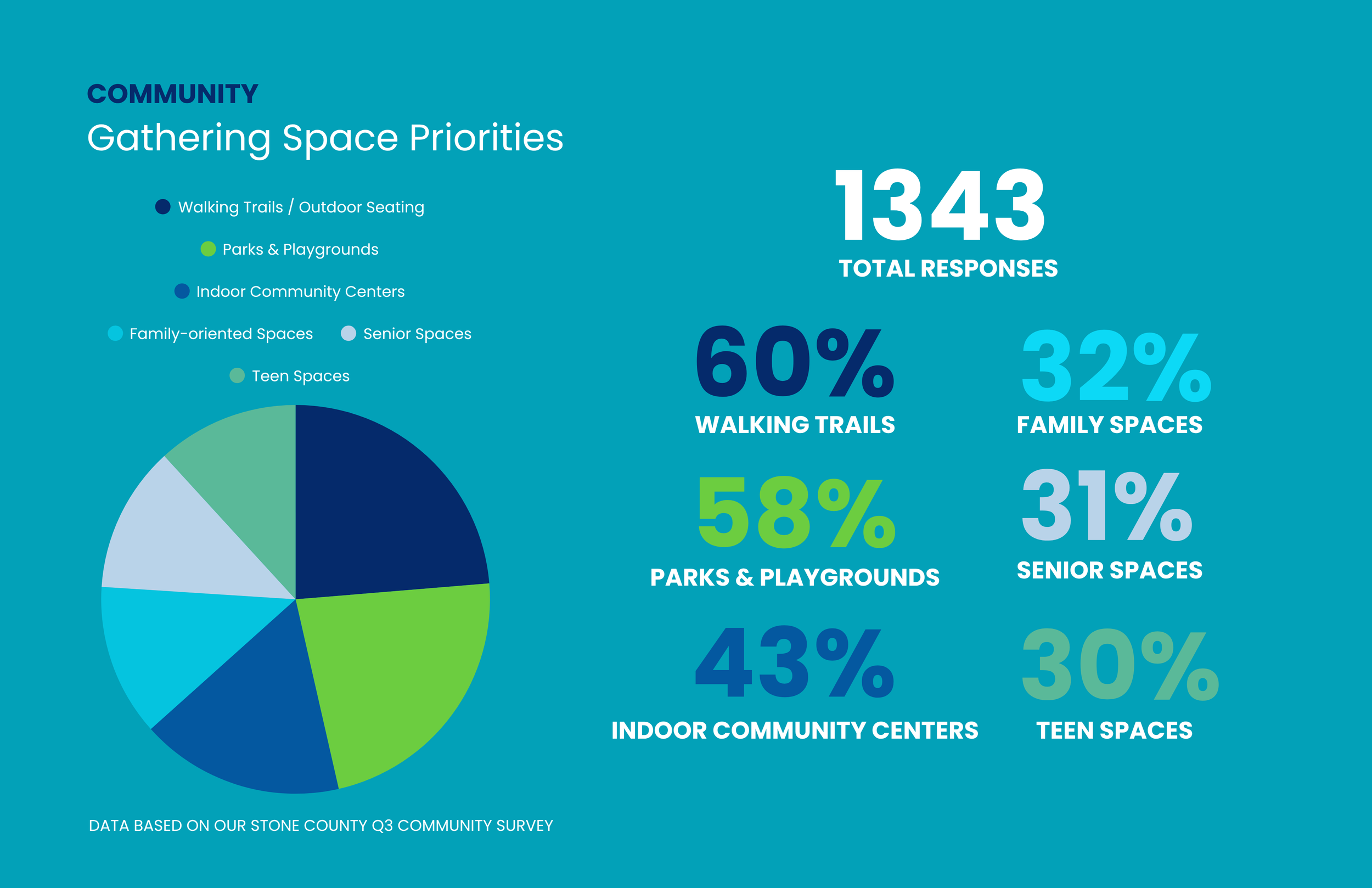
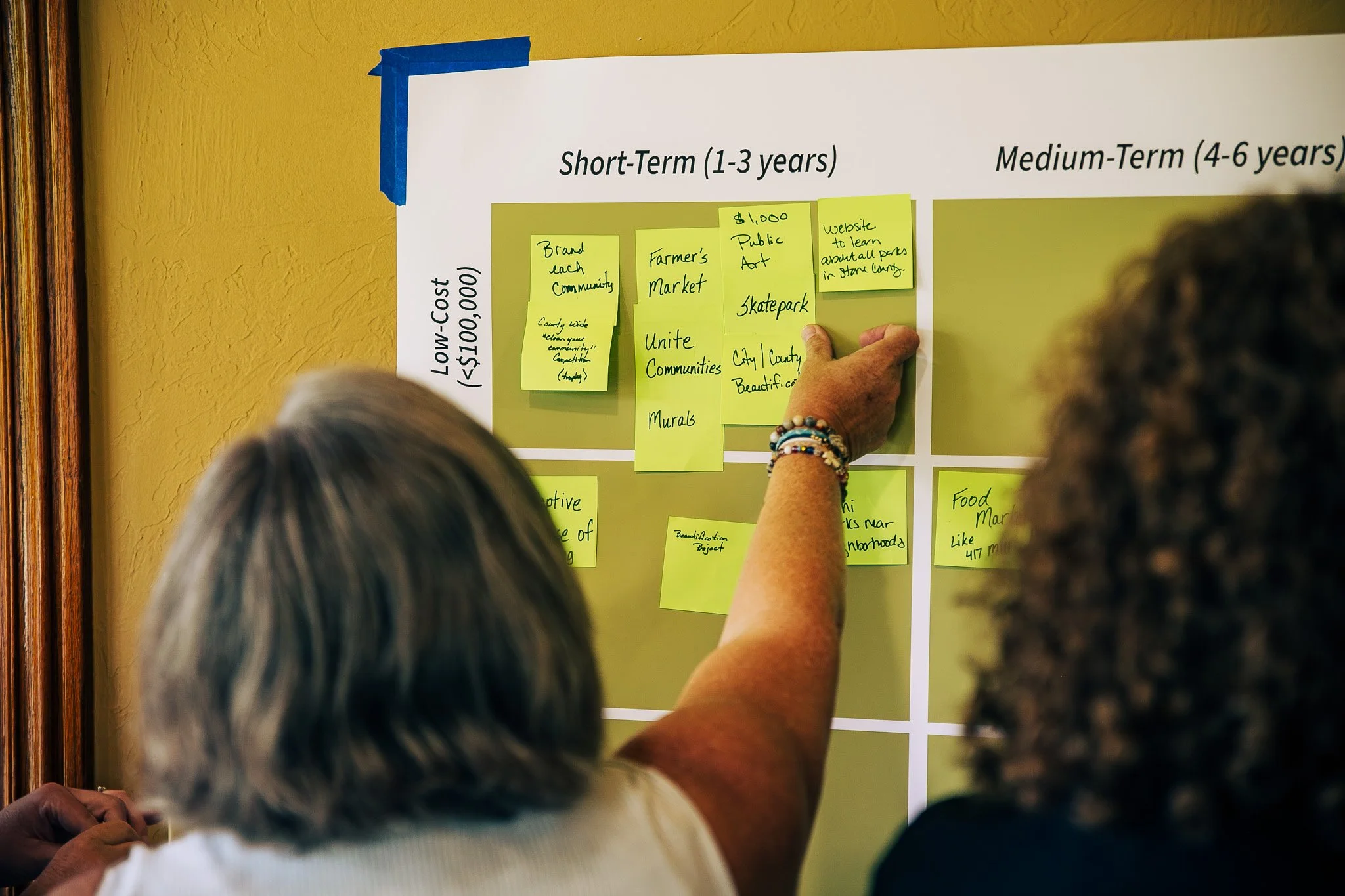
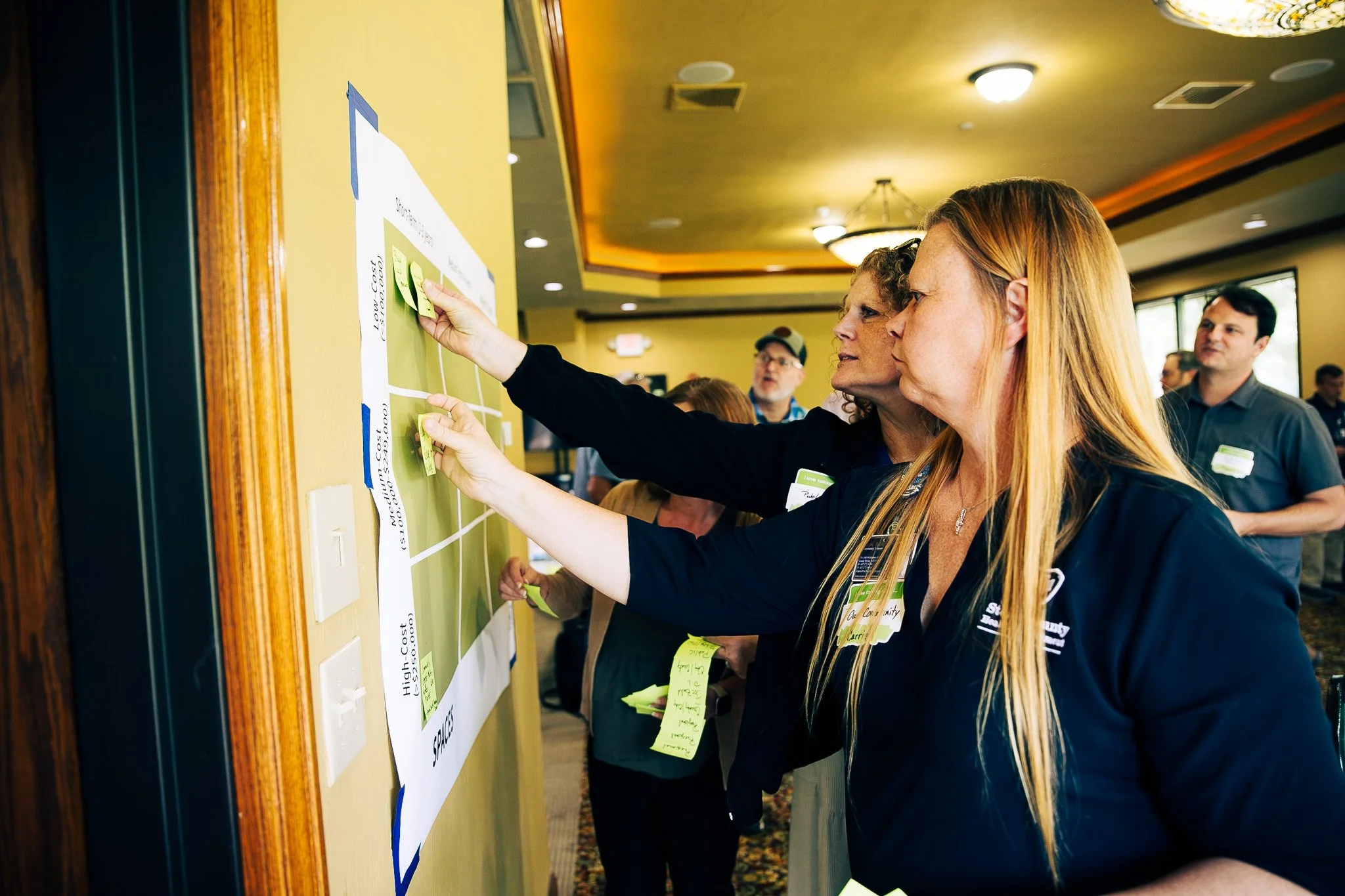
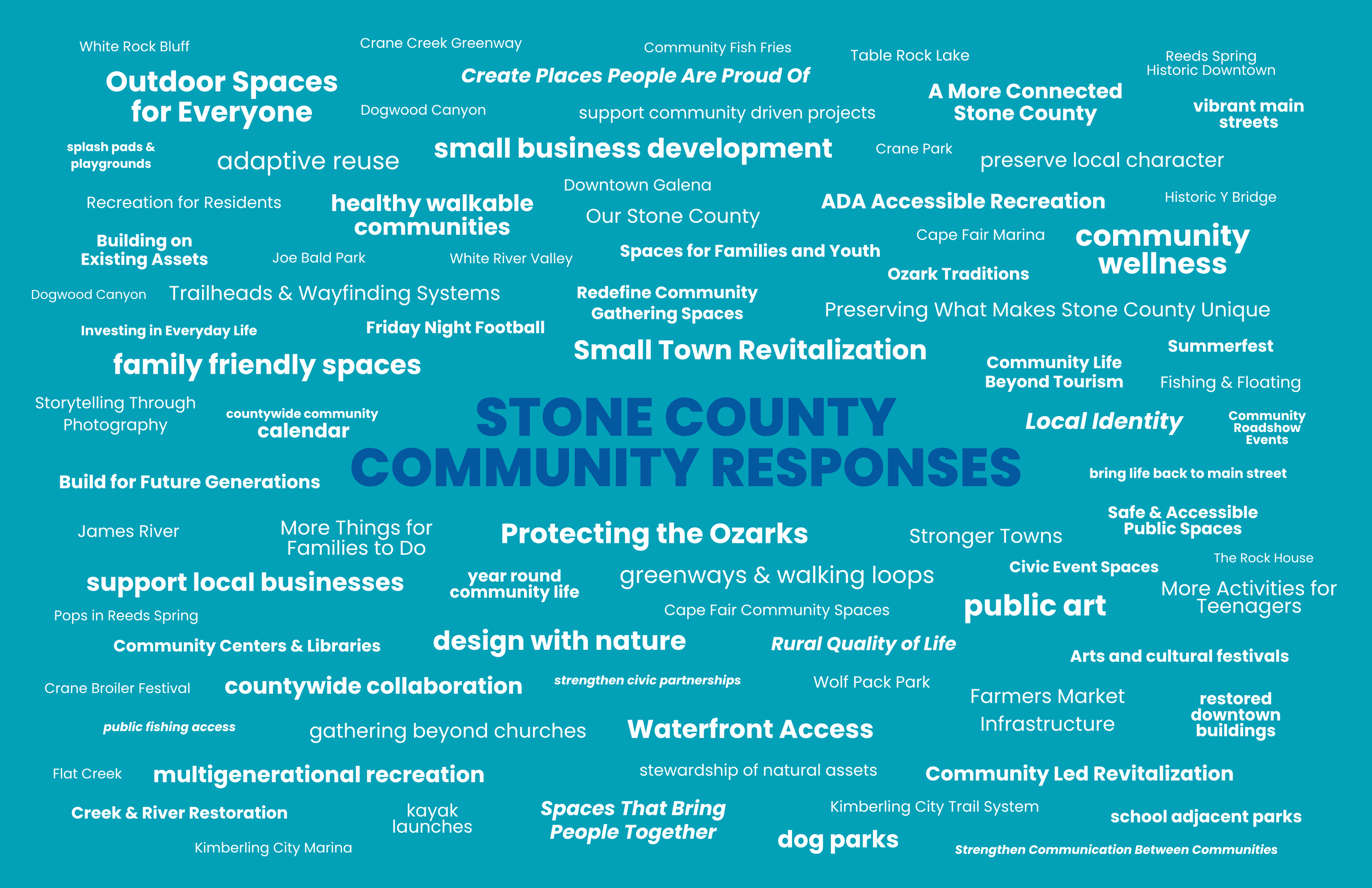
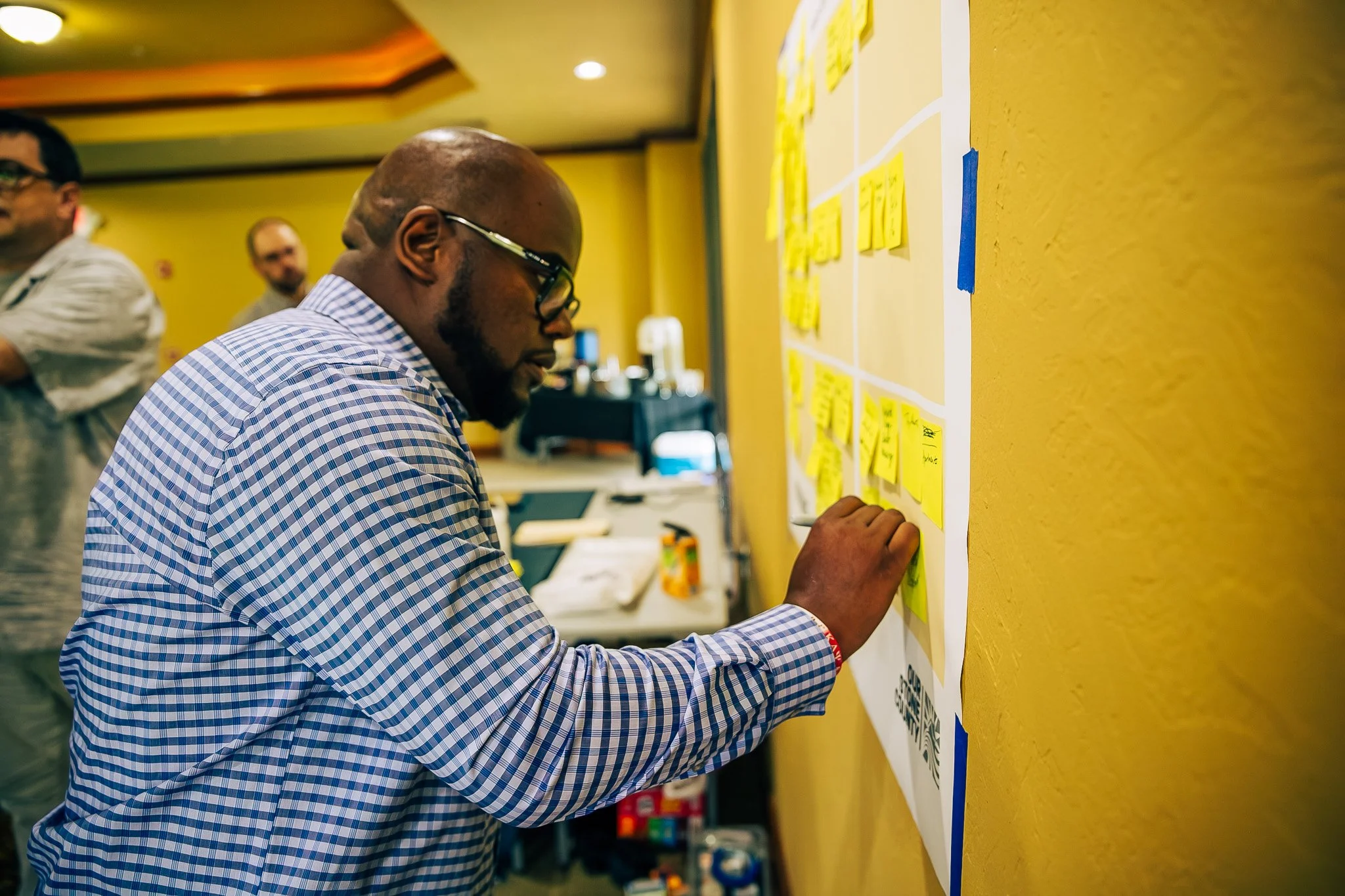
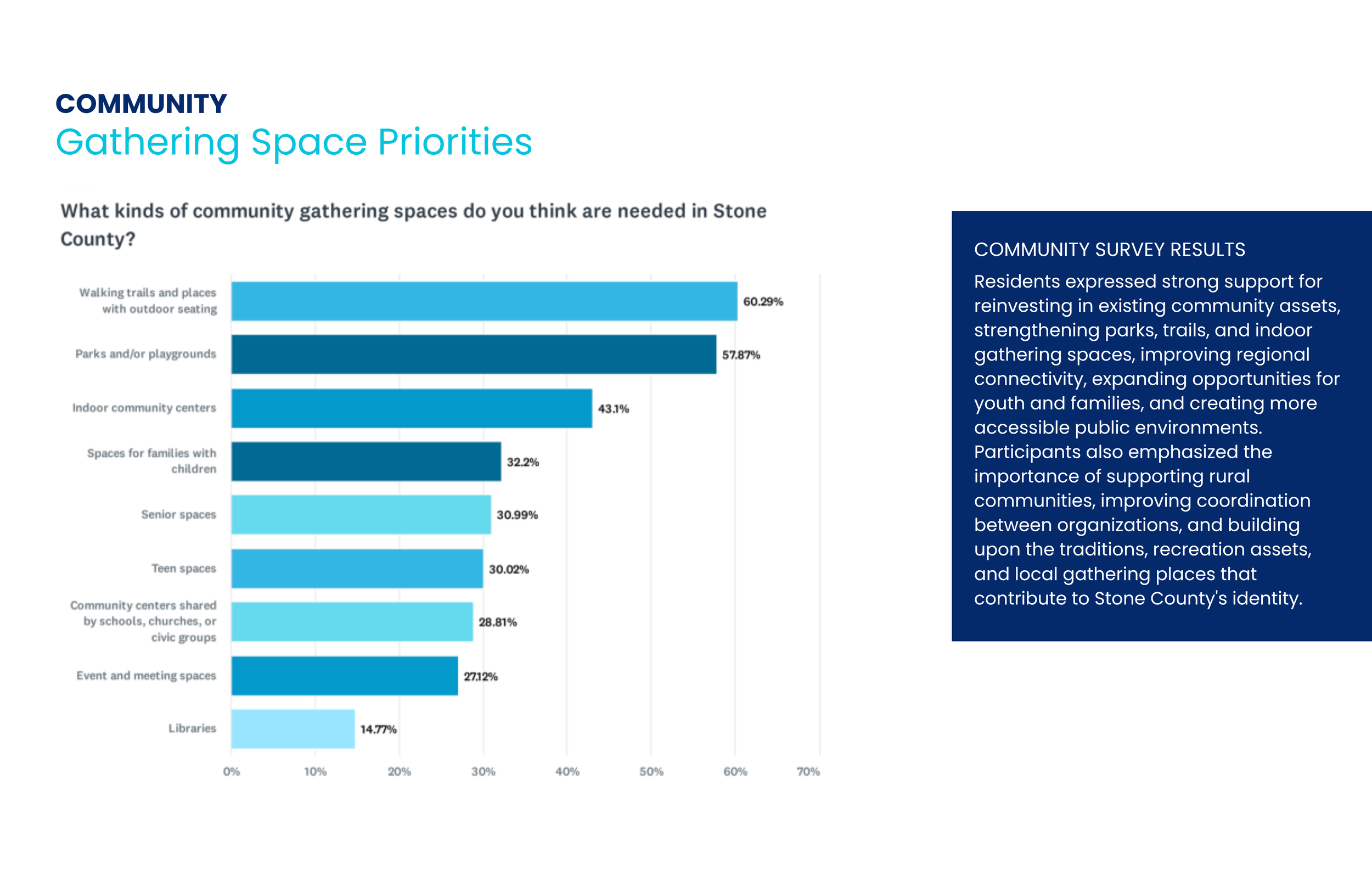
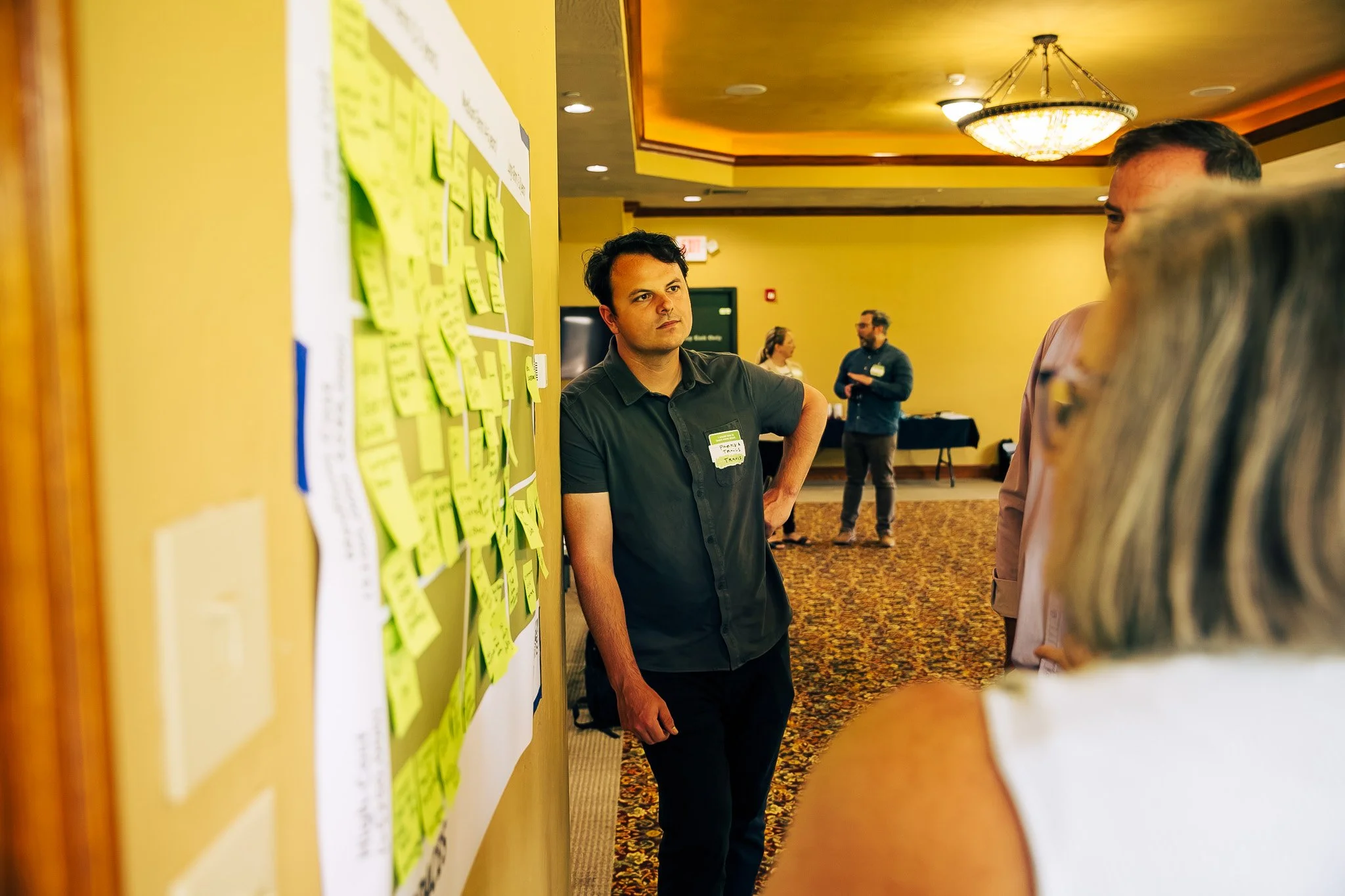
Community engagement was used to test the research against lived experience and understand what residents value about the places where they live. Our Stone County and City Thread conducted a countywide survey, community input sessions, stakeholder discussions, and additional outreach across northern, central, and southern Stone County. Participants identified recurring priorities around parks and trails, accessibility, youth and older adult recreation, waterfront access, local identity, environmental stewardship, downtown investment, and stronger connections between communities. The process also reinforced the importance of geographic equity. Residents described Stone County as geographically segmented and emphasized that investment should reach smaller communities, not just tourist centered spaces. The engagement process helped our team understand how different communities could build from what they already have. In some places that may mean a school adjacent playground, walking loop, or improved river access. In others it may mean adaptive reuse of an existing building, improvements to a downtown gathering space, better accessibility, or connections between existing community assets.
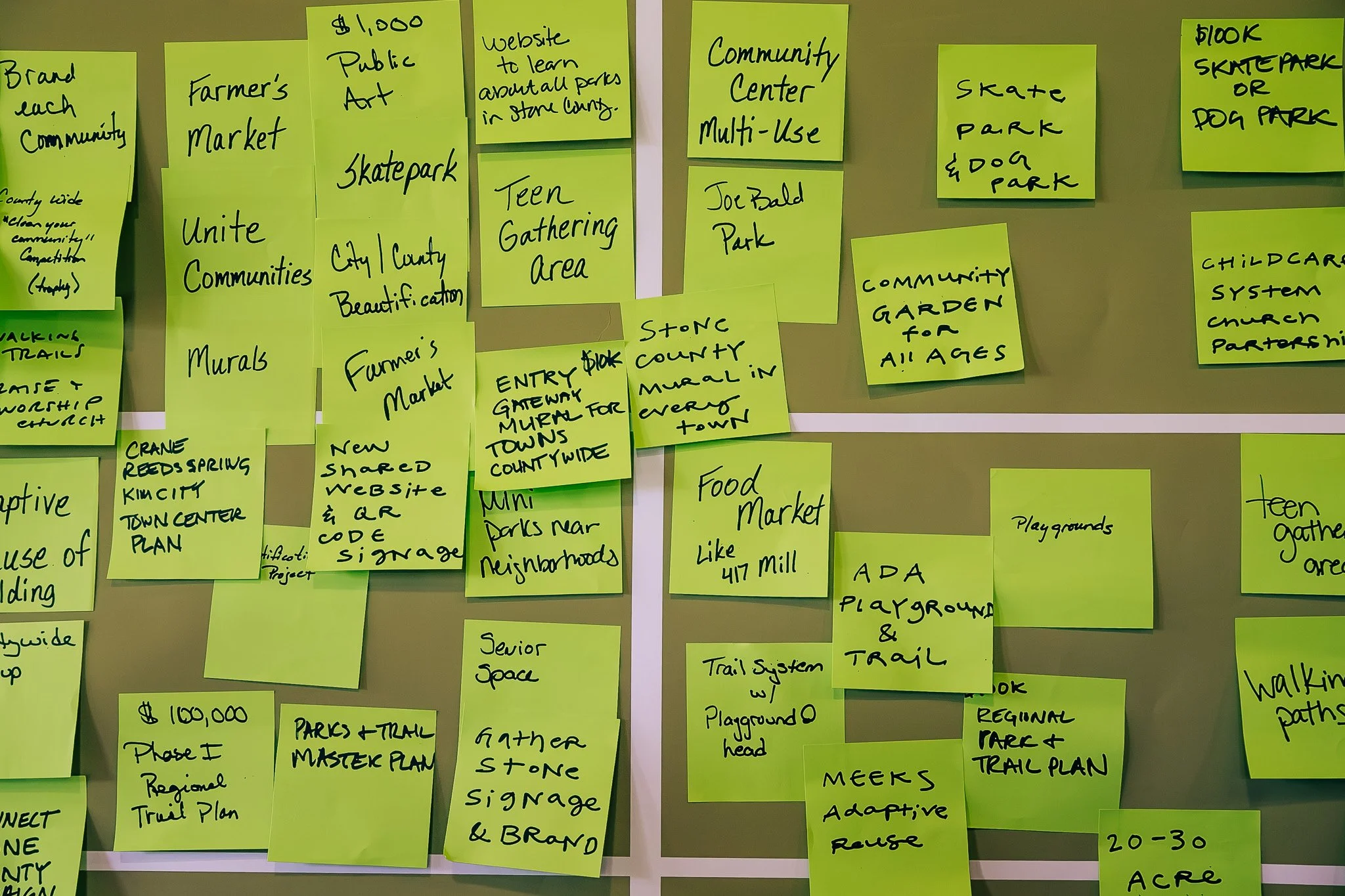
From Research to Action Planning
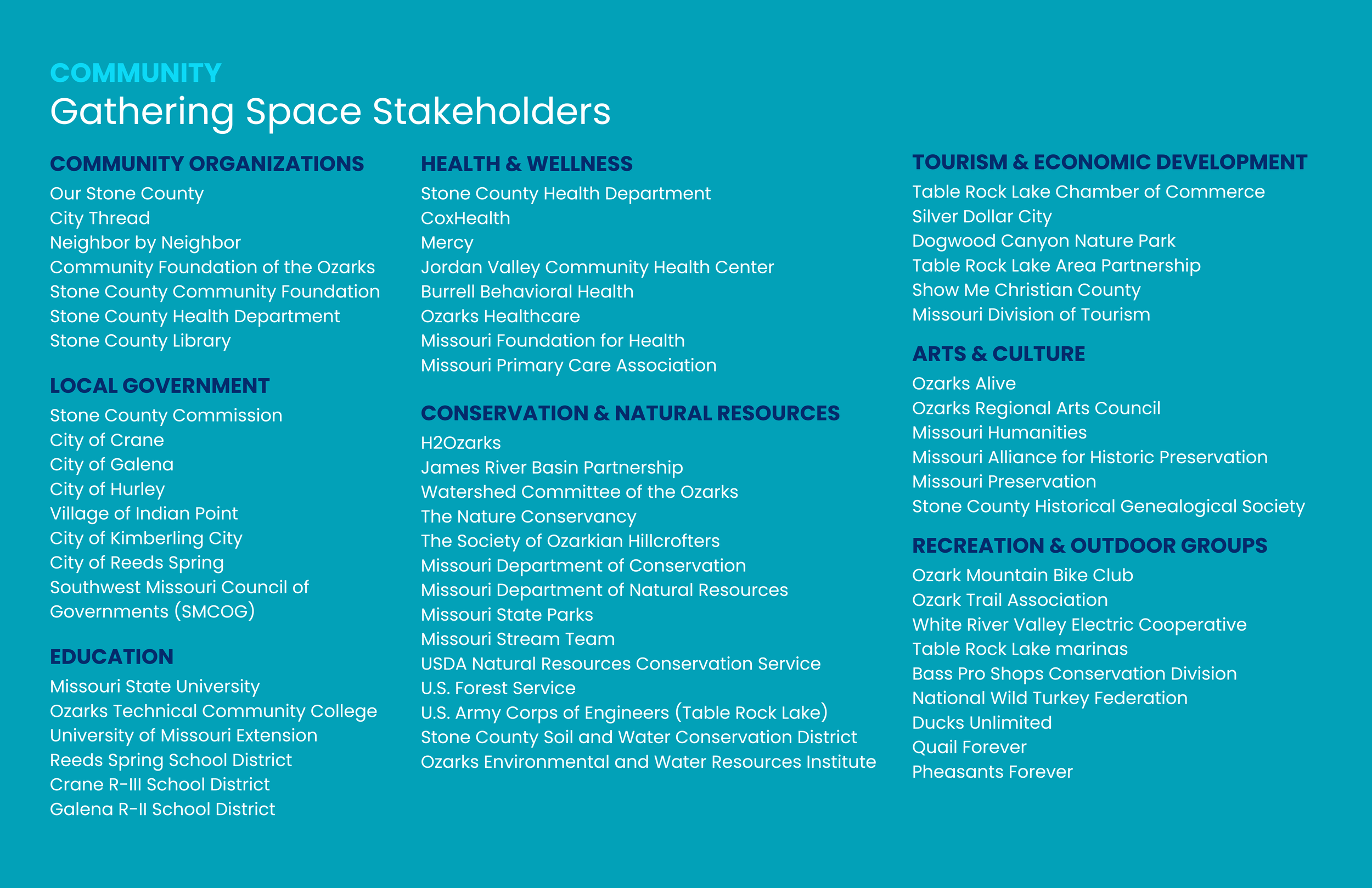
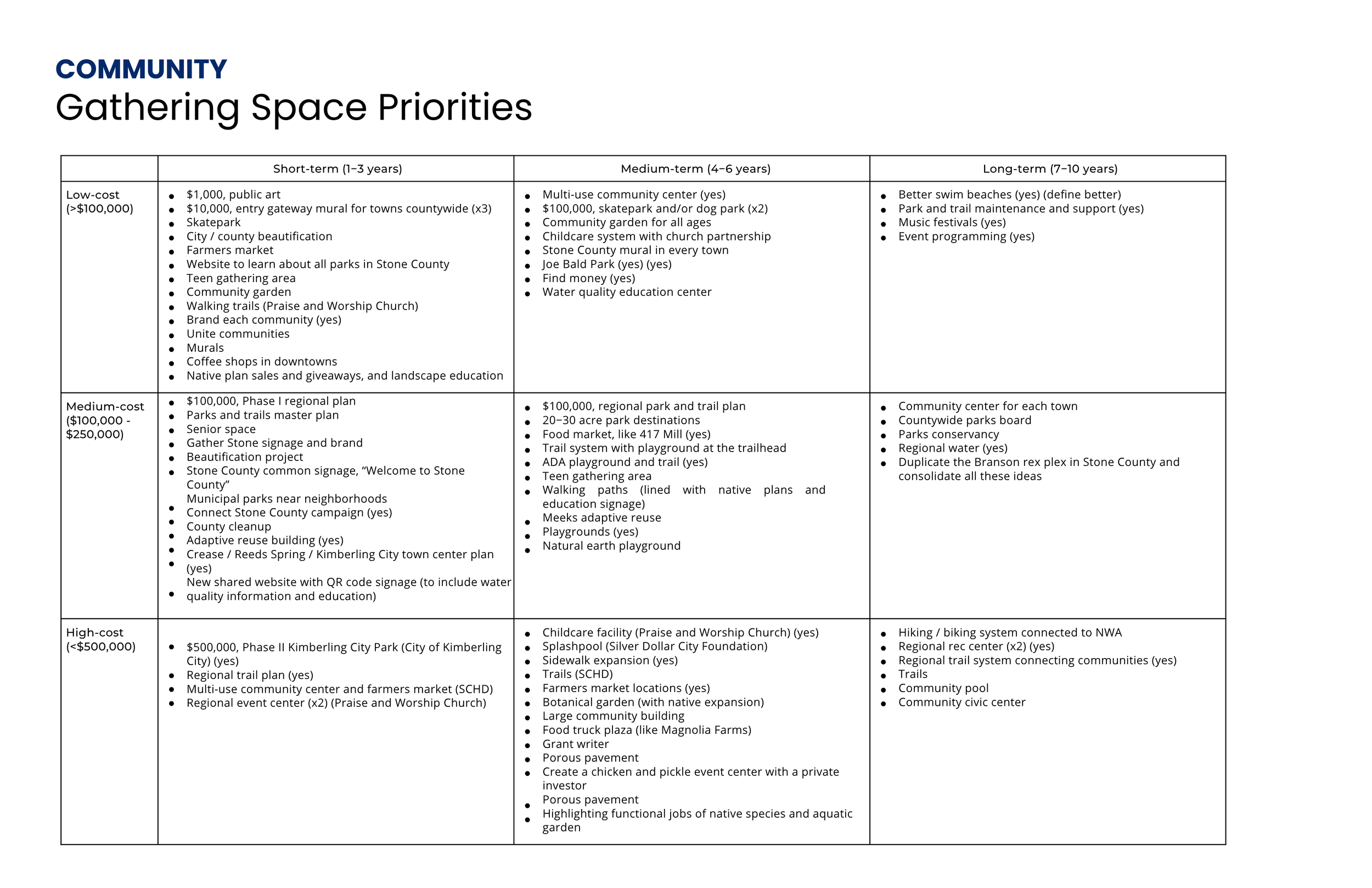
The final phase translates the research and community priorities into an implementation framework for Stone County. Recommendations range from relatively low cost organizational and communications initiatives to larger investments in parks, trails, waterfront access, adaptive reuse, recreation, and community infrastructure. A central recommendation is greater countywide coordination. Stone County’s gathering spaces are currently supported by municipalities, schools, churches, nonprofits, conservation organizations, businesses, and state and federal agencies. That diversity is an asset, but it can also make implementation difficult for smaller communities with limited staff, grant writing capacity, technical resources, or operating funds.
10 Year Action Plan
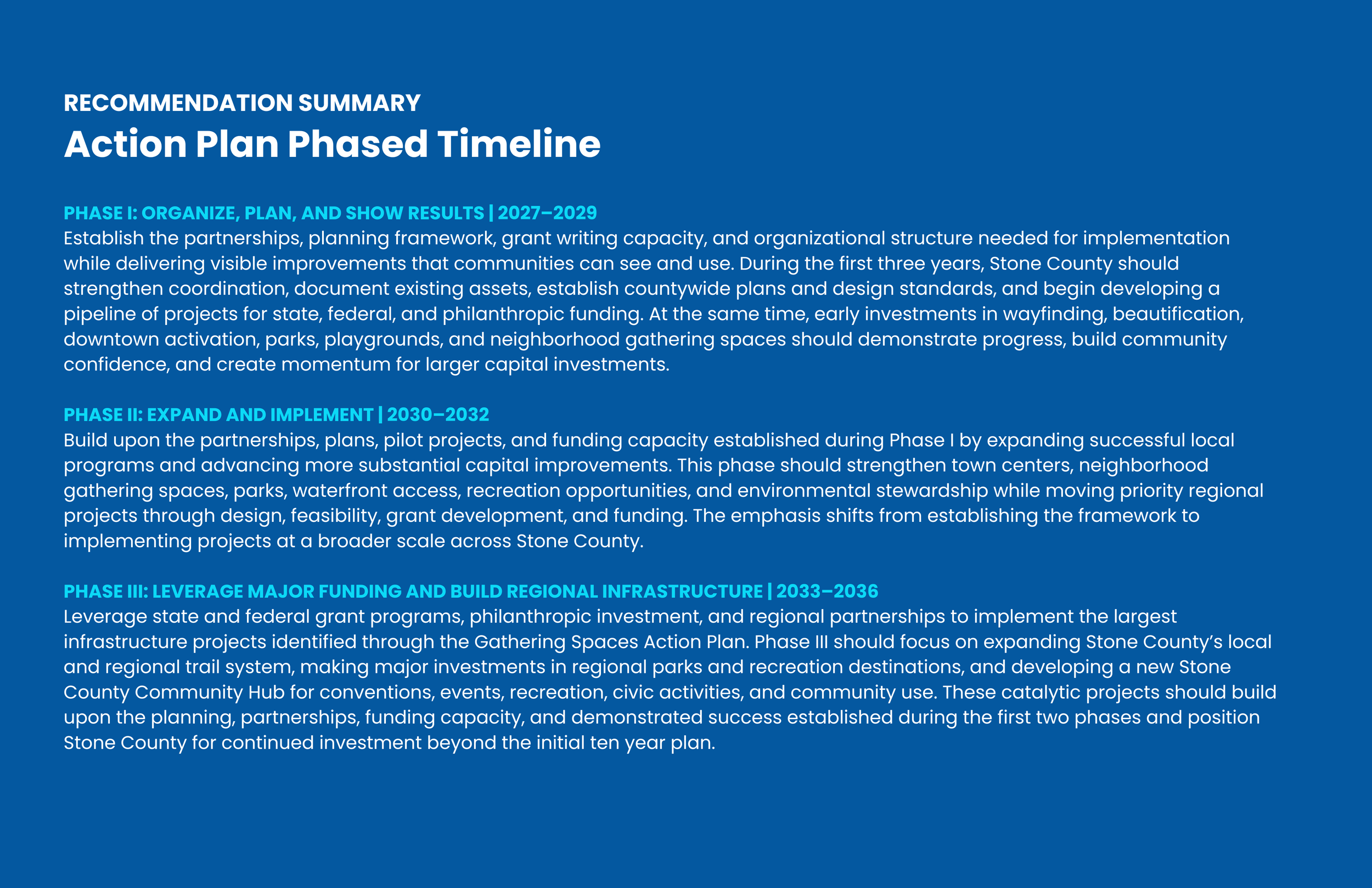
The resulting Action Plan establishes a phased path toward implementation, beginning with organizational capacity, communication, public art, identity, and visible local improvements before advancing into more complex planning and capital projects. Recommendations include a countywide parks and trails organization, a shared gathering space identity and digital platform, community gateways, public art, a countywide greenspace master plan, parks and trail construction, water access and environmental education, adaptive reuse of existing buildings, and evaluation of future regional recreation opportunities. The framework intentionally pairs large projects with the partnerships, funding strategies, maintenance responsibilities, and organizational capacity required to sustain them over time.