The Gin
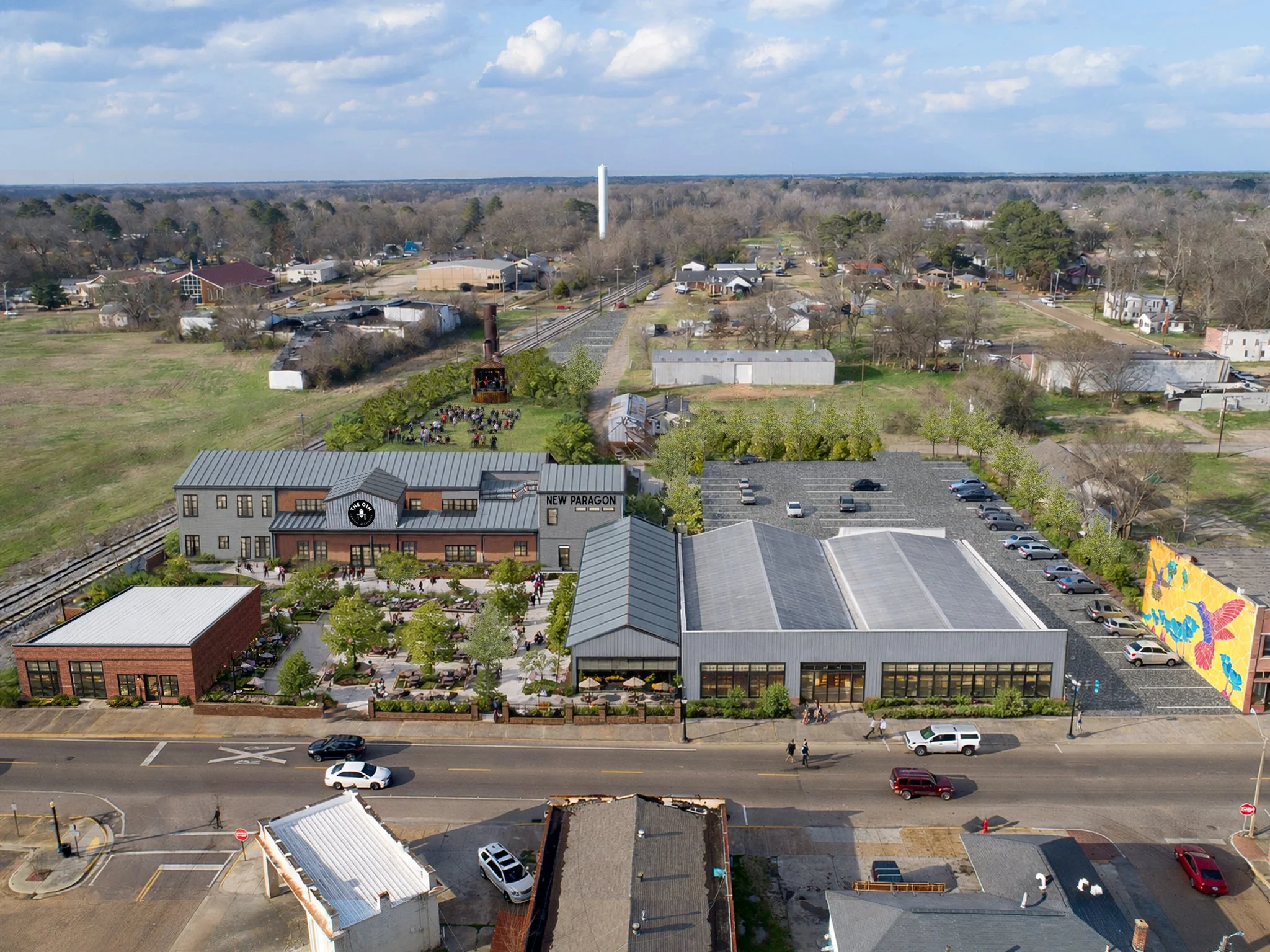
The Gin is a conceptual adaptive reuse project centered around a former cotton processing facility in Canton, Mississippi.
-
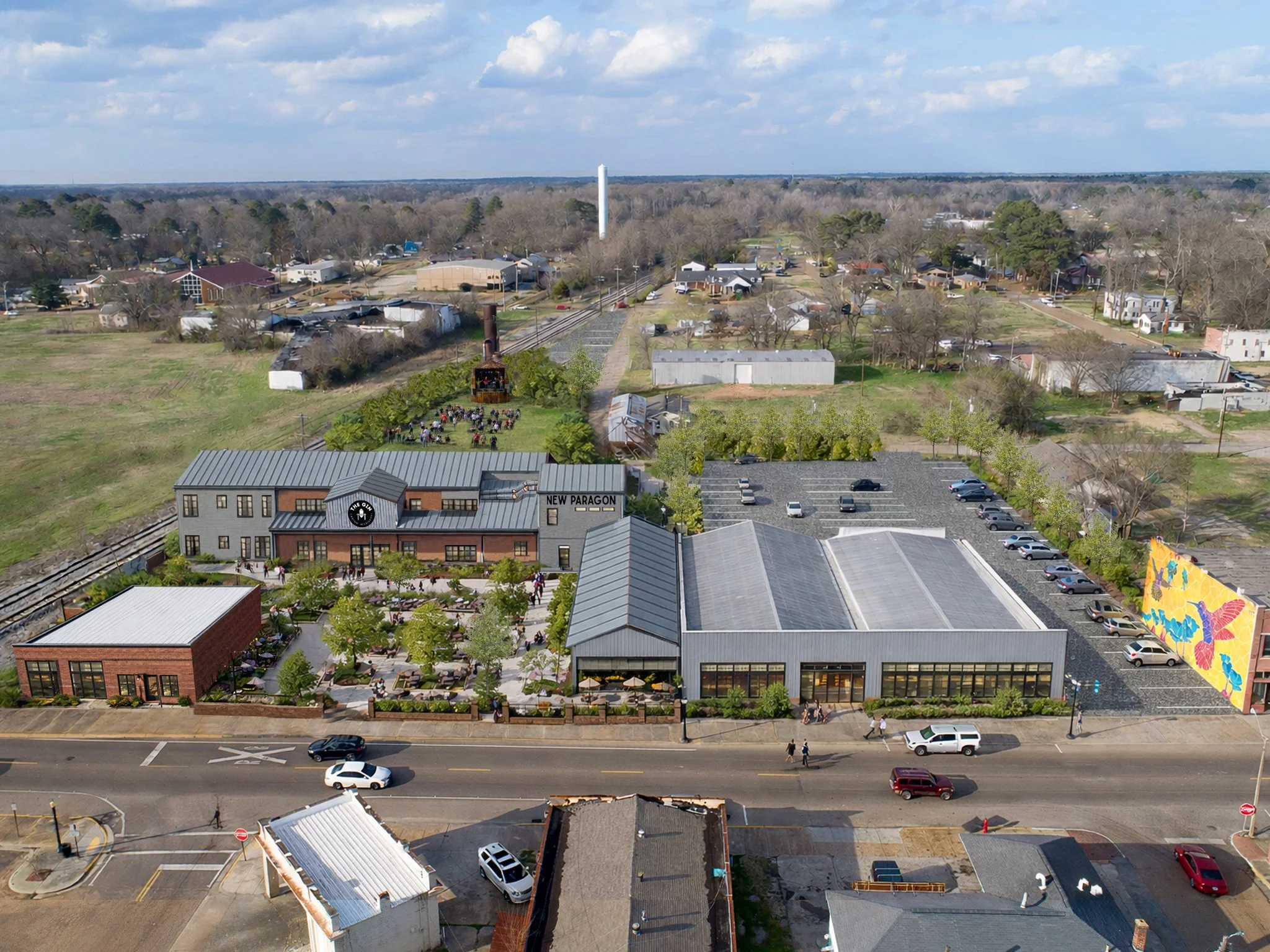
The Gin is a conceptual adaptive reuse project centered around a former cotton processing facility in Canton, Mississippi. Located approximately half a mile from the historic Canton Square and adjacent to the regional rail corridor, the site explores how industrial structures and underutilized properties can be transformed into flexible community oriented environments that support gathering, recreation, commerce, and long term reinvestment.
Developed in collaboration with CCD Architects, the concept reimagines the historic cotton gin property as a mixed use destination integrating public space, adaptive reuse, landscape infrastructure, and community programming while preserving the industrial character and history of the site.
-
Year
2025 — 2026
Scale
2 Acres
Location
Canton, Mississippi
-
Architecture
Collaborative Design
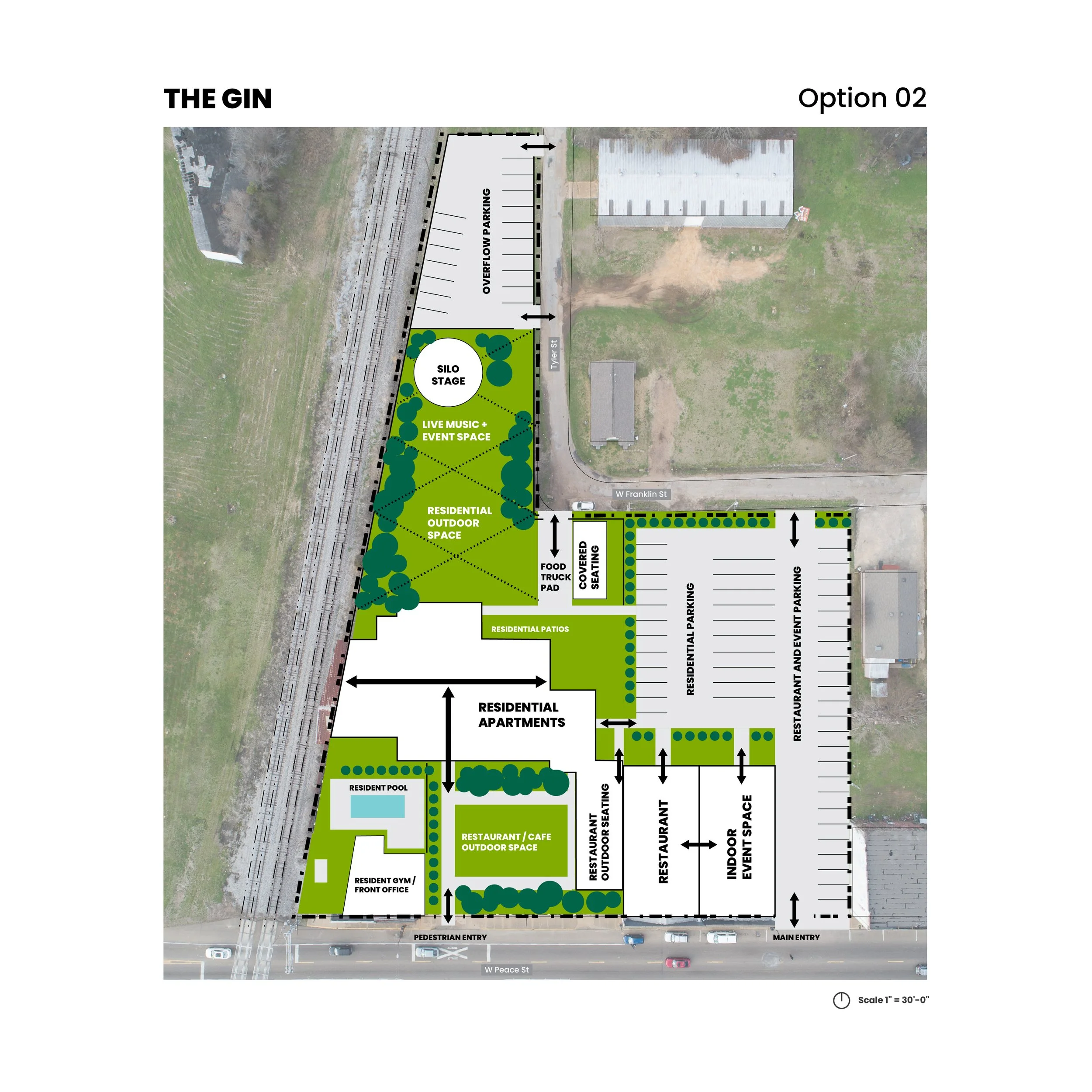
The Gin concept was developed through a collaborative process between TREE and CCD Architects, combining adaptive reuse architecture, landscape planning, and community space design into a unified redevelopment framework. The proposal explores how former industrial infrastructure can transition into an active mixed use environment that supports housing, gathering space, recreation, food, music, and flexible public programming.
Community Space + Public Life
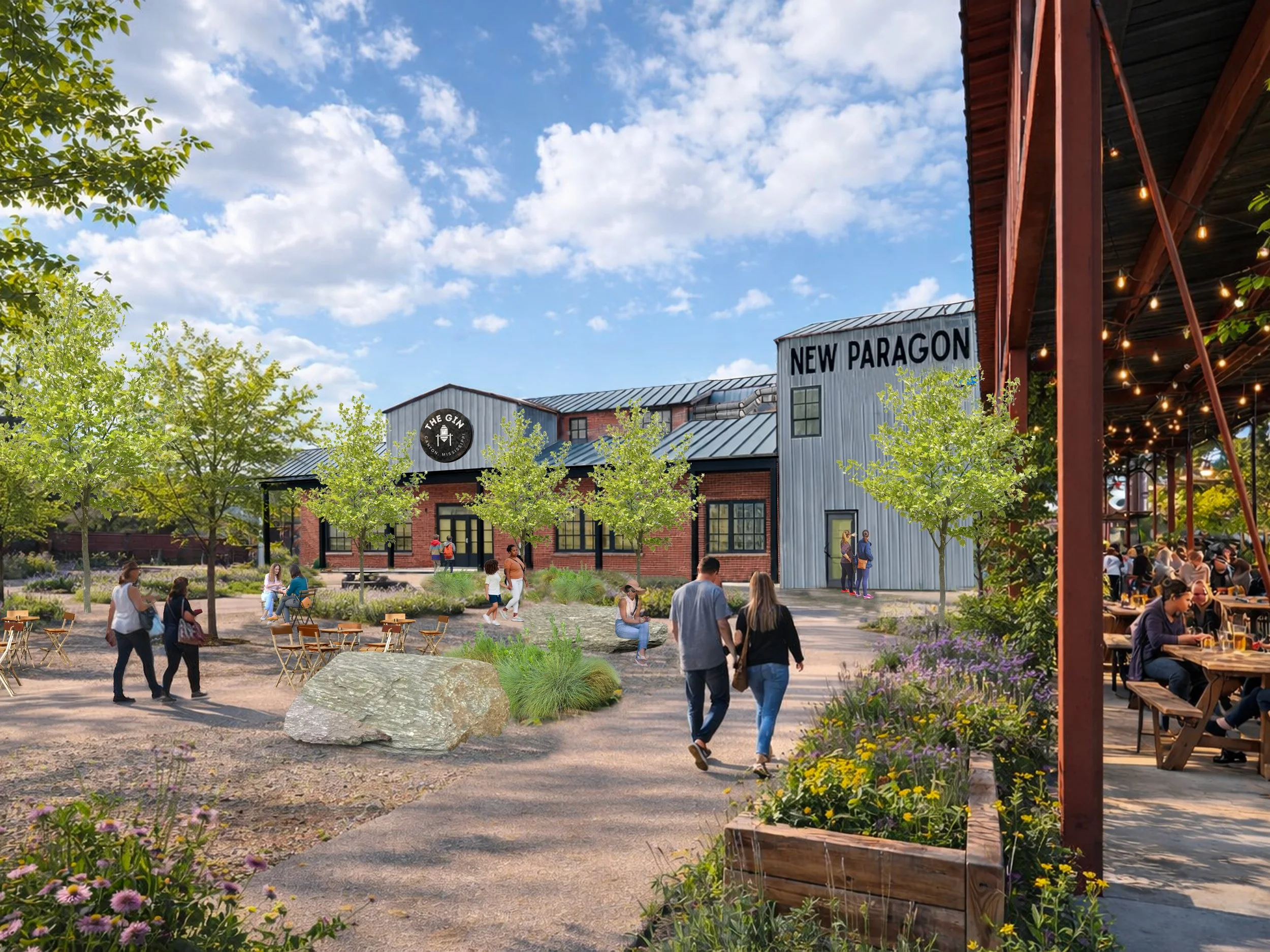
A major focus of the concept is the creation of flexible indoor and outdoor gathering environments capable of supporting both everyday use and larger community events. The site design explores relationships between public gathering space, local business activity, recreation, food, music, and landscape in order to create a more active and connected environment within Canton. Potential programming includes outdoor event lawns, flexible vendor space, small scale commercial activity, community gathering areas, live music infrastructure, adaptive reuse of industrial structures, and integrated landscape spaces designed to support both programmed and informal use. The project builds upon the site’s existing history as a community gathering environment while expanding opportunities for future public engagement and activity.
Adaptive Reuse Framework
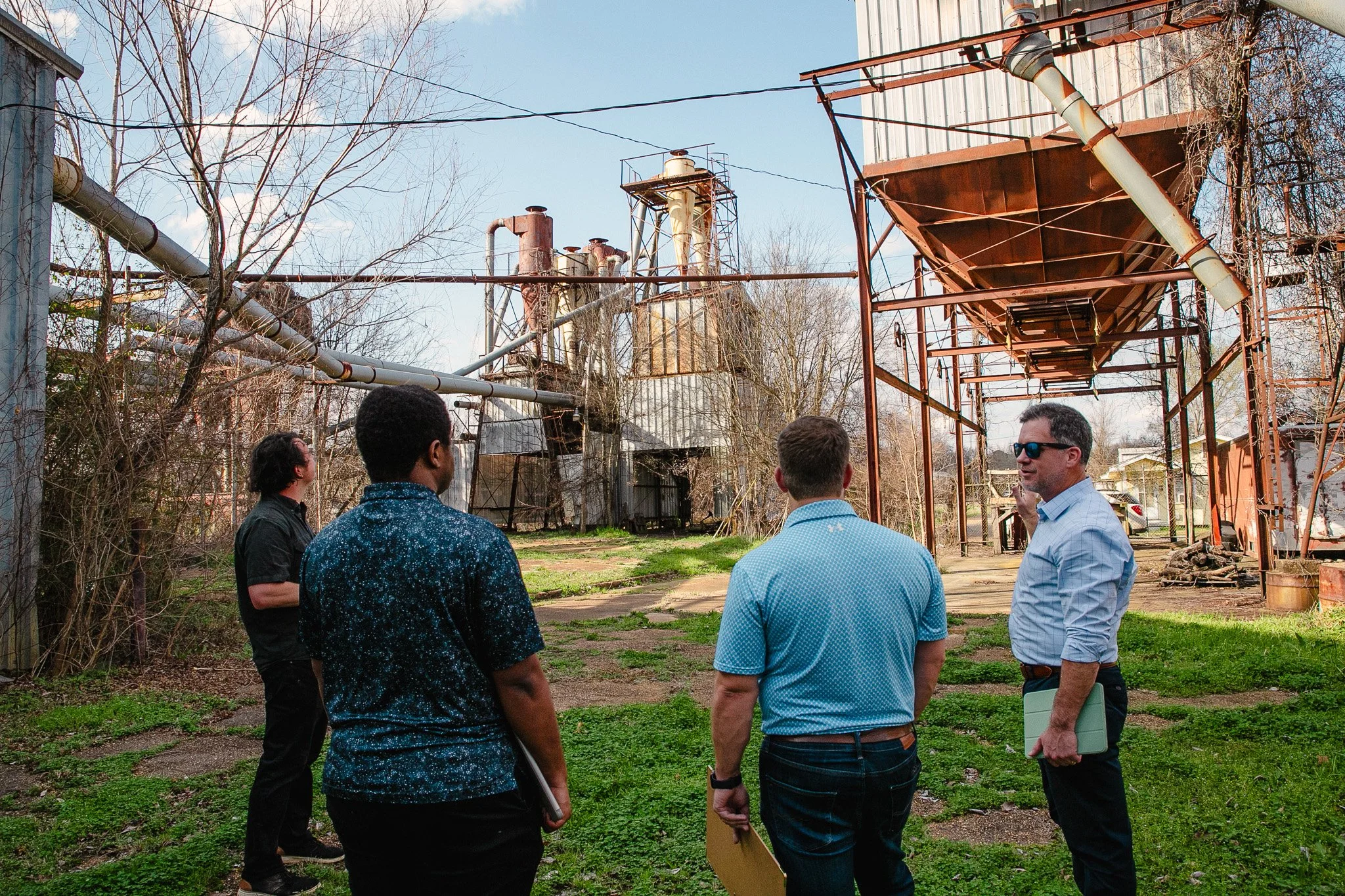
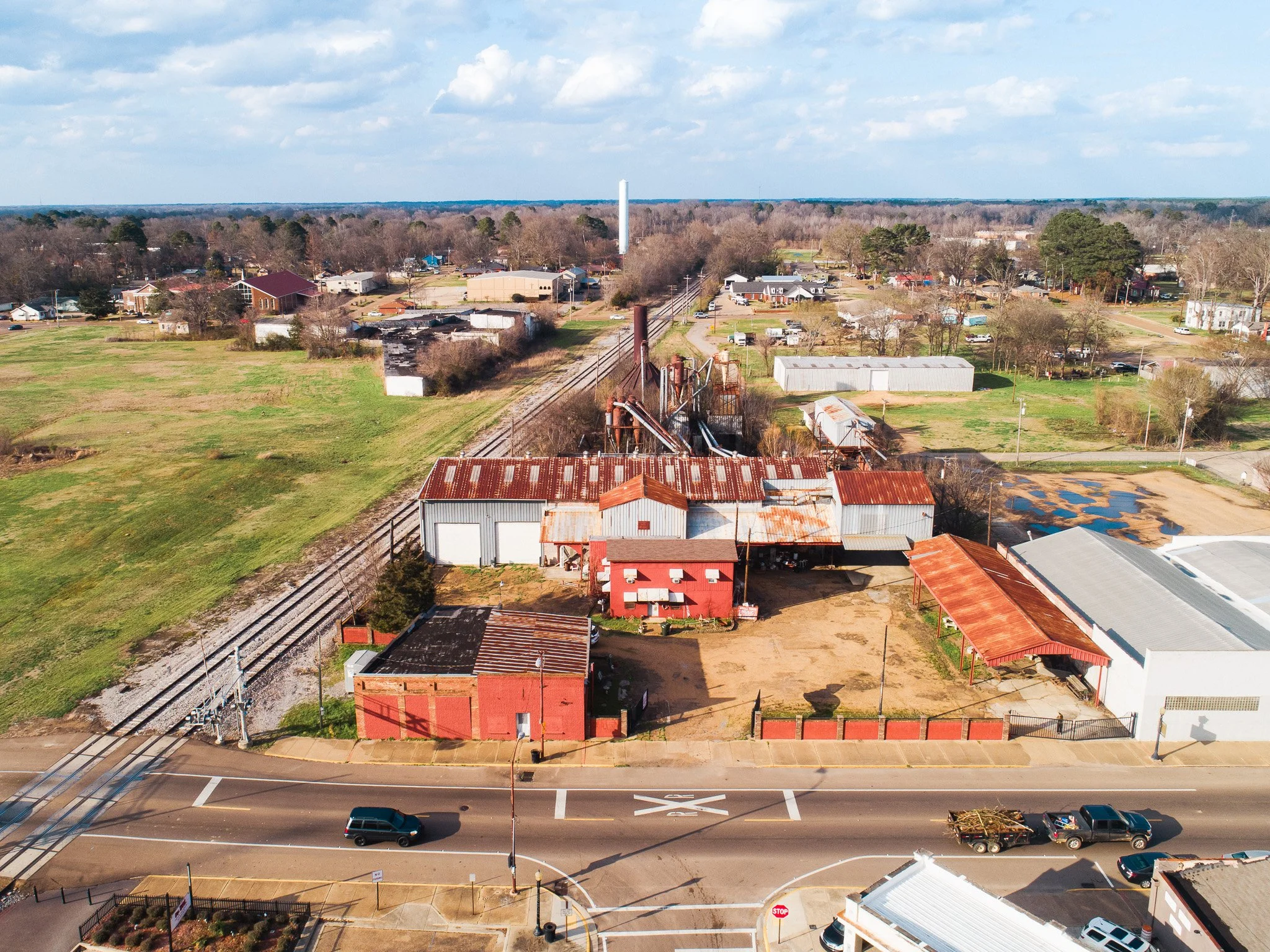
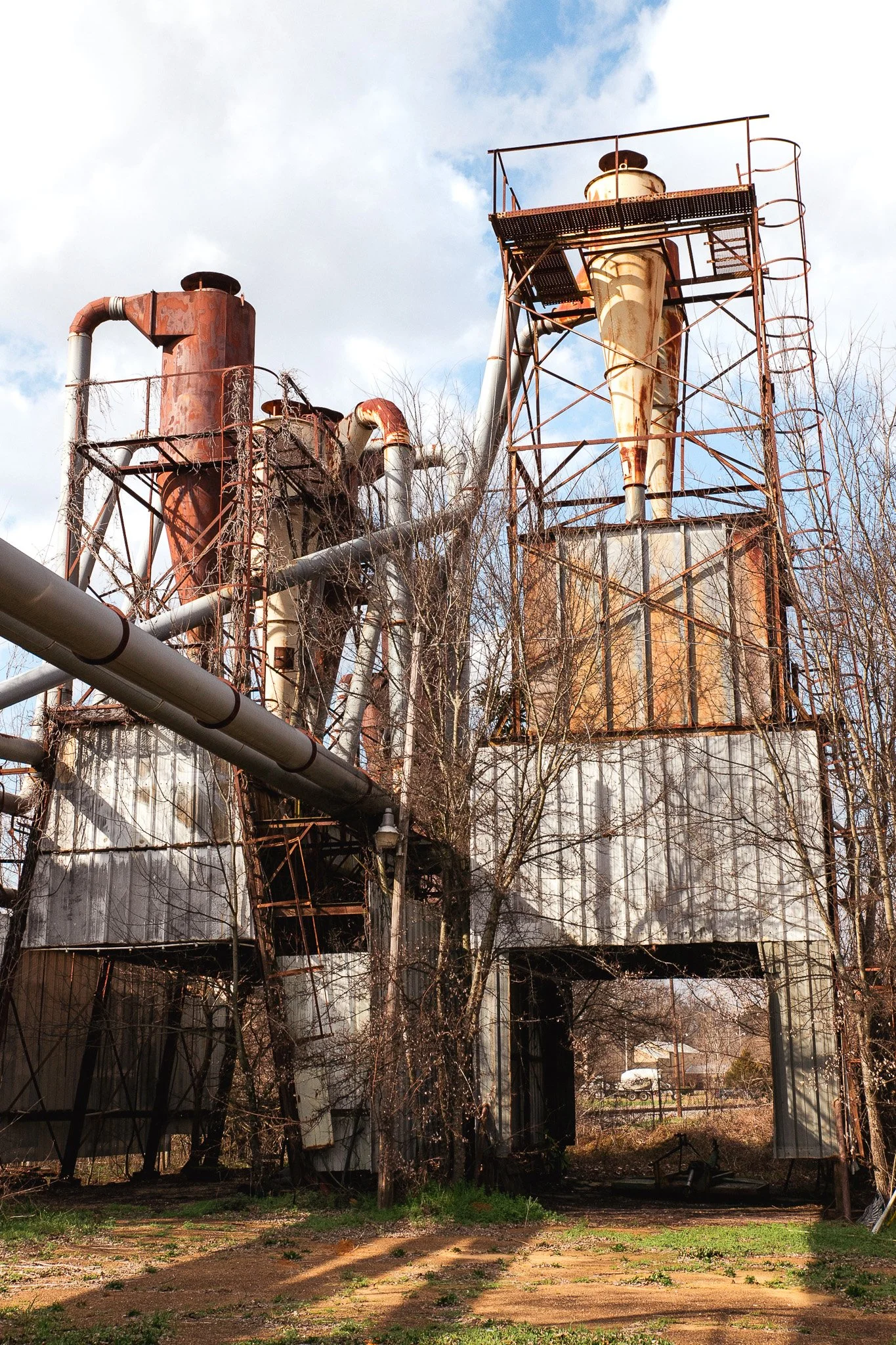
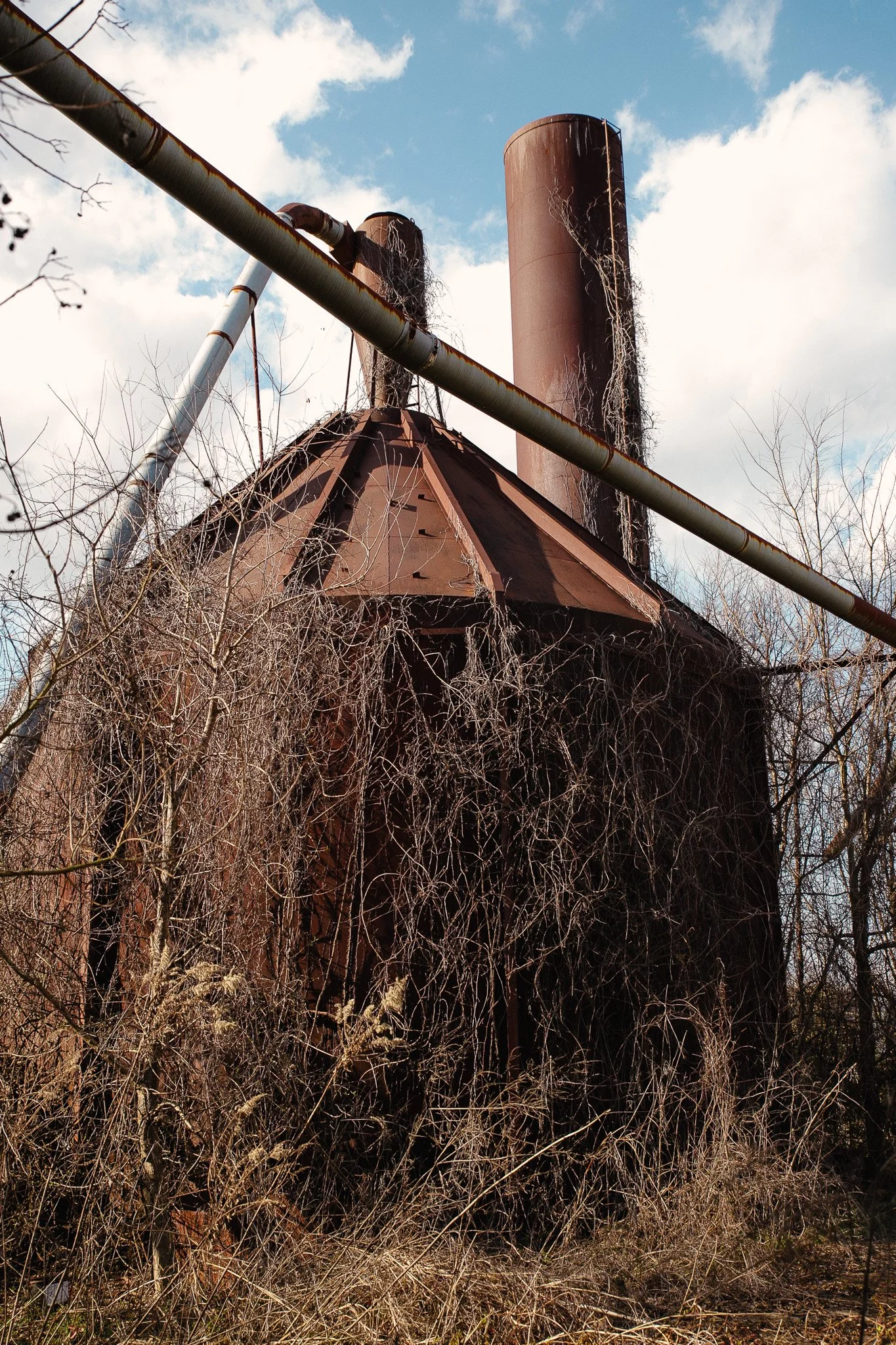
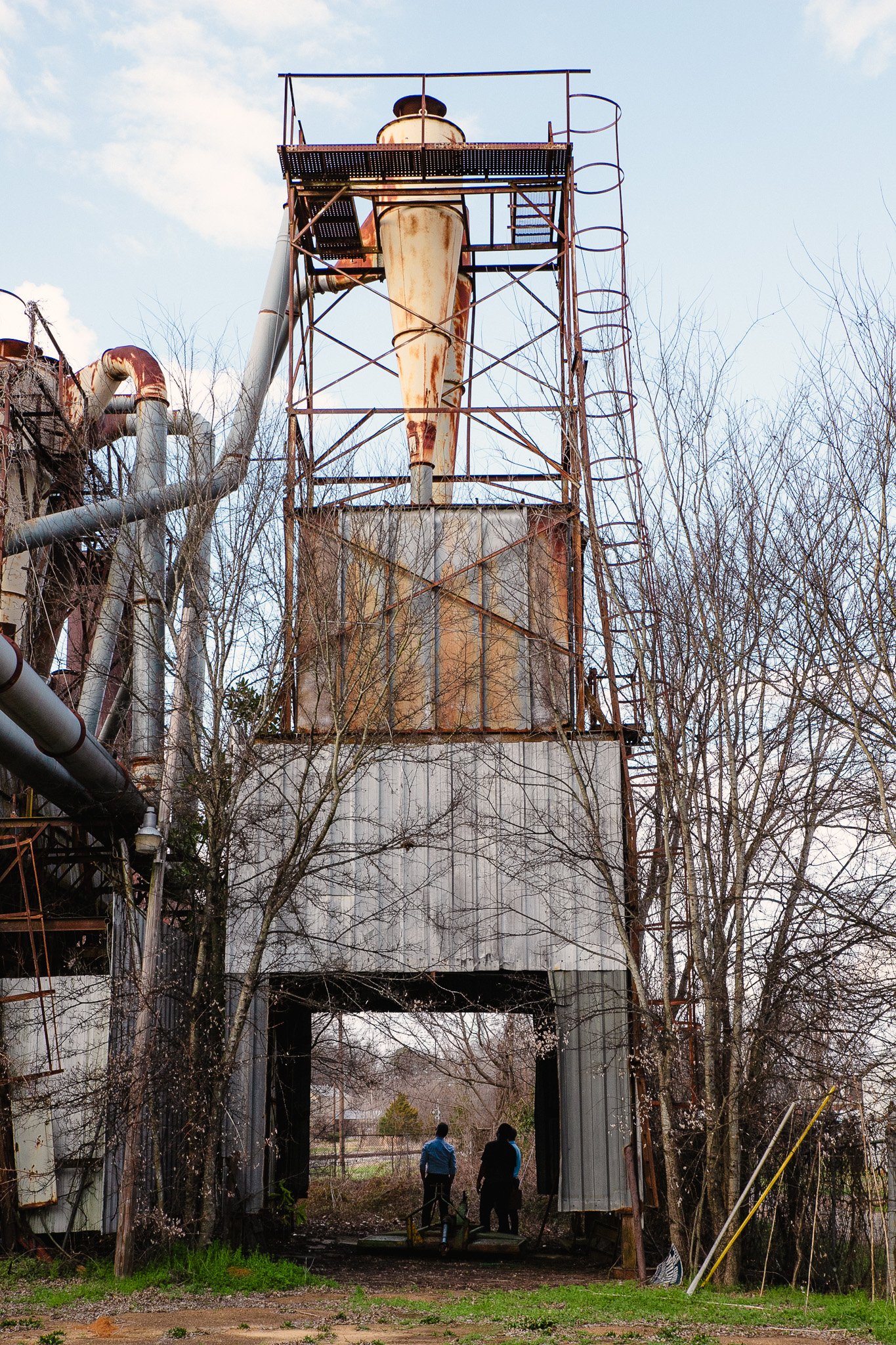
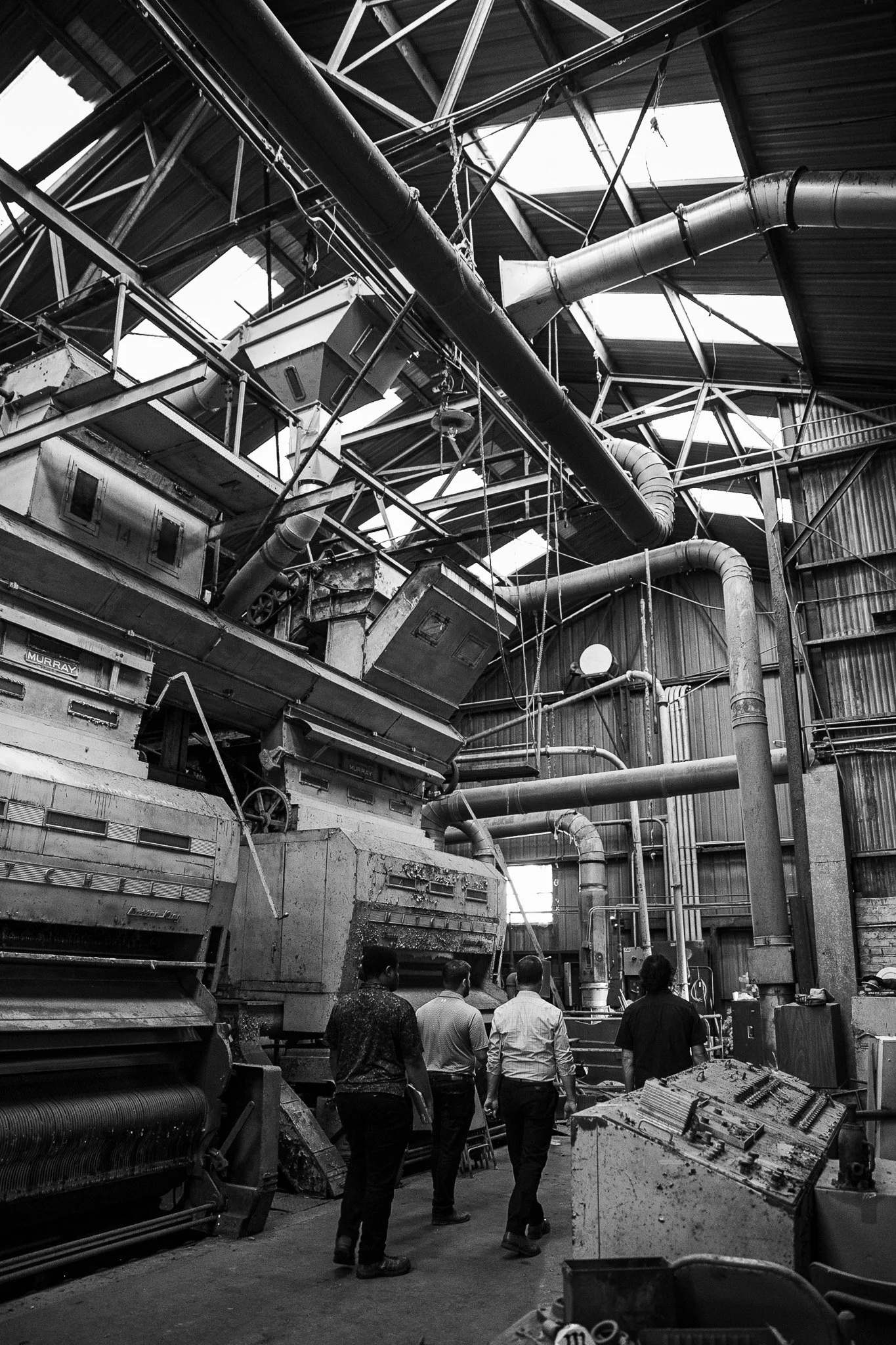
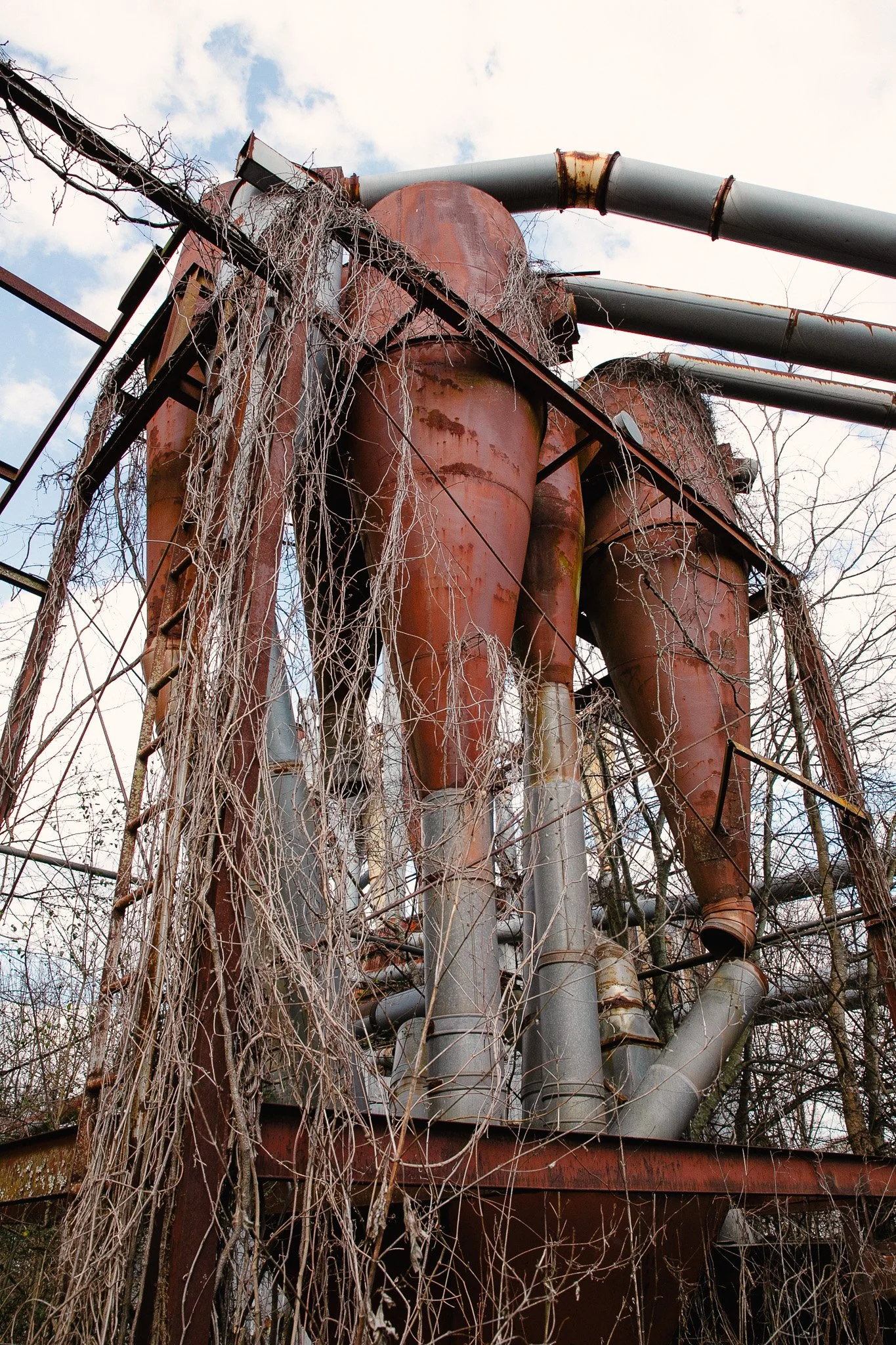
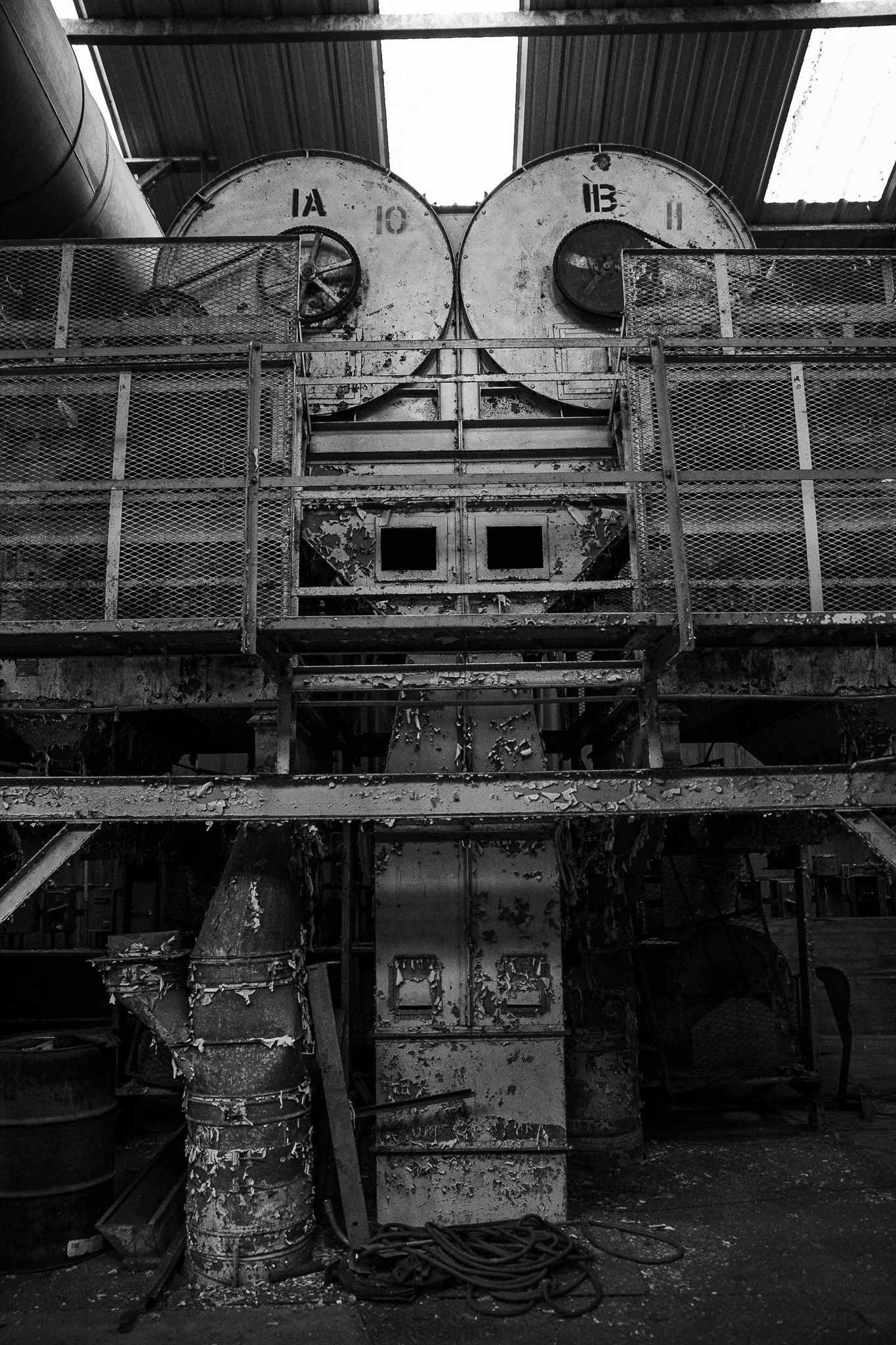
The project is guided by an adaptive reuse approach that prioritizes the preservation and reintegration of existing industrial structures, materials, and spatial conditions rather than large scale demolition or complete redevelopment. Existing buildings, silos, processing equipment, and storefront structures are treated as assets capable of supporting new forms of community activity while reinforcing the historic identity of the property. The concept explores how former agricultural and processing infrastructure can become a framework for contemporary public life, flexible programming, and mixed use development. This approach reduces material waste, preserves local character, and creates opportunities for phased implementation over time.
Landscape + Site Strategy
The conceptual framework emphasizes the integration of landscape architecture and ecological infrastructure throughout the redevelopment process. Native planting systems, shaded gathering environments, pedestrian circulation, stormwater strategies, and flexible open space are used to soften the industrial landscape while improving environmental performance and user experience. The design also explores stronger relationships between buildings, parking, outdoor gathering space, and surrounding community infrastructure. Landscape systems are treated as functional infrastructure capable of supporting comfort, identity, stormwater management, and site resilience.