What if we could reverse urban heat island effect?
It is not a far fetched concept that urban centers experience warmer temperatures than surrounding natural areas. The urban heat island effect is a well documented phenomenon: cities contain large areas of asphalt, concrete, rooftops, and other impervious surfaces that absorb and retain solar heat. As these surfaces release stored heat throughout the day and after sunset, urban environments can remain significantly warmer than surrounding landscapes. So how do we begin managing urban heat in cities that were largely built around the car?
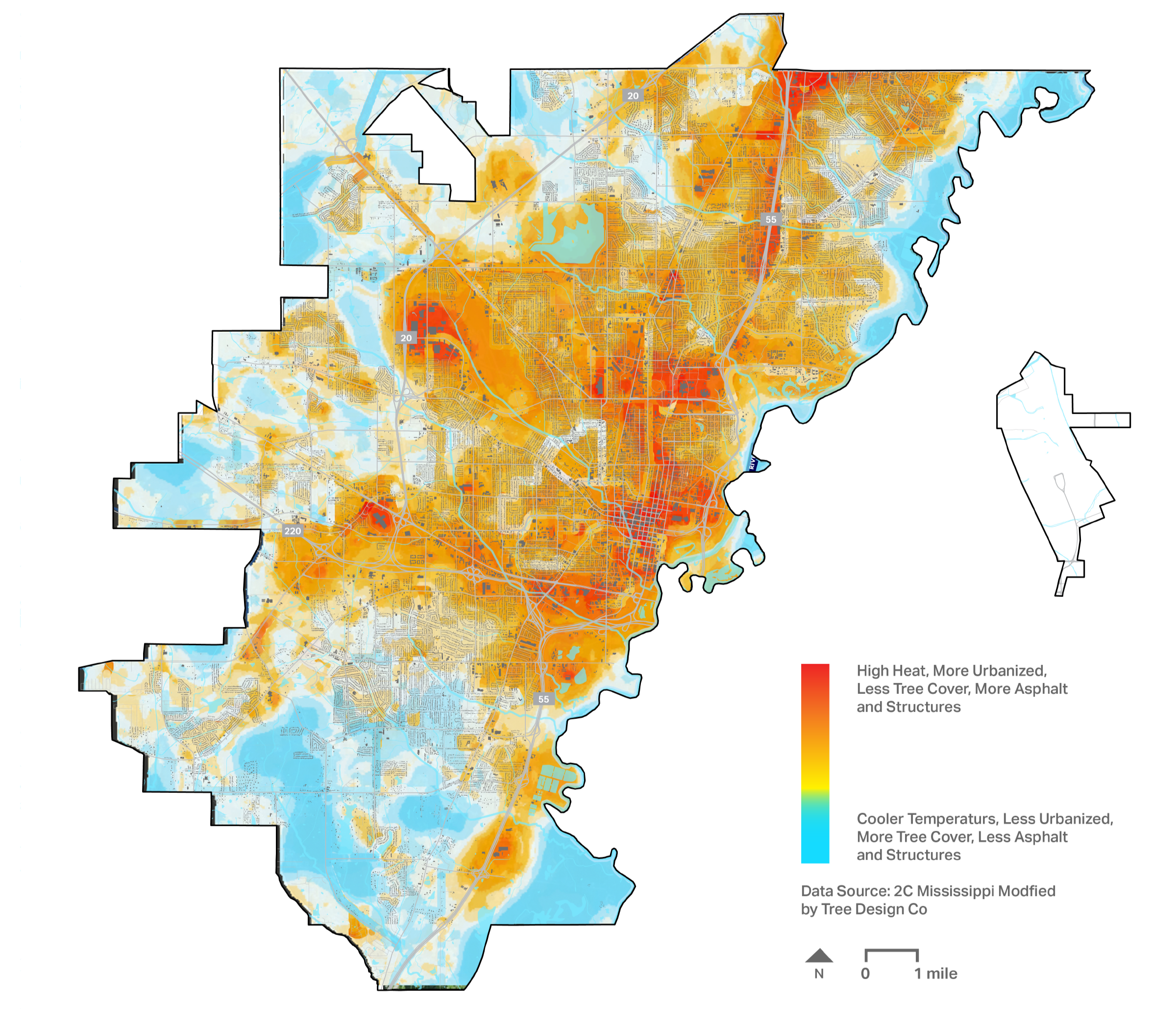
Jackson, Mississippi Urban Heat Island Map, Data Collected by 2C Mississippi
One theory we have tested in recent years is “unearthing”: strategically removing unnecessary pavement and returning portions of the urban landscape to planted, permeable ground. An oversized roadway, parking area, or concrete pad can become a garden, bioswale, multi-use trail, or shaded public space while reducing the amount of surface available to absorb and retain heat.
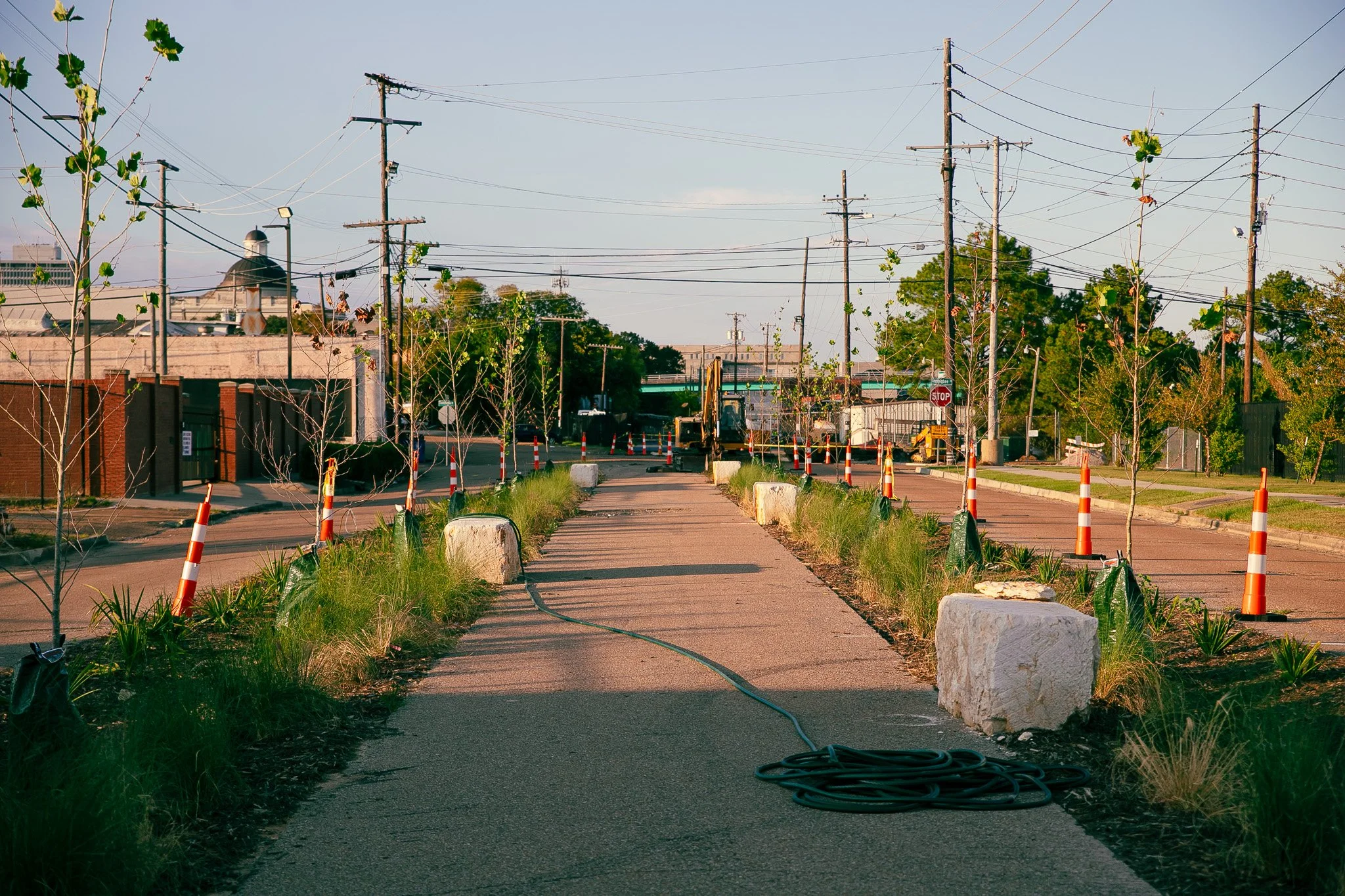
Museum Trail: Capitol Green Connector is a Precedent for Unearthing Practice, From 5-Lane Roadway to Protected Multi-Use Trail
Unearthing the City
When transforming an existing paved surface into a planted landscape, the process begins with subtraction. The area is sawcut and layers of asphalt, concrete, aggregate, and other material are removed until the underlying earth is exposed. Once uncovered, existing soil conditions can be evaluated. Compacted ground may need to be loosened, amended, and supplemented with healthy soil to support new plant communities. From there, native trees, grasses, perennials, and other vegetation can begin replacing what was previously an impermeable surface. Removing pavement creates an opportunity for the ground to absorb water again, vegetation to provide shade and habitat, and natural systems to become part of the infrastructure.
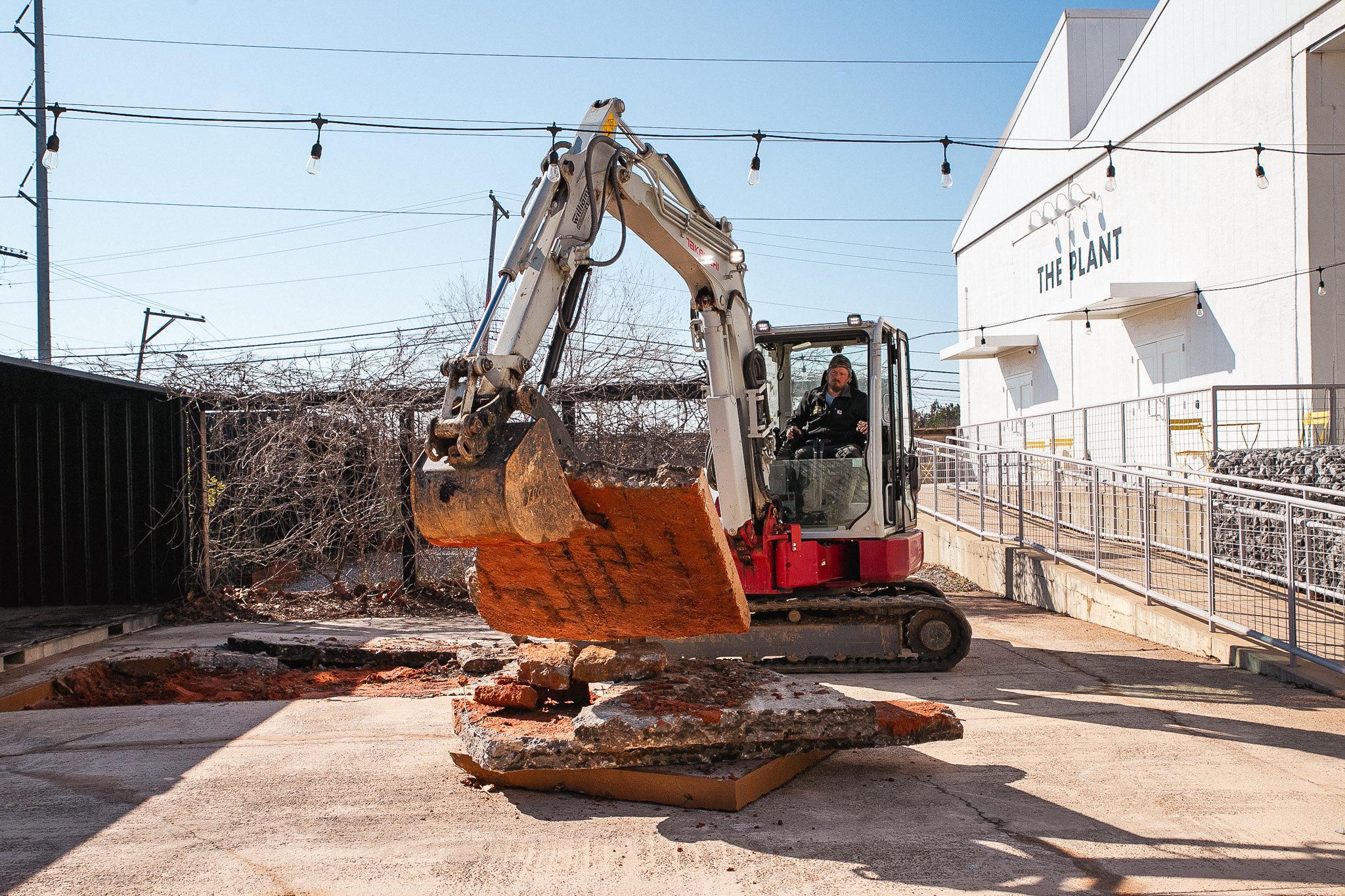
The Plant, Sawcutting Asphalt to Create Large Planter Beds for Native Plants
Designing for Water
Whenever site conditions allow, we prefer to integrate a bioswale or similar planted stormwater system into these spaces. Rather than immediately directing rainfall into a conventional storm drain, runoff from adjacent streets and paved surfaces can enter a planted landscape where it is slowed, temporarily held, and filtered. Native grasses, sedges, and other plants suited to periodically wet conditions can play an important role in this process. Their vegetation and root systems help slow runoff, stabilize soil, capture sediment, and support infiltration while creating habitat within the urban environment.
Establishment is critical. Newly planted landscapes require care as vegetation develops and root systems become established. Over time, the landscape becomes increasingly capable of performing the work it was designed to do. After a heavy rainfall, that performance becomes especially visible as water moves through the planted system rather than simply across pavement.
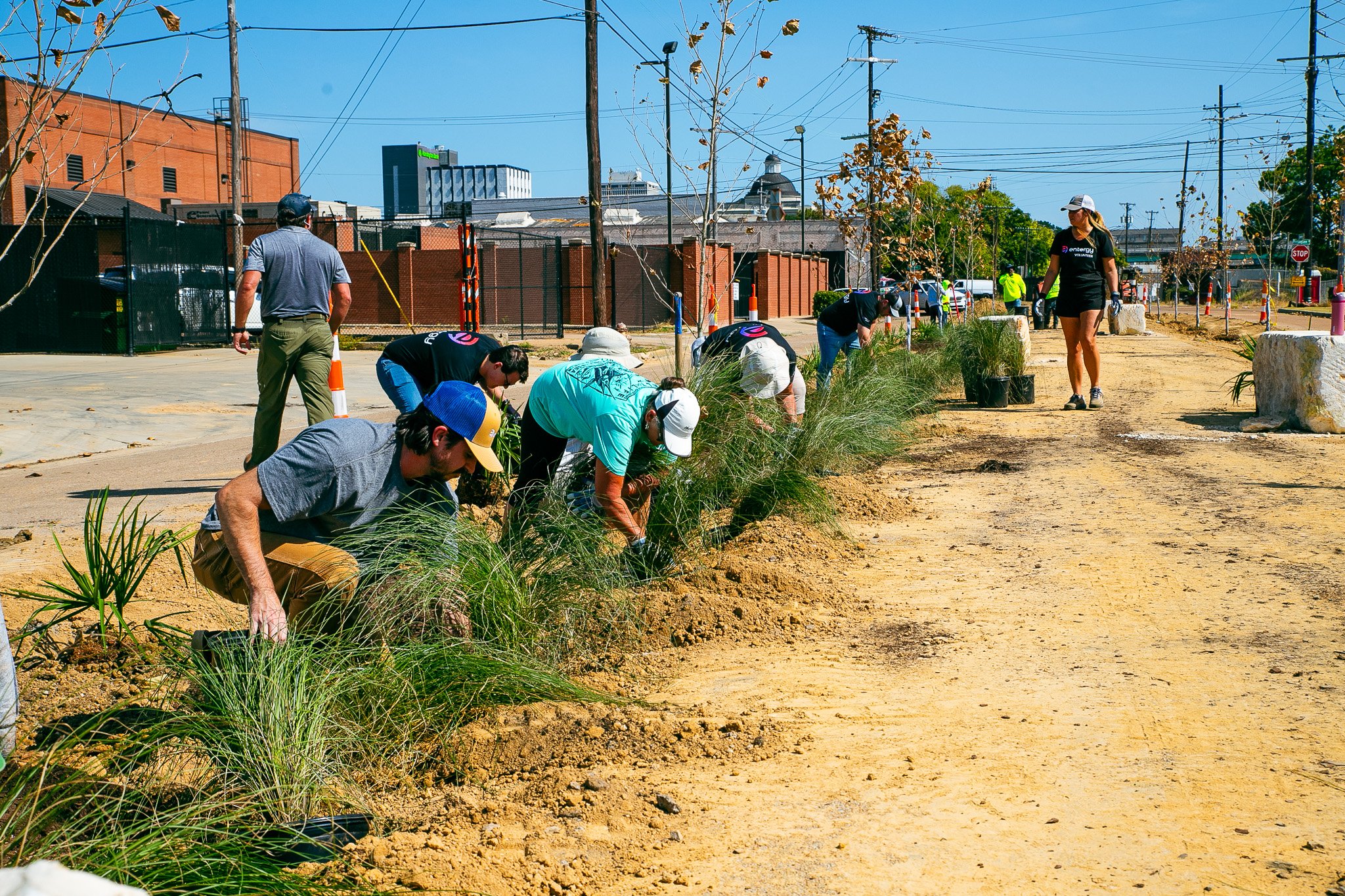
Museum Trail: Volunteers Plant Palmettos, Muhly Grasses, and American Sycamore at Community Planting Day
Making Space for People
The pavement removed for planting can also become an opportunity to rethink how the remaining right-of-way is used. A former vehicle lane might accommodate a multi-use path, wider pedestrian area, or new connection through the city. Where these interventions occur within roadways, raised crossings, bollards, narrowed travel areas, and other traffic calming measures can help establish a more clear relationship between vehicles and people. Natural materials such as limestone boulders can provide texture and informal seating while also helping define and protect pedestrian space. The result is a different kind of urban infrastructure: less pavement, more shade, more permeable ground, better stormwater management, and more space for people.
Reversing urban heat does not necessarily require rebuilding an entire city at once. Sometimes it begins by identifying pavement we no longer need, cutting into it, and giving a small piece of the city back to the earth.